A cat’s tail is more than a beautiful feature that helps it balance. It is also an important communication tool that can reveal how your feline companion feels in different situations. From a confident upright tail to a nervous tucked position, every movement can offer clues about your cat’s emotional state.
Understanding cat tail meanings makes it easier to recognize happiness, excitement, curiosity, fear, and irritation. However, cats do not communicate through their tails alone. Their ears, eyes, whiskers, body posture, and surroundings also help explain what a particular movement means. Once you learn to recognize these signals, you can respond more appropriately and build a stronger relationship with your cat.
Cat Tail Meanings at a Glance 📋
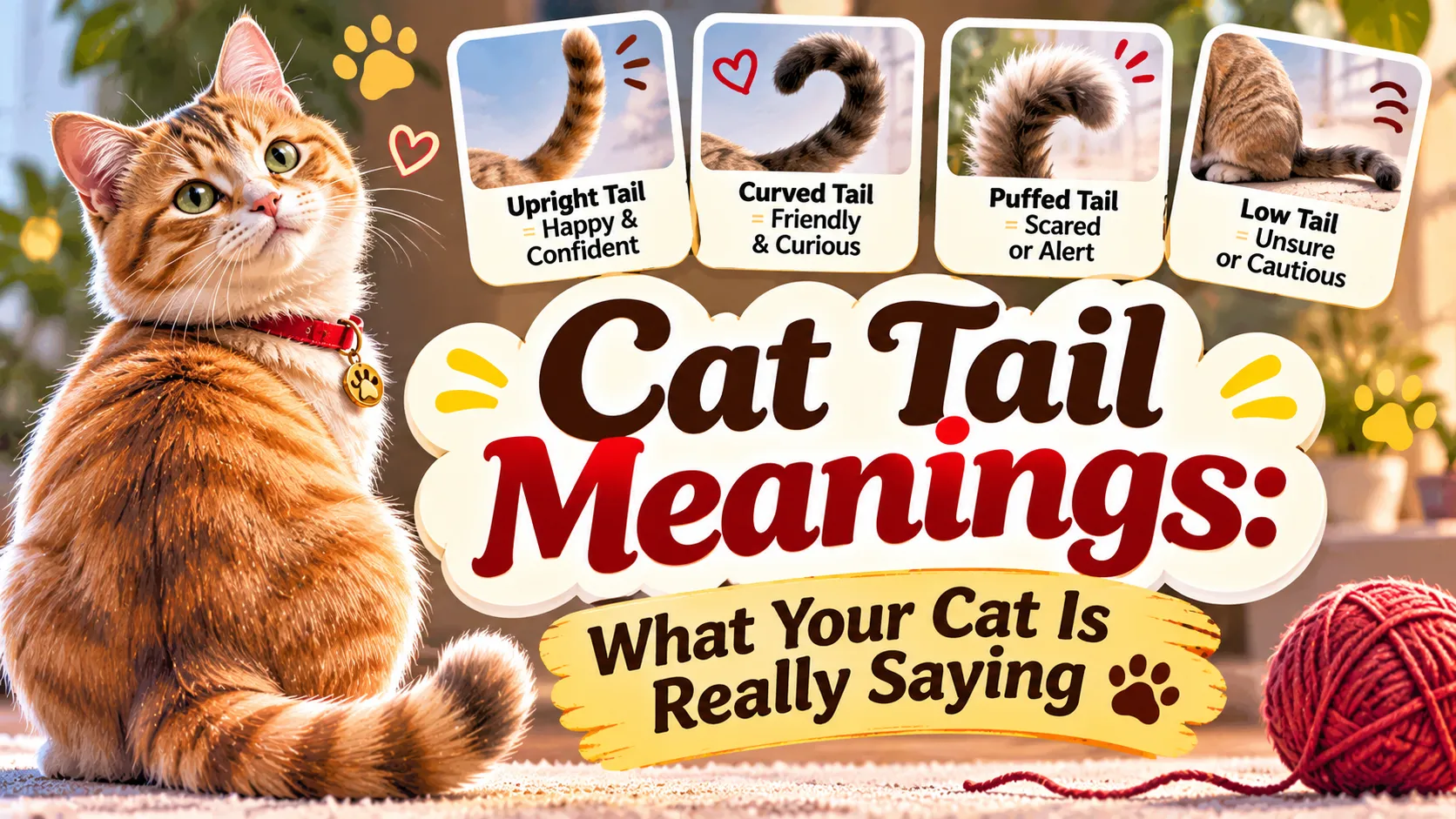
Different tail positions can communicate different emotions, although their meanings depend on the situation. This quick reference guide will help you understand the most common cat tail signals before exploring each one in detail.
| Cat tail position or movement | Possible meaning |
|---|---|
| Tail straight up | Confidence and friendliness |
| Tail shaped like a question mark | Playfulness and greeting |
| Tail held low | Fear, uncertainty, or discomfort |
| Tail tucked between legs | Anxiety or fear |
| Puffed-up tail | Feeling threatened or startled |
| Tail moving slowly | Focus or mild interest |
| Tail flicking quickly | Irritation or overstimulation |
| Tail thumping | Frustration or agitation |
| Tail tip twitching | Excitement, hunting, or irritation |
| Tail quivering upright | Excitement or possible urine marking |
| Tail wrapped around the body | Comfort, warmth, or self-protection |
| Tail wrapped around your leg | Friendly social contact |
| Tail held straight behind | Alertness or interest |
| Tail relaxed while resting | Comfort and relaxation |
| Tail held stiffly | Tension or heightened alertness |
Tail Straight Up: Your Cat Feels Happy and Confident 😻
When your cat walks toward you with its tail held straight up, it is often showing confidence and friendly intentions. This upright position is one of the clearest positive signals in feline body language. Cats commonly use it when greeting familiar people or other friendly cats.
You may notice your cat approaching you with relaxed ears, soft eyes, and a comfortable walking posture. These additional signals support the idea that your cat feels safe and socially comfortable.
What it may mean:
- Your cat feels confident.
- It is happy to see you.
- It feels comfortable in its surroundings.
- It may be ready for attention or interaction.
If your cat greets you with an upright tail, you can respond with a gentle greeting, a soft voice, or a little playtime.
Question Mark Tail: Your Cat Wants to Say Hello ❓
Have you ever noticed your cat holding its tail upright with a small curl at the tip? This position looks like a question mark and is commonly associated with friendly greetings, curiosity, and playful interest.
A question-mark tail often appears when a cat approaches someone familiar. Your feline friend may be inviting interaction or showing that it feels comfortable around you. It can also appear when your cat is exploring a familiar environment or approaching another friendly animal.
What it may mean:
- Your cat is feeling friendly.
- It is interested in interacting.
- It may be ready to play.
- It feels relaxed and confident.
You can respond by offering a favorite toy or gently scratching your cat around its cheeks or chin if it enjoys being touched.
Tail Held Low: Your Cat May Feel Uncertain 😟
A cat that carries its tail low, closer to the ground, may be feeling nervous, uncomfortable, or uncertain about something. This position can appear when a cat encounters an unfamiliar person, hears a strange noise, or enters an environment that makes it uncomfortable.
A low tail does not automatically mean your cat is frightened. Some cats naturally carry their tails lower than others, so consider their usual behavior and the surrounding situation.
What it may mean:
- Your cat feels unsure.
- Something has made it uncomfortable.
- It may be experiencing anxiety.
- It could be responding to a potential threat.
Give your cat enough space to investigate its surroundings. Avoid forcing physical contact, especially if its body appears tense or its ears move backward.
Tail Tucked Between the Legs: Your Cat Is Frightened 🙀
When a cat pulls its tail tightly between its legs or underneath its body, it may be experiencing fear, anxiety, or significant discomfort. This position makes the cat appear smaller and can indicate that it wants to avoid attention.
You might notice this behavior during thunderstorms, veterinary visits, encounters with unfamiliar animals, or other stressful situations. A frightened cat may also crouch, flatten its ears, widen its eyes, or attempt to hide.
What it may mean:
- Your cat feels frightened or threatened.
- It wants to avoid a stressful situation.
- It may be experiencing discomfort.
- It needs a quiet and secure environment.
Avoid picking up or chasing a frightened cat. Instead, remove the source of stress when possible and allow it to retreat somewhere safe.
Puffed-Up Tail: Your Cat Feels Threatened or Startled 😾
A puffed-up tail is one of the most recognizable feline body language signals. When a cat feels suddenly frightened or threatened, the fur along its tail can stand on end, making the tail appear much larger than usual.
This automatic response is called piloerection. It can make a cat look more intimidating when it feels vulnerable. You may also see an arched back, raised body fur, sideways movement, or flattened ears.
What it may mean:
- Your cat has been startled.
- It feels threatened by another animal.
- It is frightened or defensive.
- It wants the perceived threat to stay away.
Do not approach or attempt to pick up a cat displaying this posture. Give it room to calm down and remove anything that may be frightening it.
Slow Tail Swishing: Your Cat Is Focused on Something 🎯
A slow, gentle tail movement can indicate that your cat is concentrating on something interesting. You might notice this behavior when it watches a bird through the window, follows a moving toy, or observes another animal.
Unlike a fast, aggressive-looking tail movement, a slow swish can accompany focused attention. Your cat may be preparing to jump, stalk, or investigate whatever has captured its interest.
What it may mean:
- Your cat is observing something.
- It is interested in a moving object.
- It may be preparing to play or pounce.
- It is concentrating on its surroundings.
If your cat is watching a toy, you can encourage healthy play by moving it gently and allowing your cat to follow its natural hunting instincts.
Fast Tail Flicking: Your Cat May Be Irritated ⚠️
Fast tail flicking often suggests that a cat feels irritated, overstimulated, or emotionally unsettled. You may notice this behavior when you pet your cat for too long or disturb it while it is resting.
Some cats flick their tails when another animal approaches too closely or when something interrupts their concentration. The faster and more forceful the movement becomes, the more important it is to pay attention to the rest of the cat’s body language.
What it may mean:
- Your cat is becoming annoyed.
- It may not enjoy the current interaction.
- It feels overstimulated.
- It wants some personal space.
If your cat starts flicking its tail while you are petting it, pause and give it a chance to decide whether it wants more attention.
Tail Thumping: Your Cat Is Frustrated or Agitated 😿
Tail thumping happens when a cat repeatedly hits its tail against the floor, furniture, or another surface. This movement can indicate frustration, irritation, or heightened emotional arousal.
For example, your cat might thump its tail when it sees another cat outside, becomes impatient, or dislikes being disturbed. Some cats also display this behavior during play when they are highly stimulated.
What it may mean:
- Your cat feels frustrated.
- It is becoming irritated.
- Something has caught its attention.
- It may need a break from interaction.
Avoid interpreting tail thumping as a friendly invitation. Observe the cat’s ears, eyes, and posture before deciding whether to approach.
Tail Tip Twitching: Your Cat Is Curious or Excited 🐱
Sometimes a cat keeps most of its tail still while moving only the very tip. This small twitch can reveal curiosity, excitement, hunting interest, or mild irritation.
You might see it when your cat watches an insect, follows a toy, or studies something unfamiliar. A relaxed cat may also twitch its tail tip when it is mildly annoyed or does not want to be disturbed.
What it may mean:
- Your cat is concentrating.
- It is interested in something nearby.
- It may be preparing to play.
- It could be experiencing mild irritation.
The context makes a big difference. A cat watching a toy with a twitching tail tip may be playful, while one displaying tense muscles and backward ears may be uncomfortable.
Quivering Tail: Your Cat May Be Excited to See You 💕
A quivering tail is a small, rapid shaking movement that can happen when a cat holds its tail upright. Some cats display this behavior when greeting a favorite person or approaching another familiar animal.
It may also occur during urine marking. In that situation, a cat may stand with its rear toward a vertical surface, hold its tail upright, and quiver while spraying a small amount of urine.
What it may mean:
- Your cat is excited.
- It is greeting someone familiar.
- It is displaying social interest.
- It may be urine marking.
Pay attention to what happens alongside the movement. If your cat repeatedly sprays indoors or suddenly starts urine marking, discuss the behavior with your veterinarian.
Tail Wrapped Around the Body: Your Cat Wants Comfort 💤
Cats sometimes sit or lie down with their tails wrapped around their bodies. This position can help them conserve warmth and feel comfortable while resting.
However, a tightly wrapped tail combined with a crouched posture, tense muscles, or flattened ears may indicate that a cat feels nervous or defensive. The same general position can therefore have different meanings depending on the situation.
What it may mean:
- Your cat is resting comfortably.
- It is trying to conserve warmth.
- It may want to feel protected.
- It could be experiencing stress or discomfort.
Look at your cat’s overall posture before deciding whether it is simply relaxing or trying to protect itself.
Tail Wrapped Around Your Leg: Your Cat Is Showing Affection ❤️
When your cat curls its tail around your leg, arm, or another part of your body, it is often displaying friendly social behavior. This gesture may happen when your cat greets you, rubs against you, or follows you around the house.
Cats also intertwine their tails with familiar cats as part of friendly social interaction. It is one way they maintain contact and express familiarity.
What it may mean:
- Your cat feels comfortable with you.
- It is greeting you.
- It wants friendly interaction.
- It is showing social attachment.
You can respond with a gentle greeting or a little attention. However, allow your cat to decide whether it wants to be petted or simply wants to stay close.
Tail Held Straight Behind: Your Cat Is Alert and Interested 👀
A cat may hold its tail straight behind its body when investigating something or moving through an unfamiliar situation. This position can indicate alertness, interest, or concentration.
The meaning depends on how relaxed the tail and the rest of the body appear. A loose, neutral posture may suggest ordinary curiosity, while a stiff body and tense tail can indicate increased alertness.
What it may mean:
- Your cat is observing its surroundings.
- It is interested in something nearby.
- It may be assessing an unfamiliar situation.
- It is preparing to move or investigate.
Watch its ears and eyes for additional clues. Forward-facing ears and a relaxed body generally suggest a more comfortable state than flattened ears and tense muscles.
Relaxed Tail While Lying Down: Your Cat Feels Comfortable 😌
When a cat rests with its tail loosely positioned beside its body, it is often feeling comfortable and settled. You may see this position when your feline friend is sleeping, relaxing in a sunny spot, or enjoying a quiet afternoon.
A relaxed tail usually appears alongside soft facial expressions, natural ear positions, and loose muscles. Some cats stretch their tails outward, while others rest them beside their paws.
What it may mean:
- Your cat feels comfortable.
- It is relaxed in its environment.
- It may be preparing to sleep.
- It is enjoying a peaceful moment.
If your cat is resting comfortably, let it enjoy its quiet time rather than disturbing it unnecessarily.
Stiff Tail: Your Cat May Be on High Alert ⚡
A stiff tail can indicate tension, heightened attention, or an emotional response to something happening nearby. Its exact meaning depends on whether the tail is raised, lowered, or held away from the body.
For example, a raised and relaxed tail often indicates confidence, while a rigid tail accompanied by tense muscles may suggest uncertainty or agitation. A stiff, puffed-up tail can indicate fear or defensiveness.
What it may mean:
- Your cat is highly alert.
- It may feel uncertain.
- Something has caught its attention.
- It could be preparing to defend itself.
Give your cat time to assess the situation. If it looks uncomfortable, avoid sudden movements or unwanted contact.
Why Does My Cat Wag Its Tail? 🐈
Cats wag their tails for several reasons, and the movement does not always mean happiness. Unlike dogs, which often wag their tails during friendly interactions, cats use different types of tail movement to express concentration, excitement, frustration, and other emotional states.
A slow side-to-side movement may indicate that your cat is focused on something, while rapid flicking or forceful thumping can suggest irritation. A small twitch at the tip may occur during play or hunting behavior.
The important thing is to consider the speed, intensity, and situation surrounding the movement. A cat watching a toy may swish its tail before jumping, while one flicking its tail during petting may be asking for a break.
Why Does My Cat Put Its Tail Around Me? 🥰
When your cat wraps its tail around your leg or arm, it is often displaying a friendly social gesture. Cats use physical contact to maintain relationships with familiar people and other animals.
This behavior may happen when your cat greets you at the door, follows you into another room, or rubs against your legs while asking for attention. It can be accompanied by purring, cheek rubbing, or a relaxed upright tail.
Although people sometimes describe this gesture as a cat’s version of a hug, it is best understood as a sign of friendly contact and social comfort rather than a direct human-style expression of affection.
How to Read Your Cat’s Tail Along With Other Body Language 🧐
A tail provides useful information, but it should never be the only signal you consider. Cats communicate through several physical features, and combining these clues gives you a better understanding of their emotional state.
Ears: Forward-facing ears often indicate interest or alertness. Ears turned sideways or flattened backward can suggest fear, irritation, or defensiveness.
Eyes: Soft eyes and slow blinking often accompany a relaxed state. Wide eyes and enlarged pupils can appear during excitement, fear, or heightened attention, depending on the situation.
Whiskers: Whiskers positioned naturally or slightly forward can accompany curiosity. Whiskers pulled tightly against the face may appear when a cat feels frightened or defensive.
Body posture: A relaxed, stretched-out body usually suggests comfort. A crouched body, tense muscles, or an arched back may indicate fear or defensiveness.
Vocalizations: Purring, meowing, growling, and hissing provide additional clues. Remember that purring does not always mean happiness; some cats also purr when stressed or uncomfortable.
By observing these signals together, you can understand your cat’s behavior more accurately and respond in a way that makes it feel safe.
When Should You Worry About Your Cat’s Tail Behavior? 🩺
Most tail movements are normal forms of feline communication. However, sudden changes in tail position, unusual movements, or signs of pain deserve attention, especially when they occur alongside changes in appetite, activity, or behavior.
Watch for these warning signs:
- Your cat suddenly stops moving its tail normally.
- Its tail appears painful when touched.
- It keeps its tail unusually low without an obvious reason.
- You notice swelling, bleeding, or an injury.
- Your cat has difficulty walking or balancing.
- It repeatedly licks or bites its tail.
- Its tail movement changes suddenly after an accident.
- It shows signs of discomfort when sitting or moving.
Tail injuries can involve bones, nerves, muscles, or surrounding tissue. Never pull, bend, or forcefully examine an injured tail. Contact a veterinarian if you notice pain, weakness, sudden changes, or visible damage.
If your cat cannot urinate, repeatedly strains in the litter box, or passes little or no urine, seek urgent veterinary attention. Urinary blockage can be a life-threatening emergency, particularly in male cats.
Frequently Asked Questions About Cat Tail Meanings ❓
What does it mean when a cat holds its tail straight up?
A straight, relaxed tail usually indicates that a cat feels confident, comfortable, and friendly. Cats often use this position when greeting familiar people or approaching other friendly animals.
What does a question-mark tail mean in cats?
A question-mark-shaped tail generally indicates friendly interest, curiosity, or playfulness. Your cat may be greeting you or showing that it is comfortable interacting with you.
Why does my cat wag its tail when I pet it?
Your cat may be becoming overstimulated or irritated. If its tail starts flicking rapidly during petting, pause and give it some space. Some cats enjoy only short periods of physical contact.
What does a puffed-up cat tail mean?
A puffed-up tail usually indicates that a cat feels frightened, threatened, or startled. The raised fur makes the tail appear larger and can be part of a defensive response.
Why does my cat wrap its tail around my leg?
This behavior often represents friendly social contact. Your cat may be greeting you, showing familiarity, or seeking attention. It is generally a positive interaction when accompanied by relaxed body language.
What does it mean when a cat’s tail is tucked under its body?
A tucked tail can indicate fear, anxiety, uncertainty, or discomfort. Look for other signs, such as crouching, flattened ears, or hiding, to understand what may be upsetting your cat.
Why does my cat twitch only the tip of its tail?
A twitching tail tip can indicate concentration, excitement, hunting interest, or mild irritation. The surrounding situation helps determine which explanation is most likely.
Why does my cat shake its tail while standing?
An upright, quivering tail may indicate excitement or a friendly greeting. However, if your cat backs up against a vertical surface while quivering, it may be urine marking.
Do cats wag their tails when they are happy?
Sometimes, but tail wagging does not always mean happiness in cats. A slow movement may indicate concentration, while fast flicking or thumping often suggests irritation or heightened arousal.
Can a cat’s tail indicate pain?
Yes. A cat holding its tail unusually low, protecting it, reacting painfully to touch, or suddenly changing its tail movements may be experiencing discomfort or an injury. A veterinarian should evaluate concerning or persistent changes.
Why does my cat wrap its tail around its body while sleeping?
Cats may wrap their tails around themselves to conserve warmth and feel comfortable while resting. If the position is accompanied by unusual tension, hiding, or other signs of illness, pay closer attention.
What does a cat’s tail between its legs mean?
A tail held tightly between the legs usually indicates fear, anxiety, or a defensive response. Your cat may be trying to make itself appear smaller and avoid a perceived threat.
Conclusion 🐾
Understanding cat tail meanings can help you recognize what your feline companion may be communicating throughout the day. An upright tail often signals confidence and friendliness, while a puffed-up tail can indicate fear. Slow swishing may show concentration, and rapid flicking can suggest irritation or overstimulation.
Remember that every cat has its own personality and communication habits. Always consider its ears, eyes, posture, and surroundings before interpreting a particular tail movement. With patience and observation, you can understand your cat’s signals more clearly, respect its boundaries, and build a happier relationship with your furry companion.

Olivia Bennett is a writer and language enthusiast at Vocabsteria. She is passionate about exploring word meanings, name origins, and cultural expressions from around the world.