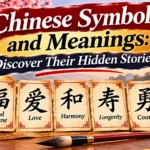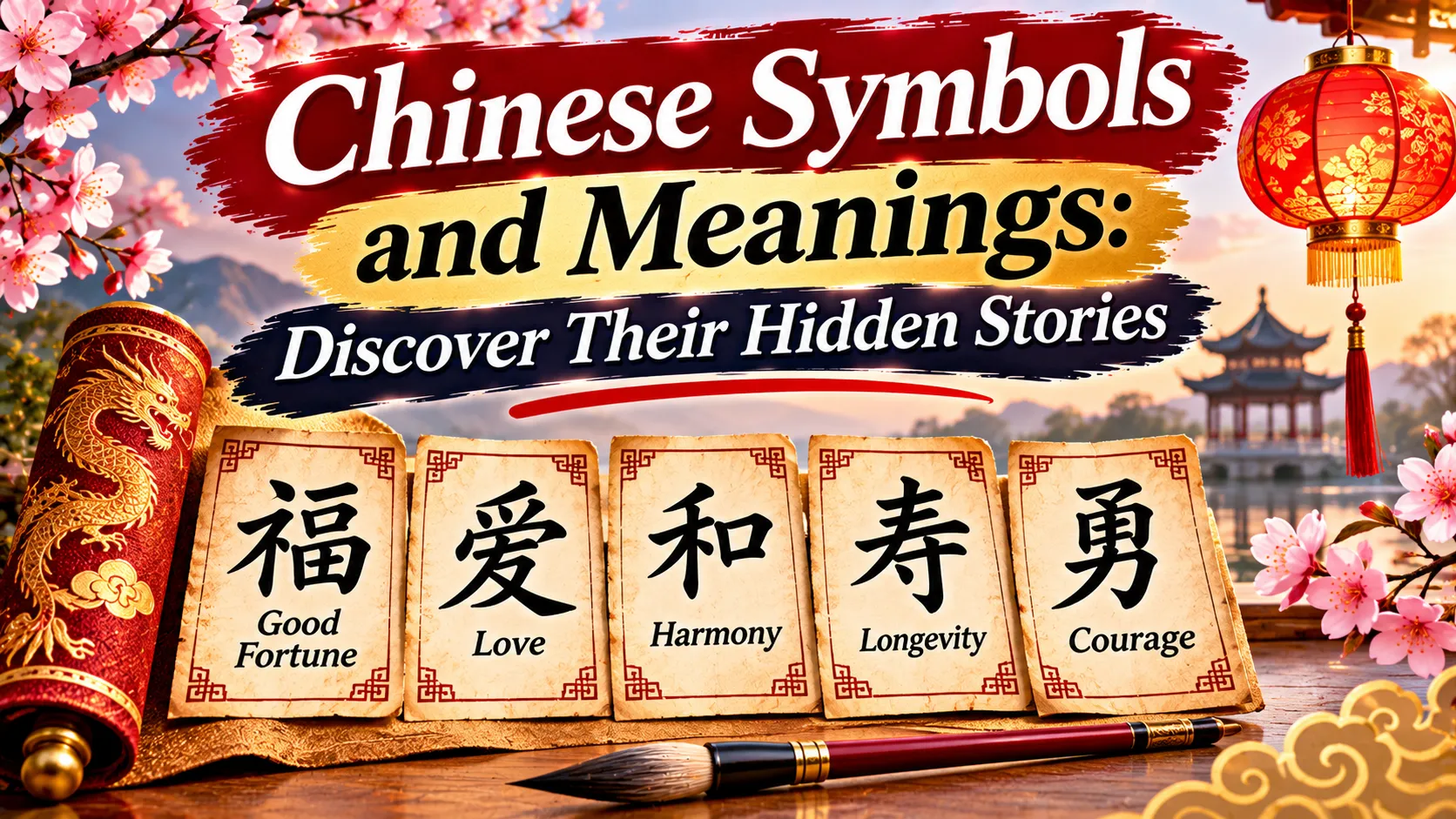
Chinese symbols carry centuries of history, culture, philosophy, and tradition. From the powerful dragon to the peaceful lotus flower, each symbol communicates ideas that go beyond its appearance. Some represent good fortune, wealth, and happiness, while others express wisdom, strength, love, protection, and spiritual balance.
People around the world admire Chinese symbols for their artistic beauty and deeper meanings. You can find them in traditional paintings, architecture, clothing, jewelry, tattoos, decorations, and celebrations. Chinese characters also hold special significance because a single character can communicate an idea, emotion, or value.
Whether you want to understand traditional Chinese culture, choose a meaningful tattoo, explore ancient artwork, or learn the meaning behind popular Chinese characters, this guide introduces important symbols and their cultural significance. It also explains how Chinese symbols differ from ordinary decorative designs and why their meanings sometimes depend on context.
What Are Chinese Symbols? 🏮
Chinese symbols are visual representations of ideas, beliefs, values, and cultural traditions that developed throughout Chinese history. They include written characters, animals, plants, colors, objects, and traditional patterns.
Chinese writing uses characters called hanzi. Each character represents a word or meaningful element rather than simply representing an individual sound like letters in the English alphabet. For example, the character 山 means mountain, while 水 means water.
Beyond written language, Chinese culture also uses symbolic images to communicate deeper messages. A dragon can represent power and good fortune, while a lotus flower often represents purity and spiritual growth. These meanings appear in traditional stories, festivals, paintings, architecture, and everyday objects.
Some symbols have several interpretations. Their meaning may change depending on the historical period, region, artwork, or cultural setting.
Popular Chinese Symbols and Their Meanings 🐉
Chinese culture includes many recognizable symbols that represent important values and traditional beliefs. Some express happiness and prosperity, while others symbolize courage, longevity, harmony, and spiritual development.
Here are some well-known examples and the ideas they traditionally represent.
| Chinese Symbol | Name | Traditional Meaning |
|---|---|---|
| 龙 | Dragon | Power, strength, good fortune |
| 凤 | Phoenix | Renewal, grace, prosperity |
| 福 | Fu | Blessing, happiness, good fortune |
| 寿 | Shou | Longevity and long life |
| 爱 | Ai | Love and affection |
| 和 | He | Harmony and peace |
| 山 | Shan | Mountain and stability |
| 水 | Shui | Water and adaptability |
| 花 | Hua | Flower and beauty |
| 心 | Xin | Heart and emotions |
| 禄 | Lu | Prosperity and official success |
| 喜 | Xi | Happiness and joy |
| 双喜 | Shuangxi | Double happiness |
| 金 | Jin | Gold and wealth |
| 玉 | Yu | Jade and virtue |
Chinese Dragon Symbol and Meaning 🐲
The Chinese dragon, written as 龙 in simplified Chinese and 龍 in traditional Chinese, stands among the most important creatures in Chinese mythology. Unlike many Western dragon stories, which portray dragons as dangerous monsters, Chinese traditions often associate dragons with positive qualities.
The dragon represents power, wisdom, strength, protection, and good fortune. Traditional stories connect it with rain, rivers, clouds, and water, making it an important figure in agricultural culture.
Chinese emperors historically used dragon imagery to represent imperial authority. The five-clawed dragon, in particular, appeared in imperial clothing and decorative objects under specific historical rules.
People also associate dragons with success, ambition, and confidence. Dragon dances remain an important part of Lunar New Year celebrations and other cultural festivals.
Common dragon meanings:
- Strength and personal power
- Good luck and prosperity
- Wisdom and authority
- Protection and success
- Rain and natural balance
Chinese Phoenix Symbol and Meaning 🦚
The Chinese phoenix, known as Fenghuang (凤凰), represents grace, virtue, harmony, and renewal. Traditional Chinese art often depicts this mythical bird with colorful feathers and elegant features.
The Fenghuang differs from the Western phoenix. Western traditions commonly describe a bird that rises from its own ashes, while the Chinese Fenghuang carries its own symbolism connected with virtue, harmony, and auspicious events.
Chinese tradition sometimes pairs the phoenix with the dragon. Together, these creatures can represent a harmonious union, especially in traditional wedding imagery.
Traditional meanings include:
- Grace and beauty
- Peace and harmony
- Renewal and positive change
- Virtue and dignity
- Prosperity and auspicious beginnings
Chinese Symbol for Good Luck: 福 🍀
The character 福 (fú) is one of the most recognizable Chinese symbols. It represents good fortune, blessings, happiness, and prosperity.
Families frequently display this character during Lunar New Year. Many people place a red 福 decoration on doors or walls to welcome positive energy and good fortune into their homes.
You may also see 福 displayed upside down. This tradition uses a Chinese wordplay: the pronunciation of “upside down” resembles the pronunciation of “arrive” in certain expressions. The arrangement therefore communicates the idea that good fortune has arrived.
The character carries a warm message of hope and well-being. It works especially well in traditional decorations, greeting cards, and cultural artwork.
Chinese Symbol for Longevity: 寿 🌸
The character 寿 (shòu) represents longevity, long life, and lasting health. It appears frequently in traditional Chinese birthday celebrations, particularly those honoring older family members.
Artists often incorporate this character into decorative plates, paintings, embroidery, furniture, and gifts. Some traditional designs feature elaborate versions of the character surrounded by clouds, flowers, or other auspicious patterns.
Longevity holds an important place in Chinese culture because it reflects respect for elders, family relationships, and the hope for a healthy life.
The symbol can represent:
- Long life
- Good health
- Respect for elders
- Blessings for older family members
- A lasting and meaningful life
Chinese Symbol for Love: 爱 ❤️
The Chinese character 爱 (ài) means love. It expresses affection, care, emotional connection, and deep attachment.
People use this character in everyday language and creative designs. It can describe romantic love, family affection, and other meaningful emotional relationships.
Traditional Chinese culture also connects love with responsibility, loyalty, kindness, and respect. Therefore, the character can communicate more than romantic attraction.
The traditional form is 愛, while the simplified form is 爱. Both represent the same basic meaning.
For tattoos, jewelry, or artwork, it is important to choose the correct written form and understand the context in which you want to use it.
Chinese Symbol for Harmony: 和 ☯️
The character 和 (hé) means harmony, peace, and agreement. It represents the importance of maintaining balanced relationships and peaceful surroundings.
Harmony plays an important role in Chinese philosophy and traditional social values. It encourages people to respect differences, maintain cooperation, and avoid unnecessary conflict.
The character appears in expressions connected with peace, friendship, and unity. It also reflects a broader cultural appreciation for balance between people and their environment.
Its common associations include:
- Peaceful relationships
- Cooperation and understanding
- Balance and unity
- Respect and mutual acceptance
- A calm and harmonious life
Chinese Yin and Yang Symbol and Meaning ☯️
The Yin and Yang symbol, known as Taijitu (太极图), represents complementary forces that interact to create balance. Its familiar design contains two curved sections, one black and one white, with a small circle of the opposite color inside each section.
Yin traditionally connects with qualities such as darkness, coolness, stillness, and receptivity. Yang connects with light, warmth, activity, and movement.
However, neither side represents something entirely good or bad. The central idea focuses on how different forces depend on one another and create a changing balance.
The symbol has strong connections with Chinese philosophy, particularly Daoist thought. It reminds people that life involves changing conditions rather than permanent extremes.
Yin and Yang commonly represent:
- Balance between contrasting forces
- Harmony in nature
- Light and darkness
- Activity and stillness
- Interdependence and change
Chinese Symbols for Wealth and Prosperity 💰
Chinese culture contains several symbols associated with financial success, abundance, and prosperity. People often display them in homes, businesses, gifts, and festive decorations.
金 (Jin) – Gold and Wealth
The character 金 (jīn) means gold or metal. It often represents wealth, value, and financial prosperity. Gold also holds an important place in traditional Chinese celebrations and decorative art.
元宝 (Yuanbao) – Traditional Gold Ingot
The yuanbao represents a traditional form of gold or silver currency. Its distinctive boat-like shape makes it a familiar symbol of wealth and abundance.
People often include yuanbao decorations in Lunar New Year displays to express hopes for financial success.
招财进宝 – Attract Wealth and Treasure
The phrase 招财进宝 (zhāo cái jìn bǎo) expresses the wish to attract wealth and bring in valuable treasures. People use it in festive decorations and business-related artwork.
财神 – God of Wealth
Caishen (财神) is a traditional Chinese deity associated with wealth and prosperity. Images of Caishen often appear during Lunar New Year celebrations as families welcome good fortune.
Chinese Symbols for Happiness and Joy 🎉
Happiness appears throughout Chinese art, language, celebrations, and traditional decorations. Several characters and designs communicate wishes for joyful relationships and positive experiences.
喜 (Xi) – Happiness
The character 喜 (xǐ) means happiness, joy, or delight. It appears in expressions connected with celebrations and joyful occasions.
双喜 (Shuangxi) – Double Happiness
The double happiness symbol combines two versions of 喜 into one decorative character. It is especially famous in Chinese wedding traditions.
Couples and families use it on wedding invitations, decorations, gifts, and ceremonial objects to express wishes for marital happiness and a joyful future.
囍 – Traditional Double Happiness Design
The character 囍 is a special decorative form of double happiness. It does not function like an ordinary standalone word in every context, but it remains strongly associated with weddings and celebrations.
喜鹊 (Xique) – Magpie
The magpie traditionally represents happiness and good news. Its name and cultural associations connect it with joyful events and positive messages.
Chinese Flower Symbols and Their Meanings 🌺
Flowers play an important role in Chinese art, poetry, festivals, and traditional symbolism. Different flowers communicate different values, including purity, beauty, perseverance, and prosperity.
Lotus Flower – Purity and Spiritual Growth
The lotus flower, known as 荷花 (héhuā), grows in muddy water while producing beautiful blossoms. This natural quality makes it a symbol of purity, resilience, and spiritual development.
Buddhist traditions also use the lotus to represent enlightenment and the ability to rise above difficulties.
Peony – Wealth and Honor
The peony, or 牡丹 (mǔdān), often represents wealth, beauty, honor, and prosperity. Traditional Chinese paintings frequently feature this flower because of its full petals and impressive appearance.
People sometimes call the peony the king of flowers because of its cultural importance and elegant beauty.
Plum Blossom – Strength and Perseverance
The plum blossom, 梅花 (méihuā), blooms during cold weather. It therefore represents courage, resilience, and hope.
Its ability to blossom in winter makes it a meaningful symbol of perseverance through difficult circumstances.
Chrysanthemum – Longevity and Integrity
The chrysanthemum, 菊花 (júhuā), often represents longevity, endurance, and a refined character. Its association with autumn also gives it a connection with maturity and reflection.
Orchid – Elegance and Noble Character
The orchid, 兰花 (lánhuā), represents elegance, refinement, and inner virtue. Traditional Chinese literature and art often use orchids to express a gentle but noble personality.
Chinese Animal Symbols and Their Meanings 🐢
Animals appear throughout Chinese mythology, folklore, traditional art, and cultural celebrations. Some represent strength and protection, while others communicate longevity, wisdom, and good fortune.
| Animal | Chinese Name | Traditional Meaning |
|---|---|---|
| Dragon | 龙 | Power, success, good fortune |
| Phoenix | 凤凰 | Harmony, grace, renewal |
| Tiger | 虎 | Courage, strength, protection |
| Crane | 鹤 | Longevity and elegance |
| Tortoise | 龟 | Long life and endurance |
| Deer | 鹿 | Prosperity and good fortune |
| Bat | 蝠 | Happiness and blessings |
| Fish | 鱼 | Abundance and prosperity |
| Rabbit | 兔 | Gentleness and cleverness |
| Koi fish | 锦鲤 | Good luck and perseverance |
Tiger – Courage and Protection
The tiger (虎, hǔ) represents courage, authority, and strength. Traditional art sometimes uses tiger images as protective symbols, especially in designs connected with children and homes.
Crane – Longevity and Grace
The crane (鹤, hè) represents long life, elegance, and good fortune. Artists often depict cranes alongside pine trees because both carry associations with endurance and longevity.
Tortoise – Wisdom and Endurance
The tortoise (龟, guī) represents longevity, stability, and endurance. Its long lifespan and protective shell contribute to its traditional symbolism.
Fish – Abundance and Prosperity
The Chinese word for fish, 鱼 (yú), sounds similar to the word for surplus or abundance, 余 (yú). This wordplay makes fish a popular decorative symbol during Lunar New Year celebrations.
Bat – Happiness and Good Fortune
The Chinese word for bat, 蝠 (fú), sounds similar to 福 (fú), the character for good fortune. Traditional artwork therefore uses bats to communicate wishes for happiness and blessings.
Chinese Symbols for Nature and the Elements 🌿
Nature provides many important symbols in Chinese philosophy and traditional artwork. Mountains, rivers, trees, clouds, and natural elements often represent balance, strength, change, and harmony.
| Symbol | Chinese Character | Meaning |
|---|---|---|
| Mountain | 山 | Stability and strength |
| Water | 水 | Adaptability and flow |
| Fire | 火 | Energy and transformation |
| Wood | 木 | Growth and vitality |
| Metal | 金 | Strength and value |
| Earth | 土 | Stability and grounding |
| Sun | 日 | Light and energy |
| Moon | 月 | Cycles and reflection |
| Cloud | 云 | Good fortune and heavenly connection |
| Bamboo | 竹 | Integrity and resilience |
Five Elements – 五行
The Five Elements, known as Wuxing (五行), form an important concept in traditional Chinese philosophy. They include wood, fire, earth, metal, and water.
Rather than describing five ordinary physical materials alone, Wuxing represents a system of relationships and changing processes. Traditional Chinese thought uses these elements to explain cycles, transformations, and interactions in nature.
- Wood represents growth and development.
- Fire represents energy and expansion.
- Earth represents stability and nourishment.
- Metal represents structure and refinement.
- Water represents movement and adaptability.
The Five Elements also appear in traditional medicine, feng shui, astrology, and other cultural systems, although their interpretations vary.
Chinese Symbols for Strength and Protection 🛡️
Chinese culture uses several characters and traditional images to express courage, resilience, safety, and personal strength.
| Symbol | Pronunciation | Meaning |
|---|---|---|
| 力 | Lì | Strength and power |
| 勇 | Yǒng | Courage and bravery |
| 武 | Wǔ | Martial strength |
| 安 | Ān | Peace and safety |
| 守 | Shǒu | Protection and guarding |
| 坚 | Jiān | Firmness and determination |
| 虎 | Hǔ | Tiger, courage and authority |
| 龙 | Lóng | Dragon, power and protection |
力 – Strength
The character 力 (lì) means strength, force, or power. It can describe physical ability as well as the strength needed to accomplish a goal.
勇 – Courage
The character 勇 (yǒng) represents bravery and courage. It communicates the ability to face challenges with determination.
安 – Peace and Safety
The character 安 (ān) means peace, safety, or security. People use it in everyday expressions and names connected with well-being.
坚 – Determination
The character 坚 (jiān) represents firmness, strength, and determination. It can describe a strong mindset or an unwavering commitment.
Chinese Symbols for Wisdom and Knowledge 📚
Wisdom and learning hold an important place in Chinese philosophy and cultural traditions. Several characters express knowledge, intelligence, thoughtful judgment, and personal development.
| Character | Pronunciation | Meaning |
|---|---|---|
| 智 | Zhì | Wisdom and intelligence |
| 学 | Xué | Learning and study |
| 知 | Zhī | Knowledge and understanding |
| 明 | Míng | Brightness and clarity |
| 德 | Dé | Virtue and moral character |
| 思 | Sī | Thought and reflection |
| 文 | Wén | Literature and culture |
| 道 | Dào | The Way or a guiding path |
The character 智 (zhì) represents wisdom and intelligent judgment. The character 学 (xué) refers to learning and study, while 知 (zhī) communicates knowledge and understanding.
Another important concept is 道 (dào), often translated as “the Way.” In Daoist philosophy, it refers to the underlying way or principle through which the universe operates. Its meaning goes beyond a simple word for a road or direction.
Chinese Color Symbols and Their Meanings 🎨
Colors communicate important cultural messages in China. Their meanings often depend on the occasion, historical tradition, and surrounding symbols.
| Color | Chinese Name | Traditional Associations |
|---|---|---|
| Red | 红色 (Hóngsè) | Happiness, celebration, good fortune |
| Gold | 金色 (Jīnsè) | Wealth, prosperity, success |
| Yellow | 黄色 (Huángsè) | Imperial authority and centrality |
| Green | 绿色 (Lǜsè) | Nature, growth, vitality |
| White | 白色 (Báisè) | Mourning and remembrance |
| Black | 黑色 (Hēisè) | Depth, authority, and water in some traditional systems |
| Blue | 蓝色 (Lánsè) | Nature and calmness in many modern contexts |
Red – Happiness and Good Fortune
Red is one of the most recognizable colors in Chinese celebrations. People use it during weddings, Lunar New Year, birthdays, and other joyful occasions.
Red envelopes, known as hongbao (红包), commonly contain money that people give as a blessing during celebrations.
Gold – Wealth and Prosperity
Gold represents wealth, success, and abundance. Traditional decorations often combine red and gold to create a festive appearance.
White – Mourning and Remembrance
White has a different cultural role in China than it does in many Western wedding traditions. It commonly appears in funeral customs and represents mourning or remembrance.
Yellow – Imperial History
Yellow historically held strong connections with imperial authority. Certain shades and uses carried special status during different Chinese dynasties.
Chinese Symbols Used in Feng Shui 🧭
Feng shui (风水) is a traditional Chinese practice that considers how people arrange spaces in relation to their surroundings. Its principles involve concepts such as direction, balance, environmental features, and the flow of qi, often translated as life energy.
Several symbols frequently appear in feng shui-inspired decorations.
Common examples include:
- Bagua (八卦): An arrangement of eight trigrams associated with traditional Chinese cosmology.
- Chinese coins: Often used as decorative representations of wealth and prosperity.
- Dragon: Associated with strength, protection, and auspicious energy.
- Phoenix: Represents harmony, renewal, and positive relationships.
- Lucky bamboo: A popular plant associated with growth and good fortune.
- Fu character (福): Represents blessings and happiness.
- Mandarin ducks: Often symbolize romantic partnership and marital harmony.
Different feng shui traditions interpret these objects in different ways. Their placement and significance depend on the particular school or practice.
Chinese Symbols for Family and Relationships 👨👩👧
Family relationships play a major role in traditional Chinese culture. Several characters communicate affection, respect, unity, and the importance of maintaining close family connections.
| Character | Pronunciation | Meaning |
|---|---|---|
| 家 | Jiā | Home and family |
| 爱 | Ài | Love |
| 亲 | Qīn | Close relationship and affection |
| 和 | Hé | Harmony |
| 孝 | Xiào | Filial respect |
| 友 | Yǒu | Friendship |
| 情 | Qíng | Feelings and affection |
| 结 | Jié | To connect or tie together |
The character 家 (jiā) means home or family. It represents more than a physical building because it can also communicate belonging and family life.
The character 孝 (xiào) represents filial respect, especially the care and respect that children show their parents and elders. It has a long history in Chinese ethical traditions.
For weddings, the double happiness symbol (囍) remains one of the most familiar designs. It expresses wishes for a joyful marriage and a harmonious relationship.
Chinese Symbols for Tattoos and Their Meanings ✍️
Chinese characters and traditional symbols attract people who want tattoos with cultural or personal meaning. Their compact designs can communicate ideas such as courage, love, wisdom, peace, and perseverance.
However, choosing a tattoo requires more care than selecting an attractive character. Some characters have several meanings, and certain combinations may sound unnatural or communicate something different from the intended message.
Here are some popular choices:
| Chinese Character | Pronunciation | Meaning |
|---|---|---|
| 爱 | Ài | Love |
| 力 | Lì | Strength |
| 勇 | Yǒng | Courage |
| 和 | Hé | Harmony |
| 福 | Fú | Good fortune |
| 梦 | Mèng | Dream |
| 心 | Xīn | Heart and mind |
| 自由 | Zìyóu | Freedom |
| 希望 | Xīwàng | Hope |
| 智慧 | Zhìhuì | Wisdom |
| 平安 | Píng’ān | Peace and safety |
| 永恒 | Yǒnghéng | Eternity |
Before choosing a Chinese tattoo:
- Confirm the character’s exact meaning with a fluent Chinese speaker.
- Decide whether you prefer simplified or traditional characters.
- Check the stroke order and visual form.
- Verify that the complete phrase sounds natural.
- Consider cultural context rather than choosing a symbol only for appearance.
A meaningful tattoo should communicate the message you intend, not simply look attractive.
Chinese Symbols and Their Meanings for Names 🌼
Chinese characters often appear in personal names because they can express positive qualities, family hopes, and meaningful wishes. Parents may select characters that represent beauty, intelligence, kindness, strength, or happiness.
The meaning of a Chinese name depends on the specific characters used. Two names may share the same pronunciation but communicate different ideas because they use different characters.
Here are examples of characters that people may use in names:
| Character | Pinyin | Meaning |
|---|---|---|
| 美 | Měi | Beauty |
| 婷 | Tíng | Graceful |
| 雅 | Yǎ | Elegant |
| 智 | Zhì | Wisdom |
| 明 | Míng | Bright |
| 伟 | Wěi | Great |
| 安 | Ān | Peace |
| 俊 | Jùn | Handsome or talented |
| 慧 | Huì | Intelligent |
| 乐 | Lè | Happiness |
Chinese naming traditions involve pronunciation, character meanings, family customs, and sometimes other cultural considerations. A fluent speaker can help confirm whether a particular combination sounds natural as a personal name.
Ancient Chinese Symbols and Their Historical Significance 🏯
Chinese symbols developed over thousands of years. Their forms changed as writing systems, religious traditions, political structures, and artistic styles evolved.
Early Chinese writing appeared on oracle bones during the Shang dynasty. People used these inscriptions to record questions and divination activities, often involving rulers, agriculture, warfare, and important events.
Over time, Chinese writing developed through several historical scripts. These include oracle bone script, bronze inscriptions, seal script, clerical script, and regular script.
Traditional artwork also preserved symbols through paintings, pottery, sculptures, architecture, textiles, and ceremonial objects.
Some symbols gained special importance through imperial traditions. Dragons became closely associated with emperors, while the phoenix appeared in art connected with grace and auspicious occasions.
Other symbols developed through philosophical and religious traditions. The Yin and Yang concept, for example, reflects ideas about complementary forces and changing relationships in the natural world.
Understanding this history helps explain why Chinese symbols carry meanings that extend beyond their visual appearance.
How to Choose the Right Chinese Symbol 🔍
Choosing a Chinese symbol becomes easier when you first decide what message you want it to communicate. A symbol that represents prosperity may suit a business decoration, while a character that expresses courage may work better for personal artwork.
Consider these points before making your choice:
1. Identify your intended meaning. Decide whether you want to express love, happiness, strength, wisdom, protection, or another quality.
2. Understand the cultural background. Learn how people traditionally use the symbol and whether it has religious, historical, or ceremonial associations.
3. Check the exact character. Similar-looking characters can carry completely different meanings. Always verify the spelling and pronunciation.
4. Consider simplified and traditional forms. For example, 爱 is simplified Chinese, while 愛 is traditional Chinese. Both mean love.
5. Check the surrounding design. A character may communicate a different message when artists combine it with animals, flowers, colors, or other symbols.
6. Ask a fluent speaker for confirmation. This step matters especially when you plan to use a symbol permanently in a tattoo, logo, or public design.
Frequently Asked Questions About Chinese Symbols ❓
What is the most famous Chinese symbol?
The Chinese dragon is among the most famous symbols. It represents power, strength, wisdom, and good fortune. The character 福, which means good fortune or blessings, also appears widely in traditional decorations.
What Chinese symbol means good luck?
The character 福 (fú) represents blessings, happiness, and good fortune. People frequently display it during Lunar New Year celebrations to express hopes for a prosperous year.
What does the Chinese dragon symbolize?
The Chinese dragon traditionally represents power, wisdom, strength, authority, and good fortune. It also has important connections with rain, water, and natural balance.
What does the Yin and Yang symbol mean?
Yin and Yang represent complementary forces that interact to create balance. The symbol communicates how different qualities, such as light and darkness or activity and stillness, depend on one another.
What is the Chinese symbol for love?
The simplified Chinese character for love is 爱 (ài). Its traditional form is 愛. Both express love, affection, and emotional connection.
What is the Chinese symbol for peace?
The character 安 (ān) can mean peace, safety, or security. The phrase 平安 (píng’ān) commonly expresses wishes for peace and safety.
What does the Chinese double happiness symbol mean?
The symbol 囍 represents double happiness. It has a strong connection with Chinese wedding traditions and expresses wishes for a joyful marriage and a happy future together.
Which Chinese symbol represents longevity?
The character 寿 (shòu) represents longevity and long life. Traditional artwork often features it in birthday decorations and gifts for older family members.
What does the lotus flower symbolize in Chinese culture?
The lotus flower often represents purity, resilience, and spiritual growth. Its ability to grow in muddy water while producing beautiful blossoms makes it a powerful image of overcoming difficulties.
Are Chinese symbols and Japanese symbols the same?
Chinese and Japanese writing systems share some characters, but they are not identical. Japanese uses kanji derived from Chinese characters alongside hiragana and katakana. Pronunciation, usage, and meanings can differ between the two languages.
Can I use Chinese symbols for tattoos?
Yes, but you should verify the character, pronunciation, and cultural meaning before getting a tattoo. A fluent Chinese speaker can help ensure that the design communicates your intended message.
Conclusion 🌟
Chinese symbols and meanings reveal the depth of Chinese language, history, philosophy, and cultural traditions. From the dragon’s association with strength and good fortune to the lotus flower’s connection with purity and resilience, each symbol communicates a distinctive idea.
Characters such as 福, 爱, 寿, and 和 express blessings, love, longevity, and harmony. Meanwhile, traditional images such as the phoenix, crane, peony, and Yin and Yang symbol offer additional ways to understand Chinese cultural values.
Whether you explore these symbols for education, artwork, decorations, names, or tattoos, understanding their background helps you appreciate their significance. The most meaningful choice is one that reflects your intended message while respecting the culture and language behind it.

Olivia Bennett is a writer and language enthusiast at Vocabsteria. She is passionate about exploring word meanings, name origins, and cultural expressions from around the world.