Have you ever paused while writing the word bingeing or binging and wondered which spelling looks right? Both forms appear in English, especially when people discuss binge-watching TV shows, eating large amounts of food, or spending hours on an activity. However, their spelling rules can confuse even confident writers.
The good news is that both bingeing and binging are correct spellings of the present participle of the verb binge. The difference comes from how writers form words ending in -ing. Although bingeing preserves the final letter e, binging follows a spelling pattern that removes it.
Understanding when to use each version can help you write more confidently, avoid unnecessary corrections, and maintain consistency throughout your work. Let’s explore the difference, pronunciation, grammar rules, and examples of both forms.
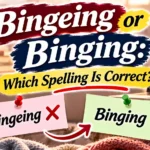
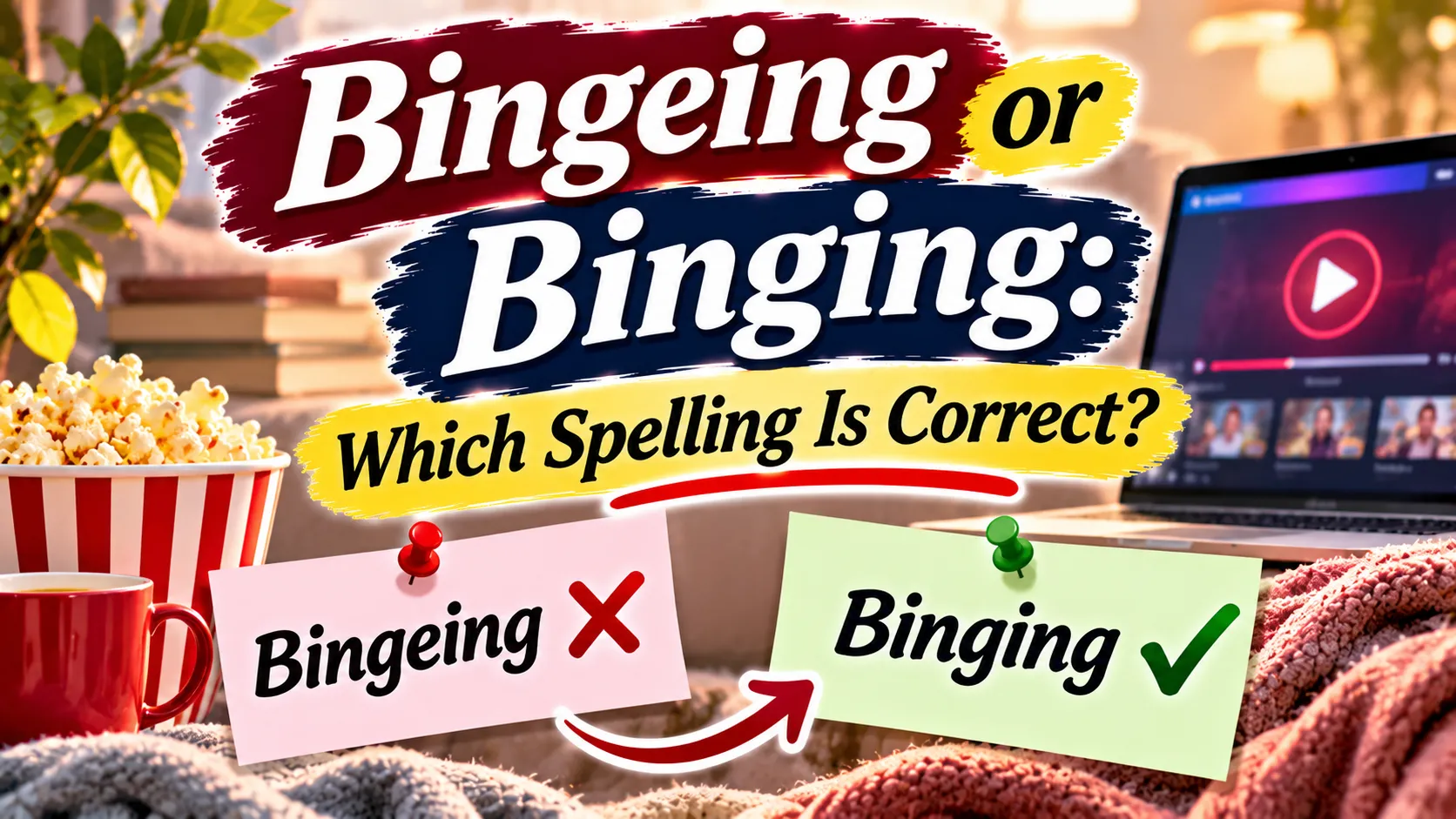
Bingeing or Binging: Which One Is Correct? ✍️
Both bingeing and binging are grammatically acceptable. They describe the same action and function as the present participle of the verb binge.
However, dictionaries and style preferences may differ in which form they favor. Many writers use bingeing because it keeps the original spelling of binge visible. Others prefer binging because it follows a common English spelling rule that drops a silent final e before adding -ing.
Consider these examples:
- She is bingeing her favorite television series.
- She is binging her favorite television series.
- He spent the weekend bingeing on mystery novels.
- He spent the weekend binging on mystery novels.
Each sentence communicates the same meaning.
Quick answer: Both spellings are correct. Choose one form and use it consistently throughout your writing. If you want to preserve the original word’s spelling, bingeing makes that connection more obvious.
What Does Binge Mean? 📖
The verb binge describes an activity that someone performs excessively or continuously, often over a relatively short period. People commonly use it when discussing television, food, drinking, shopping, gaming, and entertainment.
For example, someone might watch an entire season of a television show in one weekend. Another person might spend several hours playing video games without taking a break. Both situations can involve bingeing.
The word can also function as a noun. A binge refers to an episode or period of excessive activity.
Examples:
- We had a weekend binge of our favorite comedy series.
- He went on a shopping binge before the holidays.
- She admitted to binge-watching several episodes.
- The movie binge lasted almost six hours.
The term does not always carry the same emotional meaning. People sometimes use it casually for entertainment, but it can also describe serious patterns of excessive eating or drinking.
Why Do Bingeing and Binging Have Different Spellings? 🔤
The difference comes from a common English spelling pattern involving verbs that end in a silent e.
When writers add -ing to many verbs ending in a silent e, they remove that final letter.
For example:
| Base Verb | Present Participle |
|---|---|
| Make | Making |
| Write | Writing |
| Dance | Dancing |
| Drive | Driving |
| Hope | Hoping |
| Bake | Baking |
Following this pattern, binge can become binging.
However, English also contains words that retain the final e when adding -ing, particularly when writers want to preserve pronunciation or avoid confusion.
For example:
| Base Verb | Present Participle |
|---|---|
| Dye | Dyeing |
| Singe | Singeing |
| Age | Ageing or aging |
| Binge | Bingeing or binging |
The form bingeing keeps the connection to the original word clear. The form binging removes the final e and follows the more familiar spelling pattern.
Neither spelling changes the meaning.
Bingeing vs. Binging: Main Differences ⚖️
Although both forms are correct, a few practical differences can help you decide which one to use.
| Feature | Bingeing | Binging |
|---|---|---|
| Correct spelling | Yes | Yes |
| Base verb | Binge | Binge |
| Meaning | Excessive or continuous activity | Same meaning |
| Grammar | Present participle | Present participle |
| Spelling pattern | Retains final e | Drops final e |
| Usage | Common in general writing | Also widely used |
| Pronunciation | Same | Same |
The main difference involves spelling preference rather than grammar or meaning.
For formal articles, educational content, or professional documents, consistency matters more than choosing one universally correct form. If your publication follows a particular dictionary or editorial style guide, follow its preferred spelling.
When Should You Use Bingeing? 📝
Use bingeing when you prefer a spelling that preserves the original form of binge. This version makes the relationship between the base verb and the present participle easy to recognize.
Many writers choose this spelling in general articles and explanatory content because readers can immediately identify the original word.
Examples:
- My sister is bingeing a new drama series.
- They spent Sunday bingeing their favorite shows.
- He enjoys bingeing on documentaries during holidays.
- The students were bingeing on online videos after exams.
- She stopped bingeing episodes long enough to prepare dinner.
You can also use bingeing in continuous verb forms:
- I am bingeing a television series.
- She was bingeing on snacks last night.
- They have been bingeing several episodes every evening.
The spelling stays the same regardless of the tense construction.
When Should You Use Binging? 💡
Use binging when you prefer the shorter spelling that removes the final e. This version follows the common rule for adding -ing to verbs ending in a silent e.
It appears frequently in informal writing, online discussions, entertainment articles, and everyday communication.
Examples:
- We are binging a new comedy series.
- He spent the afternoon binging on video games.
- They were binging episodes throughout the weekend.
- I have been binging that cooking show lately.
- She enjoys binging documentaries after work.
The meaning remains identical to bingeing. You do not need to change the sentence structure when switching between the two forms.
Bingeing and Binging in Different Contexts 🎬
The verb binge appears in several everyday situations. Understanding how writers use it in different contexts can help you choose the right expression.
Binge-Watching Television Shows
Binge-watching describes watching several episodes of a television series in one sitting or over a short period.
Examples:
- We spent the entire evening bingeing a crime series.
- They are binging their favorite streaming show.
- I was bingeing episodes instead of finishing my assignments.
Both spellings work naturally in these sentences.
Binge Eating
Binge eating refers to consuming an unusually large amount of food during a limited period. In health-related writing, the term can describe a serious eating behavior rather than casual overeating.
Examples:
- The article discusses the emotional factors associated with binge eating.
- She is learning about patterns of bingeing and overeating.
- The discussion focuses on binge-eating behaviors.
In this context, use respectful, accurate language because the subject can involve health concerns.
Binge Drinking
Binge drinking describes a pattern of consuming a large amount of alcohol over a short period.
Examples:
- The campaign raises awareness about binge drinking.
- The report examines the risks associated with bingeing on alcohol.
- Students discussed the effects of excessive drinking.
For health and educational content, the established expression binge drinking often works better than less familiar alternatives.
Binge Gaming
Some people spend extended periods playing video games without taking sufficient breaks. Writers may describe this activity as binge gaming or binging on video games.
Examples:
- He spent Saturday bingeing his favorite online game.
- They were binging on multiplayer games all weekend.
- The discussion explored excessive gaming habits.
Binge Shopping
Binge shopping describes buying many items within a short period, often without much planning.
Examples:
- She went on a shopping binge before the holiday season.
- He admitted to binging on online shopping.
- The article explains why some people make impulsive purchases.
Bingeing vs. Binge-Watching: Are They the Same? 📺
These expressions have related meanings, but they do not always refer to exactly the same activity.
Bingeing is a broader term that describes excessive or continuous participation in an activity. Binge-watching specifically refers to watching multiple episodes of a television program or series in a relatively short period.
| Expression | Meaning | Example |
|---|---|---|
| Bingeing | Taking part in an activity excessively | He is bingeing on snacks. |
| Binge-watching | Watching several episodes continuously | She is binge-watching a drama. |
| Binging | Alternative spelling of bingeing | They are binging a new series. |
| Binge-watcher | A person who watches multiple episodes in one sitting | My brother is a regular binge-watcher. |
Therefore, all binge-watching involves a form of extended viewing, but not every binge involves watching television.
Is Bingeing or Binging More Common? 📊
Both spellings appear in modern English, and their popularity can vary across publications, regions, and writing platforms.
The spelling bingeing clearly preserves the base verb binge. Some editors prefer it because readers can recognize the original word without difficulty.
The spelling binging follows the familiar pattern of dropping a silent final e before adding -ing. Many people find this form straightforward and use it in casual communication.
Neither form is inherently incorrect or less professional. A writer should consider the intended audience, the publication’s style guide, and consistency.
If you write for a website, choose one spelling for your article and maintain it throughout the title, headings, examples, and body text.
Common Mistakes to Avoid When Using Bingeing or Binging 🚫
Even though both spellings are correct, writers sometimes make mistakes when using the word in sentences.
1. Treating one spelling as completely incorrect
Some writers assume that binging is always wrong because bingeing looks closer to the original word. Both forms are accepted, so avoid correcting one automatically.
2. Confusing the verb with the noun
The word binge can function as a noun or a verb.
- Noun: We had a weekend binge.
- Verb: We binge on television shows.
Choose the form that fits the sentence.
3. Using the wrong verb form
Remember that binge is the base verb, while bingeing and binging are present participles.
- Correct: She is bingeing a series.
- Correct: She is binging a series.
- Incorrect: She is binge a series.
4. Forgetting the word’s context
The word can describe entertainment, shopping, eating, and other activities. However, some contexts involve health and safety concerns. Choose wording that reflects the seriousness of the subject.
5. Switching spellings unnecessarily
Avoid using bingeing in one paragraph and binging in the next without a reason. Consistent spelling makes your writing look more polished.
Other Words That Follow Similar Spelling Patterns 🔡
The spelling difference between bingeing and binging connects with a broader feature of English spelling. Some verbs drop their final e before adding -ing, while others retain it.
Here are a few useful comparisons:
| Base Verb | -ing Form | Explanation |
|---|---|---|
| Hope | Hoping | Drops final e |
| Write | Writing | Drops final e |
| Bake | Baking | Drops final e |
| Dance | Dancing | Drops final e |
| Dye | Dyeing | Keeps e to distinguish from dying |
| Singe | Singeing | Keeps e to preserve pronunciation |
| Binge | Bingeing / Binging | Both forms are accepted |
| Age | Ageing / Aging | Both forms are used, with regional preferences |
These examples show why English spelling does not always follow one simple rule. Some words need their final e to prevent confusion or preserve pronunciation, while others allow more than one accepted form.
Frequently Asked Questions About Bingeing or Binging ❓
Is bingeing spelled with an e?
Yes. Bingeing is a correct spelling of the present participle of binge. It keeps the final e from the original verb.
Is binging a real word?
Yes. Binging is also an accepted spelling. It removes the final e before adding -ing and has the same meaning as bingeing.
Which spelling should I use in formal writing?
Both spellings are acceptable. Follow your organization’s preferred dictionary or style guide. If no specific preference exists, choose one form and use it consistently.
Do bingeing and binging mean the same thing?
Yes. Both describe participating in an activity excessively or continuously. Neither spelling changes the meaning or grammatical function.
How do you pronounce bingeing and binging?
Both forms have the same pronunciation: BINJ-ing. The spelling difference does not affect how people say the word.
Is bingeing grammatically correct?
Yes. Bingeing works as the present participle of the verb binge. You can use it in continuous constructions such as “She is bingeing a television series.”
Is binging grammatically correct?
Yes. Binging is also grammatically correct. It functions in the same way as bingeing.
What is the past tense of binge?
The simple past tense and past participle are both binged.
Examples:
- She binged an entire television series last weekend.
- They have binged several episodes already.
What is the difference between bingeing and binge-watching?
Bingeing describes excessive or continuous participation in different activities, while binge-watching specifically refers to watching multiple episodes of a television series over a short period.
Is bingeing the same as overeating?
Not necessarily. Bingeing can refer to many activities, including watching television or shopping. Binge eating specifically describes consuming an unusually large amount of food during a limited period.
Conclusion ✨
The choice between bingeing and binging does not require much worry because both spellings are correct. They represent the present participle of the verb binge and communicate the same meaning.
The form bingeing keeps the original final e, while binging follows the common spelling pattern of dropping that letter before adding -ing. You can use either version in everyday communication, professional writing, and online content.
The most important rule is consistency. Choose the spelling that suits your preferred style guide, use it throughout your writing, and focus on making your sentences clear and natural.

Olivia Bennett is a writer and language enthusiast at Vocabsteria. She is passionate about exploring word meanings, name origins, and cultural expressions from around the world.