Choosing between omelette or omelet can be confusing, especially when both spellings appear in English dictionaries, restaurant menus, and cooking articles. Although these words look slightly different, they share the same meaning and pronunciation. The difference comes from regional spelling preferences rather than grammar or food preparation.
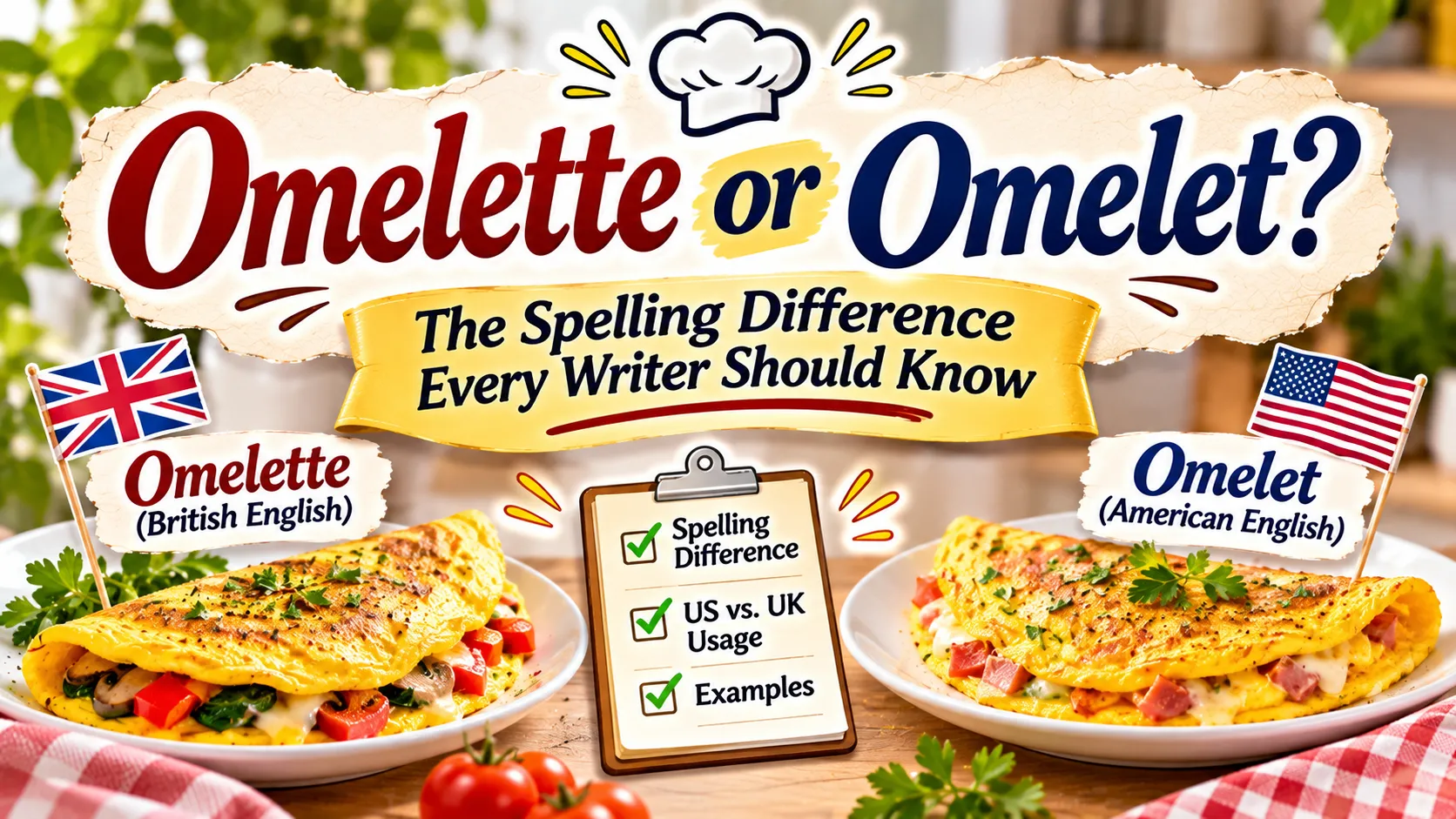
American English generally favors omelet, while British English commonly uses omelette. Both spellings describe a popular egg dish that cooks prepare by beating eggs, cooking them in a pan, and sometimes adding fillings such as cheese, mushrooms, onions, or vegetables. Understanding this distinction will help you choose the appropriate spelling for your audience and maintain consistency in your writing.
Omelette or Omelet: Which Spelling Is Correct? 🤔
Both omelette and omelet are correct English spellings. However, different English-speaking regions prefer different versions. American dictionaries generally recognize omelet as the standard spelling, while British dictionaries commonly favor omelette.
Here is the basic distinction:
- Omelet: The preferred spelling in American English.
- Omelette: The traditional spelling in British English and the spelling borrowed from French.
For example:
- I ordered a cheese omelet at my favorite American restaurant.
- We enjoyed a traditional vegetable omelette during our trip to London.
Both sentences use correct spelling. Your choice should depend on the English convention you follow rather than the type of dish you describe.
What Does Omelet Mean? 🍳
An omelet is an egg-based dish that people commonly enjoy for breakfast, brunch, or a light meal. Cooks beat eggs, pour the mixture into a heated frying pan, and cook it until the eggs set. They may fold the cooked eggs around a filling or add ingredients before folding.
People prepare omelets in many different ways. Some prefer simple eggs with salt and pepper, while others add cheese, tomatoes, onions, mushrooms, spinach, or meat. The American spelling, omelet, appears frequently in US cookbooks, restaurant menus, and food publications.
Examples of omelet in sentences:
- My mother makes a delicious cheese omelet every Sunday.
- I ordered a vegetable omelet with whole-wheat toast.
- The restaurant serves a three-egg omelet for breakfast.
- She added fresh mushrooms and spinach to her omelet.
- Would you like a plain omelet or one with cheese?
- He learned to prepare a fluffy omelet from his grandmother.
When writing for American readers, use omelet to follow the most familiar regional spelling.
What Does Omelette Mean? 🇬🇧
An omelette refers to exactly the same egg dish as an omelet. British English generally retains the final E, following the traditional French spelling. The word describes beaten eggs that cooks prepare in a frying pan, sometimes with additional ingredients.
British restaurants and food writers commonly use omelette in recipes, breakfast menus, and cooking instructions. Popular varieties include cheese omelettes, mushroom omelettes, spinach omelettes, and classic French omelettes.
Examples of omelette in sentences:
- She prepared a cheese omelette for breakfast.
- The café offers a fresh mushroom omelette.
- My father prefers a simple omelette with herbs.
- We ordered a vegetable omelette at the hotel.
- The chef prepared a delicious French omelette.
- I usually make an omelette when I need a quick meal.
If your article follows British English conventions, omelette is the appropriate spelling.
Why Do Americans Spell It Omelet? 🇺🇸
American English often favors shorter spellings for certain words that entered English through French. Omelet follows this regional preference because American writers generally omit the final E found in the traditional French spelling.
Over time, omelet became the established spelling in American dictionaries and everyday writing. It also appears regularly in American restaurant menus, recipe websites, and breakfast advertisements.
However, American English does not make omelette universally incorrect. Readers in the United States can understand both versions, even though omelet remains the more common local choice.
Other spelling differences demonstrate the same regional pattern:
| American English | British English |
|---|---|
| Omelet | Omelette |
| Color | Colour |
| Favorite | Favourite |
| Center | Centre |
| Theater | Theatre |
| Traveling | Travelling |
| Labeled | Labelled |
| Canceled | Cancelled |
These examples show why writers should consider their audience before selecting a spelling.
Is Omelette or Omelet More Common in British English? 🇬🇧
British English generally uses omelette rather than omelet. The longer spelling follows the traditional French form and appears frequently in British cookbooks, restaurant menus, and everyday writing.
For example, a British restaurant might advertise a cheese and tomato omelette, while an American restaurant might list the same meal as a cheese and tomato omelet.
Both spellings communicate the same information. The difference reflects established regional writing habits rather than a difference in ingredients or cooking methods.
Omelette vs. Omelet: Are They Different Dishes? 🍽️
No. Omelette and omelet do not describe two separate dishes. They are alternative spellings of the same word, and both refer to a meal made primarily from cooked eggs.
A French omelette, American diner-style omelet, and homemade cheese omelet may have different preparation techniques or fillings. However, those culinary differences do not come from the spelling.
For example, a cook might prepare an omelet with cheddar cheese and peppers, while another prepares an omelette with fresh herbs and mushrooms. Both dishes belong to the same general food category.
The spelling simply tells readers which regional English convention the writer follows.
Where Did the Word Omelette Come From? 📚
The English word omelette comes from French. English speakers adopted the term from the French language, where omelette describes the familiar egg dish.
The French spelling influenced British English, which generally retained the final E. American English developed the shorter form omelet and gradually adopted it as the preferred spelling.
Today, both forms remain accepted in English. Their shared history explains why writers sometimes encounter both spellings in international cookbooks, restaurant websites, and food-related articles.
When Should You Use Omelet or Omelette? ✍️
Your target audience should determine which spelling you use. Although both forms are correct, consistent spelling makes your content easier to read and helps maintain a professional writing style.
Use omelet when writing for American readers.
Choose this spelling for US-based blogs, recipe websites, restaurant menus, and cooking guides.
Examples:
- Easy Cheese Omelet Recipe
- How to Make a Fluffy Omelet
- Healthy Vegetable Omelet Ideas
- Best Breakfast Omelet Fillings
Use omelette when writing for British readers.
Choose this spelling for UK publications, British food blogs, and content that follows British English conventions.
Examples:
- Easy Cheese Omelette Recipe
- How to Make a Classic Omelette
- Healthy Vegetable Omelette Ideas
- Traditional Breakfast Omelette Recipes
Maintain consistency throughout your article.
Avoid switching between omelet and omelette without a clear reason. If you begin with American spelling, continue using it throughout the article. Apply the same rule when writing in British English.
Common Spelling Mistakes With Omelette and Omelet ⚠️
Writers sometimes assume that one spelling is correct and the other is wrong. This misunderstanding can create unnecessary confusion, especially when people write for international audiences.
Here are some common mistakes and their corrections.
Mistake: Assuming omelette is always incorrect.
Incorrect assumption: Omelette is a spelling mistake.
Correct understanding: Omelette is the accepted British spelling and also the traditional French spelling.
Mistake: Assuming omelet is incomplete.
Incorrect assumption: Omelet needs another E at the end.
Correct understanding: Omelet is the standard American spelling.
Mistake: Using both spellings randomly.
Inconsistent: I prepared a cheese omelet, but my sister ordered a vegetable omelette.
Consistent: I prepared a cheese omelet, but my sister ordered a vegetable omelet.
Mistake: Believing the words describe different recipes.
Incorrect assumption: An omelette contains different ingredients from an omelet.
Correct understanding: Both spellings describe the same general dish. Individual recipes may vary, but the spelling does not determine the ingredients.
Frequently Asked Questions About Omelette or Omelet ❓
Is omelette or omelet correct?
Both spellings are correct. American English generally prefers omelet, while British English commonly uses omelette. Both words have the same meaning and pronunciation.
Is omelet American or British?
Omelet is the preferred American English spelling. Writers in the United States commonly use this shorter version in recipes, restaurant menus, and everyday communication.
Is omelette British or American?
Omelette is the traditional British English spelling. It also follows the original French spelling of the word.
How do you spell omelet in the USA?
The standard American spelling is omelet, with one T and no final E. For US-focused articles and recipes, this version is generally the best choice.
How do you spell omelette in the UK?
British English commonly uses omelette, with two Ts and a final E. This spelling follows the traditional French form.
Does omelette have two Ts?
Yes. Omelette contains two Ts and ends with an E. The American spelling, omelet, contains one T and does not include the final E.
Do omelet and omelette have the same pronunciation?
Yes. Both spellings generally have the same pronunciation in English. Their difference appears in writing rather than meaning or sound.
Is omelette a French word?
Yes. Omelette comes from French, and English adopted the word from that language. The traditional French spelling also influenced British English.
Which spelling should I use in an American article?
Use omelet when writing for an American audience. This spelling follows standard US English conventions and matches the preference of many American dictionaries and publications.
Conclusion 🍳
The difference between omelette or omelet comes down to regional spelling preferences. American English generally uses omelet, while British English favors omelette. Both words describe the same egg dish, share the same pronunciation, and communicate the same meaning.
If you write for a US audience, choose omelet. If your readers follow British English, use omelette. Keep your spelling consistent, and you will avoid confusion while maintaining clear, professional writing.

Olivia Bennett is a writer and language enthusiast at Vocabsteria. She is passionate about exploring word meanings, name origins, and cultural expressions from around the world.