Laundry symbols and meanings help you wash, dry, iron, and care for your clothes correctly. Those small pictures on clothing tags may look confusing, but each symbol gives you a specific instruction. Some tell you which water temperature to use, while others explain whether a garment can handle bleach, tumble drying, or ironing.
Have you ever washed your favorite shirt only to discover that it shrank or lost its color? The care label could have helped you avoid that problem. Clothing manufacturers use laundry symbols to explain how each garment needs special care. Once you understand these signs, you can protect delicate fabrics, prevent unnecessary damage, and make your clothes last longer.
This guide explains common laundry symbols and their meanings in simple language. You will learn how to recognize washing, bleaching, drying, ironing, and dry-cleaning symbols, along with practical examples and answers to common questions.
What Are Laundry Symbols? 🧺
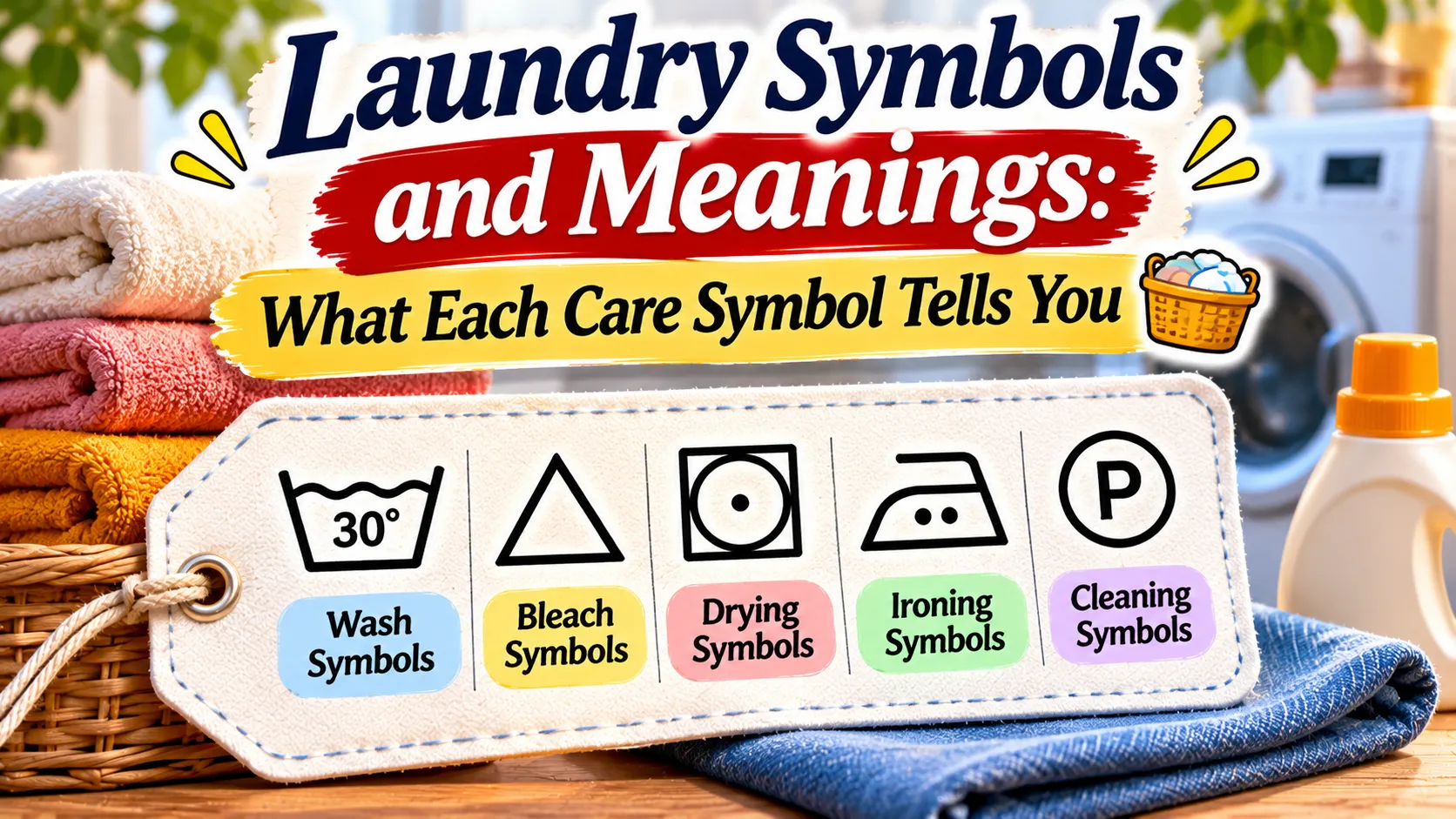
Laundry symbols are small pictures that manufacturers print on clothing care labels. They explain how to clean and maintain a garment without damaging its fabric, color, or shape. These instructions cover five main activities: washing, bleaching, drying, ironing, and professional cleaning.
Many countries follow the international care-symbol system developed under ISO 3758. North American labels may use slightly different designs, but the main categories remain similar. You can usually identify each category by its basic shape.
Five Main Types of Laundry Symbols 🏷️
Before you learn individual laundry symbols, understand their five basic categories. Each shape represents a different clothing-care activity.
| Symbol Shape | Category | What It Explains |
|---|---|---|
| Tub | Washing | Water temperature and washing method |
| Triangle | Bleaching | Whether you can use bleach |
| Square | Drying | Tumble drying and natural drying |
| Iron | Ironing | Safe ironing temperature |
| Circle | Professional cleaning | Dry cleaning and wet cleaning |
Once you recognize these five shapes, you can understand most clothing care labels much more easily.
Washing Symbols and Their Meanings 💧
Washing symbols appear as a tub filled with water. They explain whether you can machine-wash a garment, which temperature you should select, and whether you need a gentle cycle or hand washing.
| Washing Symbol | Meaning | What You Should Do |
|---|---|---|
| Plain tub | Machine wash | Wash in a washing machine. |
| Tub with 30 | Wash at 30°C | Choose a cold or cool wash. |
| Tub with 40 | Wash at 40°C | Select a warm wash. |
| Tub with 60 | Wash at 60°C | Use a hotter wash if your machine supports it. |
| Tub with a hand | Hand wash | Wash gently by hand. |
| Crossed-out tub | Do not wash | Avoid washing with water. |
| Tub with one line underneath | Mild wash | Select a gentle cycle. |
| Tub with two lines underneath | Very mild wash | Use an extra-gentle cycle. |
Machine Wash Symbol
A plain washing tub means you can machine-wash the garment. Check the number or dots inside the tub to choose the correct temperature. You should also look for lines underneath the symbol because they may require a gentler cycle.
Cold Water Wash Symbol
A tub with one dot or the number 30 generally indicates a maximum washing temperature of 30°C (86°F). Cold water works well for many colored clothes, delicate materials, and garments that may shrink in hot water.
Warm Water Wash Symbol
A tub with two dots or the number 40 indicates a maximum temperature of 40°C (104°F). This setting suits many everyday garments, including some cotton and synthetic fabrics.
Hot Water Wash Symbol
A tub with three dots or a higher temperature marking indicates a hotter wash. For example, 60°C (140°F) is suitable for certain durable fabrics when their care labels permit it. Avoid high temperatures on delicate garments because hot water can cause shrinking and damage.
Hand Wash Symbol
A hand inside a washing tub means you should wash the garment by hand. This instruction commonly appears on delicate items such as wool sweaters and certain silk garments.
Use a suitable detergent and gently move the garment through cool or lukewarm water. Avoid twisting, stretching, or rubbing the material aggressively.
Do Not Wash Symbol
A crossed-out washing tub means you should not wash the garment with a normal water-based washing process. The manufacturer may recommend professional cleaning instead.
Gentle Wash Symbol
A washing tub with one horizontal line underneath indicates a mild washing process. Two horizontal lines indicate a very mild process. These instructions help protect delicate materials from excessive movement and spinning.
Bleaching Symbols and Their Meanings 🧴
Bleaching symbols use a triangle shape. They explain whether you can use bleach and which type of bleaching product suits the fabric.
| Bleaching Symbol | Meaning | Instruction |
|---|---|---|
| Empty triangle | Bleaching allowed | You may use suitable bleach. |
| Triangle with two diagonal lines | Non-chlorine bleach only | Use oxygen-based or non-chlorine bleach. |
| Crossed-out triangle | Do not bleach | Avoid all bleaching products. |
Bleach Allowed Symbol
An empty triangle means the garment can tolerate bleaching under suitable conditions. However, always check the product instructions and fabric type before adding bleach to your laundry.
Non-Chlorine Bleach Symbol
A triangle with two diagonal lines allows non-chlorine bleach only. This instruction helps protect fabrics that may react badly to chlorine-based products.
Do Not Bleach Symbol
A crossed-out triangle means you should avoid bleach completely. Both chlorine and oxygen-based bleaching products may damage the garment or change its color.
Drying Symbols and Their Meanings 🌬️
Drying symbols appear as squares. A square containing a circle represents tumble drying, while other square designs explain natural drying methods.
| Drying Symbol | Meaning | What You Should Do |
|---|---|---|
| Square with a circle | Tumble dry | Use a dryer. |
| Square with a circle and one dot | Low heat | Choose a low-heat setting. |
| Square with a circle and two dots | Medium heat | Choose a medium-heat setting. |
| Square with a circle and three dots | High heat | Use high heat only when the fabric allows it. |
| Crossed-out square with a circle | Do not tumble dry | Air-dry the garment. |
| Square with a horizontal line | Dry flat | Place the garment on a flat surface. |
| Square with vertical lines | Drip dry | Hang it and allow water to drain. |
| Square with diagonal corner lines | Dry in the shade | Keep it away from direct sunlight. |
Tumble Dry Symbol
A square containing a circle means you can use a tumble dryer. Dots inside the circle indicate the recommended heat level.
One dot represents low heat, two dots represent medium heat, and three dots represent high heat. Always check the fabric type before selecting a dryer setting.
Low Heat Drying Symbol
One dot inside the tumble-drying symbol indicates low heat. This setting helps protect delicate fabrics and materials that may shrink under high temperatures.
Medium Heat Drying Symbol
Two dots indicate medium heat. Many everyday garments can tolerate this setting, but the manufacturer’s instructions should guide your choice.
High Heat Drying Symbol
Three dots indicate high heat. This setting generally suits sturdy fabrics that can handle higher temperatures. Avoid it for delicate materials, elastic fabrics, and garments that may shrink.
Do Not Tumble Dry Symbol
A crossed-out square containing a circle means you should not use a tumble dryer. Hang the garment or follow the label’s natural drying instructions instead.
Line Dry Symbol
A square with vertical lines indicates drip drying or a related hanging method, depending on the additional markings. Hang the garment and allow excess water to drain naturally.
Dry Flat Symbol
A square with a horizontal line means you should dry the garment flat. This method helps certain fabrics maintain their original shape and prevents stretching.
Dry in the Shade Symbol
A square with diagonal lines in the upper corner indicates shade drying. Keep the garment away from direct sunlight to reduce the risk of fading.
Ironing Symbols and Their Meanings ♨️
Ironing symbols look like small irons. Dots inside the iron show the maximum recommended temperature. These instructions help you avoid scorching, melting, or damaging clothing fibers.
| Ironing Symbol | Meaning | Maximum Temperature |
|---|---|---|
| One dot | Low heat | 110°C (230°F) |
| Two dots | Medium heat | 150°C (302°F) |
| Three dots | High heat | 200°C (392°F) |
| Crossed-out iron | Do not iron | Avoid ironing |
Low Heat Ironing Symbol
One dot inside an iron indicates a low-temperature setting. This setting commonly suits synthetic materials and certain delicate fabrics. Use a pressing cloth when the garment needs extra protection.
Medium Heat Ironing Symbol
Two dots indicate medium heat. This setting works for many fabrics, including some polyester blends and wool garments. Always check the care label before ironing.
High Heat Ironing Symbol
Three dots indicate high heat. Cotton and linen often tolerate higher temperatures, but you should still follow the manufacturer’s instructions.
Do Not Iron Symbol
A crossed-out iron means you should not apply heat with an iron. High temperatures may damage synthetic fibers, decorative details, or protective coatings.
Dry Cleaning Symbols and Their Meanings 🧼
Dry-cleaning symbols use circles. They provide instructions for professional cleaners and identify suitable cleaning methods.
| Dry Cleaning Symbol | Meaning |
|---|---|
| Empty circle | Professional dry cleaning |
| Circle with P | Professional cleaning with specified solvents |
| Circle with F | Professional cleaning with certain petroleum-based solvents |
| Circle with W | Professional wet cleaning |
| Crossed-out circle | Do not dry clean |
Dry Clean Symbol
An empty circle indicates that the garment may need professional dry cleaning. A professional cleaner can examine the fabric and choose an appropriate cleaning process.
Dry Clean with P Symbol
The letter P inside a circle identifies a professional dry-cleaning process that uses specified solvents. The cleaner should follow the relevant fabric-care requirements.
Dry Clean with F Symbol
The letter F inside a circle indicates professional cleaning with certain petroleum-based solvents. This instruction helps cleaners select an appropriate process.
Professional Wet Cleaning Symbol
A W inside a circle represents professional wet cleaning. This method uses water and specialized equipment under controlled conditions.
Do Not Dry Clean Symbol
A crossed-out circle means you should not dry-clean the garment. Follow the remaining care instructions to find a suitable cleaning method.
Laundry Symbols with Numbers and Dots 🔍
Numbers and dots provide extra details about washing and heat settings. They help you choose the correct temperature and protect fabrics from excessive heat.
Numbers inside a washing tub usually show the maximum water temperature in degrees Celsius. For example, 30 means the water should not exceed 30°C, while 40 means the maximum temperature is 40°C.
Dots indicate heat levels in drying and ironing symbols. However, the same number of dots does not represent the same temperature in every category.
| Marking | General Meaning |
|---|---|
| One dot | Low heat |
| Two dots | Medium heat |
| Three dots | High heat |
| One line under tub | Mild washing |
| Two lines under tub | Very mild washing |
| Cross over a symbol | Do not perform that process |
Always examine the symbol’s basic shape before interpreting its dots or lines.
Laundry Symbols That People Often Confuse 🤔
Some clothing care symbols look almost identical. A small line, dot, or cross can completely change their meaning, so examine the details carefully.
| Symbols | Main Difference |
|---|---|
| Tub with one line and tub with two lines | Mild wash versus very mild wash |
| Empty triangle and crossed triangle | Bleaching allowed versus no bleaching |
| Square with a circle and crossed square with a circle | Tumble dry versus no tumble drying |
| Square with a horizontal line and square with vertical lines | Dry flat versus drip dry |
| Empty circle and crossed circle | Professional dry cleaning versus no dry cleaning |
| Iron with one dot and iron with three dots | Low heat versus high heat |
For example, a plain triangle allows suitable bleaching products, but a crossed triangle prohibits bleaching. Similarly, a square with a circle allows tumble drying, while a cross over that symbol means you should avoid the dryer.
How to Read a Laundry Care Label Correctly 🏷️
A clothing care label usually presents instructions in a standard order. Most labels begin with washing instructions and continue with bleaching, drying, ironing, and professional cleaning.
Follow these five steps when you check a clothing label:
- Check the washing symbol: Find the washing tub and identify the recommended temperature.
- Read the bleaching instructions: Examine the triangle to see whether bleach is safe.
- Check the drying symbol: Look at the square before using a tumble dryer or choosing an air-drying method.
- Review the ironing instructions: Count the dots inside the iron to select the correct heat setting.
- Check the professional cleaning symbol: Look for a circle and any letters inside it.
For example, a shirt may allow machine washing at 30°C, prohibit bleaching, permit low-temperature tumble drying, and allow low-temperature ironing. Follow every instruction instead of focusing only on the washing symbol.
Common Laundry Mistakes to Avoid ⚠️
Even when you understand laundry symbols, small mistakes can damage your clothes. Pay attention to these common problems whenever you wash or dry your garments.
- Ignoring temperature limits: Hot water can shrink some fabrics and damage their fibers.
- Using bleach on colored clothing: Bleach may remove color or create permanent marks.
- Overusing the dryer: Excessive heat can shrink garments and weaken elastic materials.
- Ironing delicate fabrics at high temperatures: High heat may melt synthetic fibers or leave shiny marks.
- Ignoring hand-wash instructions: A normal machine cycle can stretch or damage delicate garments.
- Confusing drip drying with flat drying: Hanging a garment that needs flat drying may change its shape.
- Removing care labels: Without the label, you may lose important cleaning instructions.
- Mixing incompatible fabrics: Different materials often require different washing and drying settings.
Read the care label before washing a new garment. This simple habit can help you avoid unnecessary damage and extend the life of your clothes.
Frequently Asked Questions About Laundry Symbols ❓
What are the five main laundry symbols?
The five main laundry symbol categories include washing, bleaching, drying, ironing, and professional cleaning. Each category uses a different basic shape to communicate clothing-care instructions.
What does a washing tub with 30 mean?
A washing tub with the number 30 means you should wash the garment at a maximum temperature of 30°C (86°F). This setting suits many delicate and colored garments.
What does a triangle mean on a laundry label?
A triangle represents bleaching instructions. An empty triangle allows suitable bleaching, a triangle with diagonal lines permits non-chlorine bleach only, and a crossed-out triangle means you should not bleach the garment.
What does a square with a circle mean?
A square with a circle represents tumble drying. Dots inside the circle indicate the recommended heat level, while a cross means you should avoid tumble drying.
What does a crossed-out washing symbol mean?
A crossed-out washing tub means you should not wash the garment using a normal water-based washing process. Check the other symbols to determine whether professional cleaning offers a suitable option.
What does a hand in a washing tub mean?
A hand inside a washing tub means you should wash the garment by hand. Use gentle movements and avoid twisting or aggressively rubbing the fabric.
What does one dot inside an iron mean?
One dot inside an iron indicates a low-temperature setting, generally up to 110°C (230°F). This setting helps protect delicate and heat-sensitive fabrics.
What does a circle mean on clothing labels?
A circle represents professional cleaning instructions. Letters inside the circle provide additional information about the cleaning process and suitable solvents.
What does a square with a horizontal line mean?
A square with a horizontal line means you should dry the garment flat. This method helps certain fabrics maintain their original shape.
What does a crossed-out iron symbol mean?
A crossed-out iron means you should not iron the garment. High temperatures may damage the material, decorations, or protective coating.
What does a square with vertical lines mean?
A square with vertical lines indicates drip drying. Hang the garment and let excess water drain naturally rather than using a tumble dryer.
Conclusion 🧺
Understanding laundry symbols and meanings makes clothing care easier and helps you avoid common washing mistakes. Washing tubs explain water temperature and washing methods, triangles provide bleaching instructions, squares describe drying methods, irons indicate heat settings, and circles explain professional cleaning requirements.
Before washing a new garment, take a moment to read its care label. Choose the correct temperature, use suitable cleaning products, and follow the drying and ironing instructions. These simple habits can protect your clothes, prevent unnecessary damage, and help your favorite garments last longer.

Olivia Bennett is a writer and language enthusiast at Vocabsteria. She is passionate about exploring word meanings, name origins, and cultural expressions from around the world.