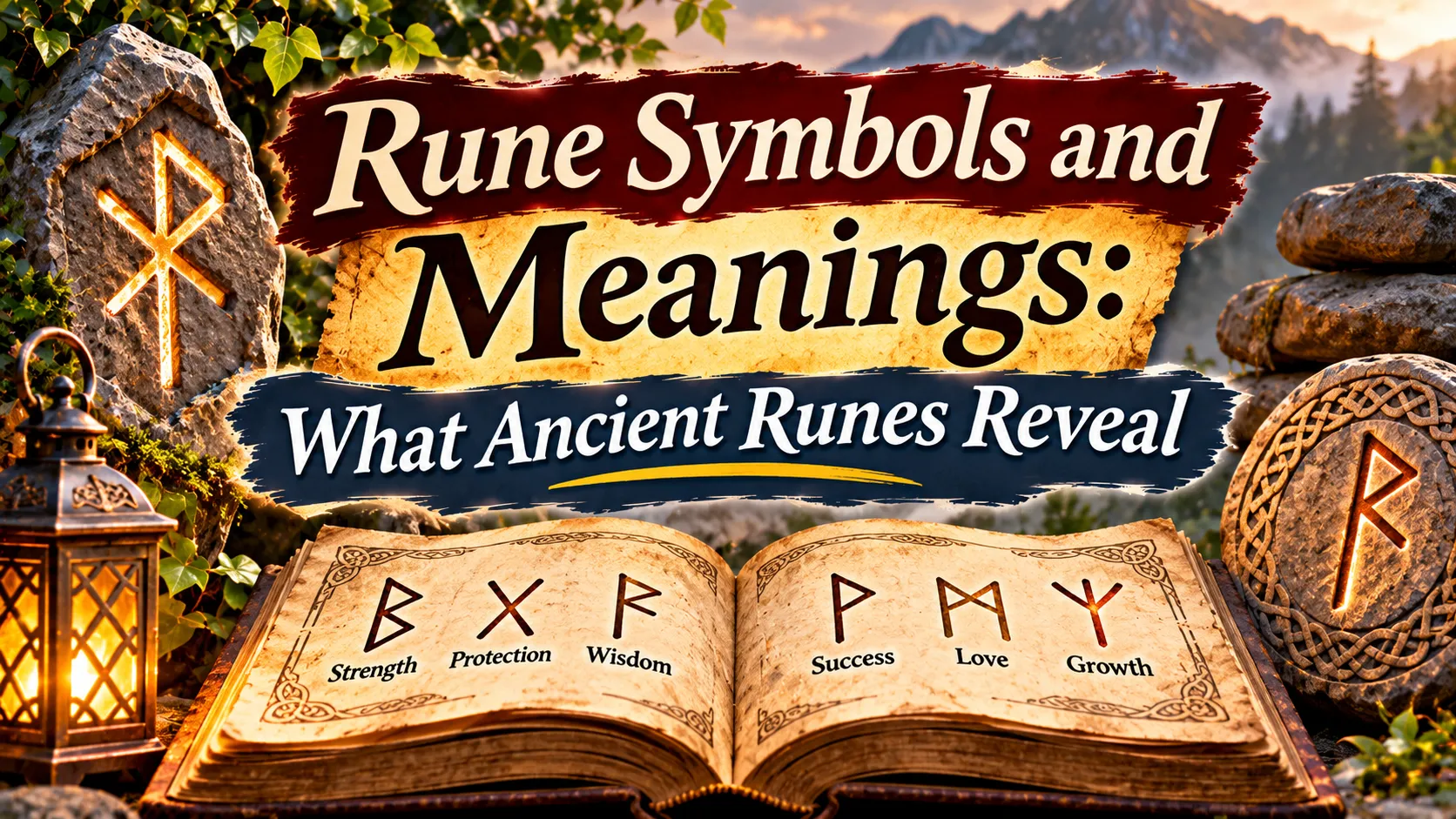
Ancient civilizations used symbols to record their stories, express beliefs, and communicate important ideas. Among these fascinating writing systems, runes hold a special place in European history. Their distinctive shapes appeared on stones, weapons, jewelry, tools, and everyday objects across northern Europe. Today, people explore rune symbols to understand ancient languages, Norse mythology, spiritual traditions, and symbolic interpretations.
The Elder Futhark contains 24 unique characters, and each rune represents a particular sound. Its reconstructed names also carry meanings connected to familiar concepts such as wealth, strength, journeys, gifts, nature, and family heritage. These associations make runes interesting to historians, language enthusiasts, artists, and people who enjoy ancient symbolism.
However, historical rune meanings and modern spiritual interpretations do not always match. Some meanings come from reconstructed ancient words, while others developed through contemporary spiritual practices. Understanding this difference helps you explore the subject without confusing historical evidence with modern beliefs.
This guide explains all 24 Elder Futhark runes, their traditional names, common symbolic associations, and connections with protection, love, prosperity, courage, and personal growth.
What Are Rune Symbols? ᚱ
Runes are characters from ancient Germanic writing systems. Germanic-speaking communities used them across northern Europe, particularly in regions that now include Scandinavia, Germany, and parts of the British Isles. Archaeologists have discovered runic inscriptions on stones, weapons, wooden objects, jewelry, and personal belongings.
The earliest known runic inscriptions date to approximately the second century CE. Their angular shapes made them practical for carving into materials such as wood, bone, stone, and metal.
The word Futhark comes from the first six characters of the Elder Futhark alphabet: Fehu, Uruz, Thurisaz, Ansuz, Raidho, and Kenaz. Together, their initial sounds create the name of this ancient writing system.
Although people often connect runes with magic and divination, their primary historical purpose involved writing. Individual characters represented sounds, while their names carried meanings from early Germanic languages.
Three Major Types of Runic Alphabets 📜
Runic writing changed over time as different communities adapted its characters to their languages. Historians generally recognize three major runic systems.
Elder Futhark: This alphabet contains 24 characters and represents the oldest widely recognized runic system. Germanic-speaking communities used it from approximately the second to eighth centuries CE.
Younger Futhark: Scandinavian communities developed this 16-character system during the Viking Age. It includes long-branch and short-twig forms. Because it contains fewer characters, some runes represent multiple sounds.
Anglo-Saxon Futhorc: This alphabet developed among Anglo-Saxon and related communities. It expanded the original runic system with additional characters to represent sounds in their languages.
The Elder Futhark provides a useful starting point for understanding rune symbolism because many modern rune guides organize their explanations around its 24 characters.
All 24 Elder Futhark Rune Symbols and Meanings ⭐
The Elder Futhark contains 24 runes, and each character represents a sound and carries a reconstructed historical name. These names provide clues about the language and culture of early Germanic communities.
Modern spiritual traditions also connect individual runes with ideas such as prosperity, protection, courage, wisdom, and transformation. The following table separates traditional name meanings from common modern interpretations.
| Rune | Name | Traditional Meaning | Common Modern Symbolism |
|---|---|---|---|
| ᚠ | Fehu | Cattle or wealth | Prosperity and resources |
| ᚢ | Uruz | Aurochs | Strength and vitality |
| ᚦ | Thurisaz | Giant or powerful being | Defense and challenges |
| ᚨ | Ansuz | God or deity | Wisdom and communication |
| ᚱ | Raidho | Ride or journey | Progress and direction |
| ᚲ | Kenaz | Uncertain; often linked with a sore | Creativity and knowledge |
| ᚷ | Gebo | Gift | Generosity and partnership |
| ᚹ | Wunjo | Joy or bliss | Happiness and harmony |
| ᚺ | Hagalaz | Hail | Change and disruption |
| ᚾ | Nauthiz | Need or distress | Patience and resilience |
| ᛁ | Isa | Ice | Stillness and focus |
| ᛃ | Jera | Year or harvest cycle | Growth and rewards |
| ᛇ | Eihwaz | Yew | Endurance and continuity |
| ᛈ | Perthro | Uncertain | Mystery and possibilities |
| ᛉ | Algiz | Uncertain; often linked with elk | Protection and awareness |
| ᛊ | Sowilo | Sun | Energy and success |
| ᛏ | Tiwaz | God Tiwaz or Týr | Courage and justice |
| ᛒ | Berkano | Birch | Growth and renewal |
| ᛖ | Ehwaz | Horse | Trust and cooperation |
| ᛗ | Mannaz | Human being | Identity and community |
| ᛚ | Laguz | Water | Emotions and intuition |
| ᛜ | Ingwaz | Ing or Ingwaz, a divine name | Potential and development |
| ᛞ | Dagaz | Day | Clarity and new beginnings |
| ᛟ | Othala | Inherited property or estate | Heritage and belonging |
These modern associations offer symbolic interpretations rather than fixed definitions from ancient runic inscriptions.
Fehu (ᚠ): Wealth, Resources, and Prosperity 💰
Fehu begins the Elder Futhark sequence. Its reconstructed name refers to cattle, which represented valuable property in early Germanic societies. Livestock supplied food, materials, and economic resources, so cattle played an important role in everyday life.
Modern rune traditions connect Fehu with financial growth, abundance, ambition, and responsible resource management.
Traditional meaning: Cattle or wealth.
Common symbolic associations:
- Financial prosperity
- Valuable resources
- Material success
- Personal achievement
- Ambition and opportunity
People often choose Fehu for artwork that represents financial goals, business ambitions, and the desire to create a stable future.
Uruz (ᚢ): Strength, Courage, and Vitality 💪
Uruz takes its name from the aurochs, a powerful wild ancestor of modern cattle. This large animal represented impressive physical strength in ancient European environments.
Its historical association provides a natural connection with endurance and physical power. Modern interpretations also connect Uruz with determination, confidence, and personal resilience.
Traditional meaning: Aurochs.
Common symbolic associations:
- Physical strength
- Courage
- Energy and vitality
- Endurance
- Personal transformation
Uruz often represents the determination to face challenges and develop greater inner strength.
Thurisaz (ᚦ): Defense, Boundaries, and Powerful Forces 🛡️
Thurisaz connects with the Old Norse concept of a thurs, which refers to a giant or powerful supernatural being. Its historical name reflects an important part of early Germanic mythology.
Modern interpretations often emphasize protection, confrontation, caution, and the need to recognize difficult situations before taking action.
Traditional meaning: Giant or powerful being.
Common symbolic associations:
- Defense and protection
- Personal boundaries
- Difficult challenges
- Caution
- Awareness
Thurisaz often appears in modern designs that represent strength, protection, and the ability to face adversity.
Ansuz (ᚨ): Wisdom, Knowledge, and Communication 🗣️
Ansuz has a historical connection with a god or deity. Its name belongs to an important linguistic tradition that also connects with the Old Norse word for divine beings.
Modern rune interpretations associate Ansuz with communication, learning, inspiration, and meaningful conversations.
Traditional meaning: God or deity.
Common symbolic associations:
- Wisdom
- Communication
- Learning
- Inspiration
- Guidance
Writers, teachers, students, and people who value knowledge often appreciate Ansuz as a symbolic representation of understanding and communication.
Raidho (ᚱ): Travel, Movement, and Life Direction 🛤️
Raidho refers to riding or a journey. Its name reflects the importance of transportation and movement in early Germanic societies.
Modern interpretations extend this idea beyond physical travel. They connect Raidho with personal progress, important decisions, life direction, and the process of moving toward a goal.
Traditional meaning: Ride or journey.
Common symbolic associations:
- Travel and exploration
- Personal progress
- Life direction
- Movement
- Order and balance
Raidho works well in modern artwork about new adventures, personal development, and meaningful life changes.
Kenaz (ᚲ): Creativity, Discovery, and Knowledge 🔥
Kenaz has one of the more debated historical name interpretations in the Elder Futhark. Scholars often connect its reconstructed name with a sore or ulcer, so the popular modern translation of torch does not represent an established literal meaning.
Contemporary rune traditions often associate Kenaz with illumination, learning, artistic ability, and creative discovery.
Traditional name association: Uncertain; often linked with a sore or ulcer.
Common symbolic associations:
- Creativity
- Knowledge
- Inspiration
- Discovery
- Learning
Artists, writers, and creative thinkers often use Kenaz in modern designs that celebrate imagination and personal expression.
Gebo (ᚷ): Gifts, Generosity, and Partnership 🎁
Gebo means gift. Its traditional meaning connects naturally with generosity, exchange, appreciation, and relationships.
Modern interpretations often emphasize the balance between giving and receiving. A meaningful relationship requires cooperation, respect, and mutual understanding rather than one-sided effort.
Traditional meaning: Gift.
Common symbolic associations:
- Generosity
- Friendship
- Partnership
- Gratitude
- Mutual exchange
Gebo makes a meaningful design choice for people celebrating friendship, cooperation, and important relationships.
Wunjo (ᚹ): Joy, Happiness, and Harmony 😊
Wunjo means joy or bliss. Its historical name describes a positive emotional state and provides a foundation for modern interpretations involving happiness, belonging, and fulfillment.
People often connect this rune with the satisfaction that comes from meaningful relationships, personal achievements, and a peaceful environment.
Traditional meaning: Joy or bliss.
Common symbolic associations:
- Happiness
- Harmony
- Friendship
- Emotional satisfaction
- Fulfillment
Wunjo frequently appears in modern artwork that celebrates positive experiences and joyful relationships.
Hagalaz (ᚺ): Change, Disruption, and Transformation 🌨️
Hagalaz means hail, a natural force that can damage crops and interrupt ordinary activities. Its name reflects the unpredictable power of nature.
Modern interpretations connect Hagalaz with sudden changes, difficult experiences, disruption, and transformation. It can represent moments when unexpected circumstances force someone to reconsider their plans.
Traditional meaning: Hail.
Common symbolic associations:
- Sudden change
- Challenges
- Disruption
- Transformation
- Unpredictability
Hagalaz offers a symbolic reminder that life does not always follow a predictable path.
Nauthiz (ᚾ): Need, Patience, and Resilience ⏳
Nauthiz means need or distress. Its historical association reflects situations in which people face limitations, shortages, or difficult circumstances.
Modern interpretations focus on patience, self-discipline, survival, and the ability to continue despite obstacles.
Traditional meaning: Need or distress.
Common symbolic associations:
- Patience
- Resilience
- Self-discipline
- Necessity
- Overcoming limitations
Nauthiz often represents the strength required to remain determined when life becomes difficult.
Isa (ᛁ): Ice, Stillness, and Focus ❄️
Isa means ice. Its simple vertical shape gives it a distinctive appearance, while its historical name creates a natural connection with stillness and frozen movement.
Modern interpretations often associate Isa with patience, self-control, concentration, and reflection. It can represent a period when someone needs to pause before making an important decision.
Traditional meaning: Ice.
Common symbolic associations:
- Stillness
- Focus
- Patience
- Self-control
- Reflection
Isa works well in symbolic artwork that represents calmness and thoughtful decision-making.
Jera (ᛃ): Harvest, Growth, and Natural Cycles 🌾
Jera means year or annual cycle. Its historical name connects with the passing seasons and the agricultural rhythm of planting and harvesting.
Modern interpretations emphasize gradual progress, patience, achievement, and rewards that follow consistent effort.
Traditional meaning: Year or harvest cycle.
Common symbolic associations:
- Growth
- Harvest
- Achievement
- Natural cycles
- Rewards for effort
Jera represents the idea that meaningful results often require time, commitment, and patience.
Eihwaz (ᛇ): Endurance, Protection, and Continuity 🌲
Eihwaz connects with the yew tree, which has a long history in European landscapes and cultural traditions.
Modern rune symbolism often associates the character with endurance, resilience, protection, and continuity. Its connection with a long-lived tree makes it an appealing symbol for strength through difficult periods.
Traditional meaning: Yew.
Common symbolic associations:
- Endurance
- Resilience
- Protection
- Continuity
- Transformation
Eihwaz often represents the ability to remain strong while navigating major changes.
Perthro (ᛈ): Mystery, Chance, and Possibility 🔮
Perthro has one of the least certain reconstructed names in the Elder Futhark. Scholars continue to debate its historical meaning, so no single translation can explain it with complete confidence.
Modern spiritual traditions often connect Perthro with mystery, chance, hidden possibilities, and unexpected discoveries.
Traditional name meaning: Uncertain.
Common symbolic associations:
- Mystery
- Chance
- Hidden possibilities
- Discovery
- Uncertainty
Perthro often represents life’s unpredictable nature and the possibilities that emerge from unfamiliar situations.
Algiz (ᛉ): Protection, Awareness, and Defense 🦌
Algiz has an uncertain reconstructed name. Many modern references connect it with elk-related imagery, although scholars debate its exact historical meaning.
Contemporary rune interpretations often emphasize protection, awareness, safety, and personal boundaries.
Traditional name meaning: Uncertain; often associated with elk.
Common symbolic associations:
- Protection
- Awareness
- Safety
- Defense
- Spiritual guidance
Algiz remains popular in modern jewelry and artwork that represents security and personal strength.
Sowilo (ᛊ): Sun, Energy, and Success ☀️
Sowilo means sun. Its historical name connects it with daylight, warmth, and the natural energy that supports life.
Modern interpretations often associate Sowilo with confidence, success, clarity, achievement, and positive energy.
Traditional meaning: Sun.
Common symbolic associations:
- Success
- Energy
- Confidence
- Clarity
- Achievement
Sowilo makes a popular design choice for people who want to represent optimism, motivation, and personal ambition.
Tiwaz (ᛏ): Courage, Justice, and Honor ⚔️
Tiwaz connects with the Germanic god Tiwaz and the later Norse god Týr. Norse mythology presents Týr as a figure associated with courage and sacrifice, particularly through the story of the wolf Fenrir.
Modern interpretations emphasize fairness, responsibility, determination, and moral strength.
Traditional meaning: The god Tiwaz or Týr.
Common symbolic associations:
- Courage
- Justice
- Honor
- Leadership
- Commitment
Tiwaz often represents standing up for one’s principles and accepting responsibility for important decisions.
Berkano (ᛒ): Growth, Renewal, and New Beginnings 🌿
Berkano means birch. The birch tree provides a natural connection with growth, renewal, and the changing seasons.
Modern interpretations often connect Berkano with nurturing, family, development, fertility, and fresh opportunities.
Traditional meaning: Birch.
Common symbolic associations:
- Growth
- Renewal
- Nurturing
- New beginnings
- Fertility
Berkano works well in artwork that celebrates family, personal development, and positive changes.
Ehwaz (ᛖ): Trust, Partnership, and Cooperation 🐎
Ehwaz means horse. Horses played important roles in transportation, agriculture, and everyday life across early European societies.
Modern rune interpretations connect Ehwaz with trust, loyalty, teamwork, movement, and cooperation. The relationship between a horse and rider offers a useful image of mutual understanding.
Traditional meaning: Horse.
Common symbolic associations:
- Trust
- Partnership
- Cooperation
- Progress
- Loyalty
Ehwaz often represents relationships that grow through communication, teamwork, and shared responsibility.
Mannaz (ᛗ): Humanity, Identity, and Community 👥
Mannaz means human being or person. Its name connects the rune with individual identity, human relationships, and the role people play within their communities.
Modern interpretations emphasize self-awareness, cooperation, social connections, and personal development.
Traditional meaning: Human being.
Common symbolic associations:
- Humanity
- Identity
- Community
- Self-awareness
- Cooperation
Mannaz makes a meaningful symbol for artwork about human connection and understanding oneself.
Laguz (ᛚ): Water, Emotions, and Intuition 🌊
Laguz means water. Water supports life and constantly changes its form, creating natural associations with movement, depth, and adaptability.
Modern rune interpretations often connect Laguz with emotions, intuition, creativity, and the ability to respond to changing circumstances.
Traditional meaning: Water.
Common symbolic associations:
- Intuition
- Emotions
- Adaptability
- Flow
- Inner awareness
Laguz often appears in modern designs that represent emotional understanding and personal reflection.
Ingwaz (ᛜ): Potential, Fertility, and Development 🌱
Ingwaz connects with Ing or Ingwaz, a divine name from early Germanic tradition. Scholars continue to examine its historical and mythological associations.
Modern interpretations often emphasize fertility, potential, development, and the preparation that comes before new growth.
Traditional association: Ing or Ingwaz, a divine name.
Common symbolic associations:
- Potential
- Fertility
- Development
- Inner growth
- New opportunities
Ingwaz often represents ideas and goals that develop gradually before producing visible results.
Dagaz (ᛞ): Daylight, Clarity, and New Beginnings 🌅
Dagaz means day. Its name connects with daylight and the transition from darkness to light.
Modern interpretations associate Dagaz with awakening, clarity, positive transformation, and the beginning of a new chapter.
Traditional meaning: Day.
Common symbolic associations:
- New beginnings
- Clarity
- Awakening
- Transformation
- Hope
Dagaz makes a meaningful choice for artwork celebrating personal milestones and major life changes.
Othala (ᛟ): Heritage, Family, and Belonging 🏡
Othala refers to inherited property or an estate. Its traditional meaning connects with possessions and land that families pass from one generation to another.
Modern interpretations extend this idea to ancestry, family history, cultural heritage, home, and belonging.
Traditional meaning: Inherited property or estate.
Common symbolic associations:
- Family heritage
- Ancestry
- Home
- Belonging
- Inheritance
Othala often appears in artwork that celebrates family roots and cultural history. However, some extremist movements have appropriated this rune, so people should research its modern associations before using it publicly.
Rune Symbols Associated With Protection and Strength 🛡️
Modern rune traditions connect several Elder Futhark characters with defense, courage, resilience, and personal power. These associations can help you choose symbols for artwork or personal designs.
| Rune | Name | Common Modern Association |
|---|---|---|
| ᚢ | Uruz | Strength and endurance |
| ᚦ | Thurisaz | Defense and boundaries |
| ᛉ | Algiz | Protection and awareness |
| ᛇ | Eihwaz | Resilience and continuity |
| ᛏ | Tiwaz | Courage and honor |
| ᚺ | Hagalaz | Facing difficult changes |
| ᚾ | Nauthiz | Patience and survival |
These associations reflect contemporary symbolic interpretations. They do not prove that the ancient communities who used these characters treated them as magical protective objects.
Rune Symbols Associated With Love and Relationships ❤️
Some runes have become popular in modern artwork about affection, friendship, cooperation, and emotional connection.
| Rune | Name | Common Modern Association |
|---|---|---|
| ᚷ | Gebo | Generosity and partnership |
| ᚹ | Wunjo | Happiness and harmony |
| ᛗ | Mannaz | Human connection |
| ᛖ | Ehwaz | Trust and cooperation |
| ᛒ | Berkano | Nurturing and family |
| ᛟ | Othala | Heritage and belonging |
| ᚨ | Ansuz | Communication and understanding |
For example, Gebo can represent mutual appreciation, while Ehwaz can symbolize trust and cooperation. These interpretations come mainly from modern symbolic practices rather than a fixed ancient system of romantic meanings.
Rune Symbols Associated With Wealth and Success 💎
Several runes have become popular choices for designs that celebrate prosperity, achievement, opportunity, and personal ambition.
Fehu has the clearest historical connection with wealth because its reconstructed name refers to cattle. Sowilo connects with the sun, while Jera refers to the annual cycle and harvest.
| Rune | Name | Common Modern Association |
|---|---|---|
| ᚠ | Fehu | Wealth and resources |
| ᛊ | Sowilo | Success and energy |
| ᛃ | Jera | Harvest and rewards |
| ᚹ | Wunjo | Happiness and fulfillment |
| ᛜ | Ingwaz | Potential and development |
| ᛞ | Dagaz | Progress and new beginnings |
| ᚱ | Raidho | Direction and movement |
People often select these characters for designs that represent business goals, financial ambitions, and personal achievements.
Did Ancient People Use Runes for Magic and Divination? 🔮
Runes served primarily as a writing system, but historical sources also connect them with cultural beliefs and possible ritual practices. Archaeologists have discovered inscriptions on everyday objects, memorial stones, weapons, and items that may have served ceremonial purposes.
Medieval Norse literature also describes magical uses of runes. However, these later written accounts do not establish every detail of how earlier Germanic communities understood or practiced runic magic.
Modern rune divination follows its own traditions. Practitioners may select rune stones, wooden pieces, or cards and interpret their symbols in relation to personal questions, relationships, and decisions.
Researchers have not established that ancient Germanic communities followed one standardized fortune-telling system based on all 24 Elder Futhark runes. Therefore, modern divination meanings should remain separate from historical linguistic evidence.
How to Choose a Rune for Tattoos and Jewelry ✨
Rune symbols have distinctive shapes that make them popular in tattoos, pendants, bracelets, rings, and decorative designs. However, their historical and modern meanings deserve careful attention before you choose a permanent symbol.
Consider these points when selecting a rune:
- Research its name: Understand the original linguistic meaning instead of relying entirely on modern spiritual descriptions.
- Identify the alphabet: Check whether the character belongs to Elder Futhark, Younger Futhark, or Anglo-Saxon Futhorc.
- Verify the spelling: Combining several runes does not automatically produce an accurate historical word. Ancient spelling depended on the language and period.
- Check modern associations: Some runes have acquired political or extremist associations through misuse.
- Choose a personal meaning: Consider whether you want to express courage, heritage, creativity, growth, or another important idea.
A meaningful design should reflect both your personal intention and an accurate understanding of its historical background.
Frequently Asked Questions About Rune Symbols and Meanings ❓
How many symbols does the Elder Futhark contain?
The Elder Futhark contains 24 characters. Germanic-speaking communities used this alphabet during the early centuries CE, and it remains one of the best-known historical runic systems.
Which rune represents strength?
Uruz is commonly associated with strength because its traditional name refers to the powerful aurochs. Modern rune traditions also connect it with endurance, vitality, and courage.
Which rune represents protection?
Algiz frequently represents protection and awareness in modern rune interpretations. Thurisaz and Eihwaz also carry contemporary associations with defense and resilience.
Which rune represents wealth?
Fehu has the clearest historical connection with wealth. Its reconstructed name refers to cattle, which served as valuable property in early Germanic societies.
Which rune represents love?
No Elder Futhark rune has one universally established historical meaning of romantic love. Modern interpretations often connect Gebo with partnership and Wunjo with happiness and harmony.
Are Viking runes and Elder Futhark the same?
No. The Elder Futhark contains 24 characters and predates the Viking Age. Scandinavians primarily used the Younger Futhark during the Viking Age, and that system contains 16 characters.
Did Vikings use runes as a secret language?
No. Runes primarily represented sounds in written language. Some people used specialized or coded runic forms, but runes did not function as a separate secret language.
Are modern rune meanings historically accurate?
Some rune names have strong linguistic foundations, but many popular spiritual interpretations come from modern traditions. Readers should distinguish reconstructed historical meanings from later symbolic associations.
Can I use runes in a tattoo?
Yes, many people choose runes for tattoos because of their historical appearance and personal symbolism. Before choosing a design, verify the character, spelling, alphabet, and any modern political associations.
What is the difference between a rune and a symbol?
A rune is a character from a historical writing system that represents a sound or linguistic value. A symbol is a broader visual sign that communicates an idea. A rune can also carry symbolic associations, but its original purpose generally involved writing.
Conclusion
Rune symbols offer a fascinating connection to ancient Germanic languages, Scandinavian history, and northern European traditions. The 24 Elder Futhark characters carry distinctive names and sound values, with historical associations ranging from cattle and gifts to ice, water, sunlight, and inherited property.
Modern traditions also connect these characters with strength, protection, love, prosperity, wisdom, and personal transformation. These interpretations can inspire tattoos, jewelry, artwork, and personal reflection, but they do not always represent documented ancient beliefs.
By understanding the historical background and modern interpretations separately, you can appreciate each rune more accurately. Whether you study ancient alphabets or explore symbolic designs, the history behind these characters makes them far more meaningful.

Olivia Bennett is a writer and language enthusiast at Vocabsteria. She is passionate about exploring word meanings, name origins, and cultural expressions from around the world.