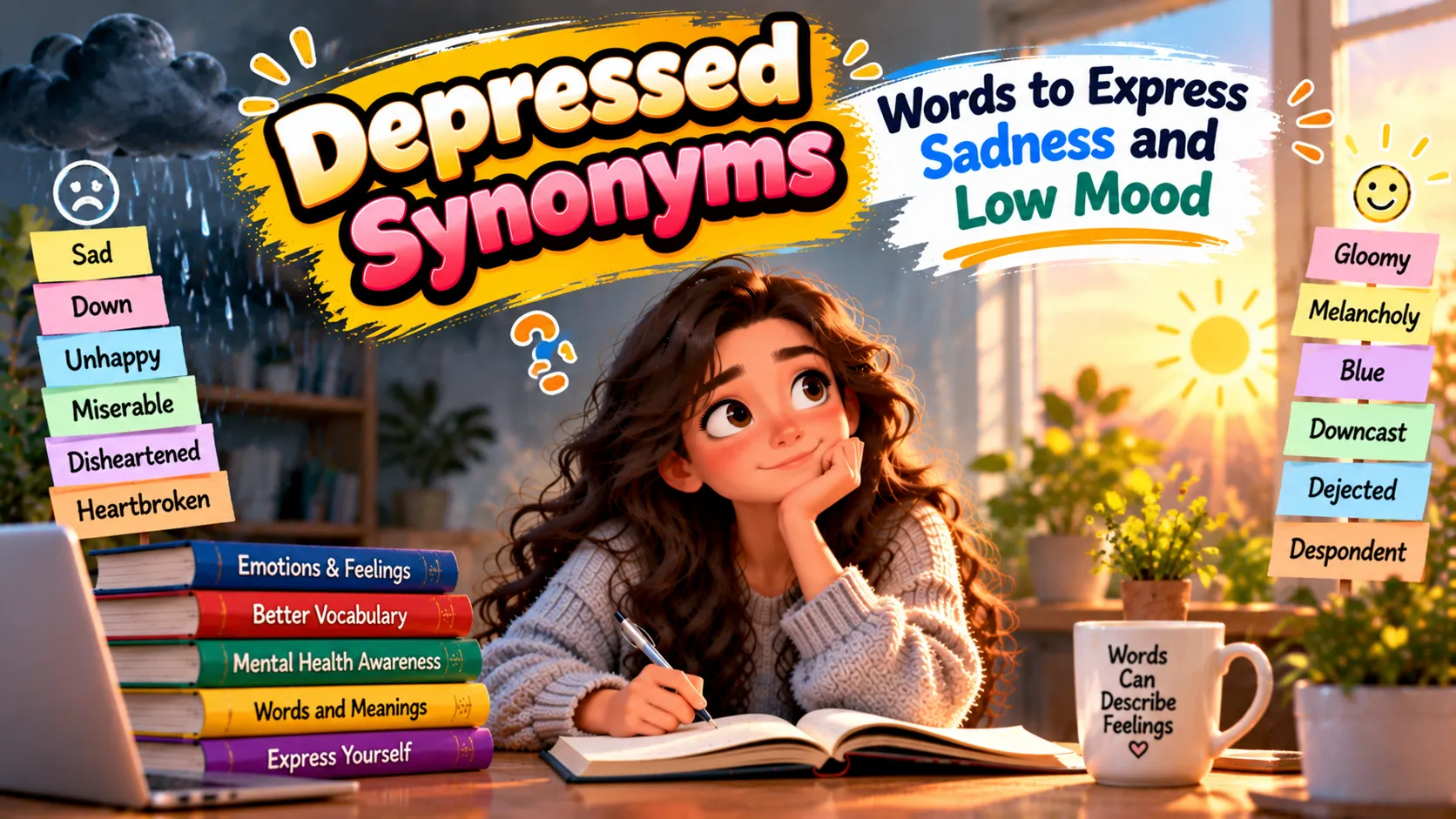
Looking for the best depressed synonyms to describe sadness, emotional exhaustion, or a low mood? The English language offers many alternatives, including sad, unhappy, gloomy, downhearted, miserable, and dejected. However, each word carries a slightly different meaning, so choosing the right synonym depends on the feeling or situation you want to describe.
For example, you might feel blue after a disappointing day, discouraged after a setback, or despondent when you have lost hope. In more formal writing, words such as melancholy and disheartened can express a deeper or more reflective kind of sadness.
In this guide, you’ll discover common depressed synonyms, formal alternatives, emotional expressions, words for writing, and examples that show how to use each term naturally. You’ll also learn the difference between feeling depressed and having clinical depression, helping you choose words that communicate your meaning accurately.
💙 Common Synonyms for Depressed
Some synonyms for depressed are familiar, easy to understand, and suitable for everyday conversations. These words describe sadness, unhappiness, disappointment, or a general lack of emotional energy.
Here are common alternatives to use in everyday writing:
- Sad
- Unhappy
- Down
- Gloomy
- Miserable
- Blue
- Low
- Downhearted
- Dejected
- Disheartened
- Discouraged
- Melancholy
- Glum
- Dismal
- Sorrowful
- Heavyhearted
- Morose
- Woeful
- Forlorn
- Crestfallen
- Troubled
- Dispirited
- Uncheerful
- Pessimistic
- Despondent
Example: Instead of writing, “She felt depressed after the disappointing news,” you could write, “She felt downhearted after the disappointing news.”
The best choice depends on the intensity of the feeling. Sad is a broad, neutral word, while miserable suggests stronger unhappiness. Discouraged focuses on losing confidence or motivation.
😔 Synonyms for Depressed That Mean Sad
When you want to express sadness without suggesting a medical condition, several words can communicate the feeling clearly. These synonyms are useful for personal messages, stories, essays, and everyday conversations.
- Sad
- Unhappy
- Sorrowful
- Mournful
- Tearful
- Blue
- Downcast
- Downhearted
- Heartbroken
- Grief-stricken
- Woeful
- Melancholy
- Heavyhearted
- Dejected
- Forlorn
- Dolorous
- Lamenting
- Disconsolate
- Bereaved
- Crestfallen
- Wistful
- Pensive
- Plaintive
- Mournful
- Dispirited
Example: “He looked sad after saying goodbye to his friends.”
You could also write, “He looked downcast after saying goodbye to his friends.”
Keep in mind that some words have more specific meanings. Bereaved usually describes someone who has lost a loved one, while heartbroken often refers to intense emotional pain following loss or disappointment.
🌧️ Synonyms for Depressed That Mean Gloomy
Sometimes, depressed describes a gloomy atmosphere or a feeling that everything seems dull and unpleasant. In these situations, words associated with darkness, dreariness, and a lack of cheerfulness may be more appropriate.
- Gloomy
- Glum
- Dismal
- Dreary
- Bleak
- Somber
- Overcast
- Cheerless
- Joyless
- Morose
- Sullen
- Melancholy
- Depressing
- Gray
- Dark
- Downbeat
- Uninspiring
- Lifeless
- Drab
- Forbidding
- Ominous
- Oppressive
- Desolate
- Drear
- Unpleasant
Example: “The gloomy weather made the afternoon feel unusually quiet.”
In this sentence, gloomy describes the atmosphere rather than a person’s mental health.
Similarly, you might describe a room as dreary, a situation as bleak, or someone’s expression as glum. These words help make descriptions more specific and vivid.
💔 Synonyms for Depressed That Mean Miserable
When sadness feels particularly intense, words such as miserable, anguished, and wretched may communicate more than the general term sad.
These alternatives can be useful in emotional writing, fiction, personal reflections, or descriptions of difficult experiences.
- Miserable
- Wretched
- Anguished
- Tormented
- Distressed
- Heartbroken
- Desolate
- Devastated
- Grief-stricken
- Despondent
- Forlorn
- Inconsolable
- Distraught
- Woebegone
- Disconsolate
- Suffering
- Pained
- Troubled
- Agonized
- Brokenhearted
- Dispirited
- Overwhelmed
- Afflicted
- Unsettled
- Downcast
Example: “She felt miserable after the argument.”
For a stronger description, you could write, “She felt devastated after the argument.”
These words are not exact substitutes in every situation. Distraught suggests intense emotional upset, while tormented implies ongoing mental suffering. Choose the word that best matches the experience you want to describe.
🥀 Formal Synonyms for Depressed
Formal synonyms can improve essays, reports, academic writing, and professional communication. They allow you to express emotional states without relying on the same familiar word repeatedly.
- Despondent
- Disconsolate
- Dejected
- Dispirited
- Melancholy
- Morose
- Somber
- Mournful
- Forlorn
- Crestfallen
- Disheartened
- Desolate
- Downcast
- Woebegone
- Pensive
- Dolorous
- Disillusioned
- Disenchanted
- Distressed
- Grief-stricken
- Heavyhearted
- Sorrowful
- Despairing
- Dismayed
- Inconsolable
Example: “The team was discouraged by the unexpected results.”
For a more formal tone, you could write, “The team was disheartened by the unexpected results.”
In academic or professional writing, avoid choosing a sophisticated word simply because it sounds impressive. Disillusioned means disappointed after discovering the truth about something, whereas despondent suggests a loss of hope.
📚 Advanced and Literary Synonyms for Depressed
Literary vocabulary can help writers describe sadness with greater precision. These words appear in novels, poetry, descriptive essays, and reflective writing.
- Melancholic
- Despondent
- Disconsolate
- Woebegone
- Dolorous
- Lugubrious
- Morose
- Forlorn
- Plaintive
- Mournful
- Funereal
- Lachrymose
- Dejected
- Wistful
- Heavyhearted
- Sorrowful
- Despairing
- Elegiac
- Pensive
- Somber
- Desolate
- Doleful
- Grief-stricken
- Downcast
- Dispirited
Example: “A melancholy silence settled over the empty house.”
A more literary version might be, “A mournful stillness settled over the empty house.”
Some of these words are uncommon in everyday conversation. Lugubrious describes something excessively mournful, while lachrymose means prone to tears or tearful. Elegiac is associated with mourning or reflection on loss.
Use advanced vocabulary when it adds meaning, not merely to make a sentence more complicated.
🧠 Synonyms for Depressed That Mean Discouraged
Feeling depressed in a casual sense can sometimes overlap with feeling discouraged, especially after a setback. However, discouragement specifically involves reduced confidence, enthusiasm, or motivation.
These words are useful when someone feels disappointed about progress, work, school, or personal goals.
- Discouraged
- Disheartened
- Demoralized
- Dispirited
- Deflated
- Disillusioned
- Dismayed
- Defeated
- Unmotivated
- Dejected
- Disappointed
- Disenchanted
- Crestfallen
- Hopeless
- Defeatist
- Uninspired
- Resigned
- Hesitant
- Doubtful
- Pessimistic
- Frustrated
- Downcast
- Discontented
- Disaffected
- Unenthusiastic
Example: “He felt discouraged after failing the exam.”
You could also say, “He felt disheartened after failing the exam.”
The distinction matters because someone can be discouraged about one particular event without feeling persistently sad in other areas of life.
🌙 Synonyms for Depressed That Mean Hopeless
When someone feels that a situation will not improve, words connected to hopelessness may be more precise than general sadness.
These alternatives are particularly useful for storytelling, emotional descriptions, and discussions about difficult circumstances.
- Hopeless
- Despondent
- Despairing
- Forlorn
- Defeated
- Pessimistic
- Desperate
- Disconsolate
- Downcast
- Dispirited
- Resigned
- Defeatist
- Disheartened
- Dismayed
- Bleak
- Desolate
- Unhopeful
- Disillusioned
- Brokenhearted
- Discouraged
Example: “After several setbacks, she felt hopeless about the project.”
A more literary alternative would be, “After several setbacks, she became despondent about the project.”
These terms differ in intensity. Pessimistic means expecting unfavorable outcomes, while despairing suggests a more profound sense of lost hope. In everyday use, select the word that reflects the situation without exaggerating it.
💬 Casual and Informal Synonyms for Depressed
In everyday conversations, people often use informal expressions instead of the word depressed. These expressions can describe a temporary low mood, disappointment, or emotional exhaustion.
- Down
- Feeling blue
- Bummed out
- Feeling low
- Glum
- Moody
- Out of sorts
- Not feeling great
- In a funk
- Down in the dumps
- Feeling blah
- Crushed
- Beat
- Deflated
- Fed up
- Unhappy
- Under the weather
- Out of spirits
- Not myself
- Having a rough day
- Feeling off
- Low-spirited
- Worn down
- Disappointed
- A little low
Example: “I’m feeling down after a difficult week.”
In a casual conversation, you might say, “I’m feeling a little blue today.”
These expressions are not always interchangeable. Fed up usually means annoyed or frustrated, while bummed out typically refers to disappointment or sadness. Under the weather more often refers to feeling physically unwell, so it may not be the clearest choice for emotional sadness.
✍️ Synonyms for Depressed in Writing
If you’re writing a story, essay, article, or personal reflection, choosing a specific synonym can make your sentences more expressive. Rather than repeating depressed, identify the feeling you want to communicate.
Here are useful alternatives for different writing situations:
- For sadness: Sad, sorrowful, mournful
- For disappointment: Disappointed, crestfallen, disheartened
- For hopelessness: Despondent, despairing, forlorn
- For a gloomy atmosphere: Bleak, dreary, somber
- For emotional pain: Anguished, heartbroken, distressed
- For low motivation: Dispirited, discouraged, deflated
- For reflective sadness: Melancholy, wistful, pensive
- For severe unhappiness: Miserable, devastated, distraught
Example: “The character felt depressed after losing everything.”
Depending on the intended meaning, you might write:
- The character felt despondent after losing everything.
- The character became withdrawn after the loss.
- The character felt heartbroken after losing a loved one.
- The character grew disillusioned after discovering the truth.
Each alternative creates a slightly different impression. The most effective word is the one that expresses the character’s specific emotional experience.
📱 Short Synonyms for Depressed
Short words and expressions can be useful in texts, social media captions, messages, and quick descriptions.
- Sad
- Blue
- Low
- Down
- Glum
- Gloomy
- Empty
- Lost
- Hurt
- Alone
- Low-spirited
- Unhappy
- Tired
- Worn
- Moody
- Dull
- Flat
- Heavy
- Deflated
- Quiet
- Numb
- Drained
- Broken
- Unwell
- Upset
Some of these words describe feelings that may accompany sadness rather than being direct synonyms. For example, tired and drained describe low energy, while numb can describe feeling emotionally unresponsive.
Example: “I’m feeling low today.”
This short expression is natural in everyday conversation and does not necessarily imply a mental health diagnosis.
🌿 Positive or Gentle Alternatives to Depressed
Sometimes you want to acknowledge a low mood without making the situation sound overwhelming. Gentle alternatives can help you describe emotions in a softer, more neutral way.
- Feeling low
- A little sad
- Downhearted
- Disappointed
- Reflective
- Pensive
- Wistful
- Quiet
- Unsettled
- Out of sorts
- Emotionally tired
- Feeling blue
- Discouraged
- Not quite myself
- Having a difficult day
- In need of rest
- Low in spirits
- Feeling overwhelmed
- A little withdrawn
- Temporarily discouraged
Example: “I’ve been feeling a little low lately.”
This sentence communicates sadness without making assumptions about its cause or severity.
A gentle alternative can be useful when talking with a friend or describing an ordinary emotional response. Still, it is important not to minimize persistent or severe distress. If someone is struggling, listening with compassion is often more helpful than searching for the perfect label.
⚖️ Depressed vs. Sad: What’s the Difference?
Depressed and sad are related, but they do not always mean the same thing. Sadness is a common human emotion that may arise in response to disappointment, loss, or a difficult experience.
The word depressed can be used informally to describe a low mood. It can also refer to depression as a mental health condition, which involves more than simply feeling sad.
Here is a basic comparison:
| Word | Typical meaning |
|---|---|
| Sad | Feeling unhappy or sorrowful |
| Down | Experiencing a low mood |
| Gloomy | Feeling or appearing cheerless |
| Discouraged | Losing confidence or motivation |
| Depressed | Feeling very low; may also refer to a mental health condition |
| Despondent | Feeling deeply discouraged or hopeless |
Examples:
- “I felt sad when my friend moved away.”
- “I felt discouraged when my plans did not work out.”
- “I’ve been feeling down this week.”
These sentences describe different experiences. None of them, by itself, establishes a clinical diagnosis.
Clinical depression can involve persistent low mood or loss of interest, along with other symptoms that affect daily life. If these experiences continue or interfere with everyday functioning, consider speaking with a qualified healthcare professional.
🩺 Depressed vs. Clinical Depression
Understanding the difference between an ordinary low mood and clinical depression is important when choosing synonyms.
People often say they feel depressed after a disappointing event. In this everyday sense, the word may simply describe sadness, discouragement, or a temporary loss of enthusiasm.
Clinical depression, however, is a mental health condition that requires appropriate assessment. It may involve persistent sadness or emptiness, loss of interest, changes in sleep or appetite, fatigue, difficulty concentrating, feelings of worthlessness, or other symptoms.
Not everyone experiences the same symptoms, and a synonym cannot determine whether someone has depression.
For general writing, words such as sad, downhearted, and discouraged may communicate an ordinary emotional state more precisely. When discussing a diagnosed condition, use clear and respectful language rather than treating every synonym as equivalent to a medical diagnosis.
If you or someone you know is experiencing persistent distress, a healthcare professional can help assess the situation and discuss support options.
📖 Antonyms of Depressed
Antonyms are words with opposite or contrasting meanings. If you’re looking for the opposite of depressed in the sense of feeling sad, words related to happiness, optimism, and emotional well-being may fit.
- Happy
- Cheerful
- Joyful
- Hopeful
- Optimistic
- Content
- Satisfied
- Upbeat
- Positive
- Enthusiastic
- Elated
- Delighted
- Radiant
- Buoyant
- Encouraged
- Inspired
- Energetic
- Lively
- Lighthearted
- Jubilant
- Thrilled
- Exuberant
- Carefree
- Peaceful
- Sanguine
Example: “She felt cheerful after spending time with her family.”
Depending on the context, hopeful may be a better opposite of despondent, while cheerful may contrast more naturally with gloomy.
The word depressed can also describe something physically or economically reduced, such as a depressed area or depressed market activity. In those contexts, the appropriate opposite might be elevated, thriving, or increased, rather than happy.
🎯 Conclusion
There are many useful depressed synonyms, but the best alternative depends on the feeling you want to express. Words such as sad, unhappy, gloomy, downhearted, and miserable work well in everyday conversation, while despondent, disconsolate, and melancholy can add a more formal or literary tone.
For a more precise description, choose discouraged when someone has lost confidence, heartbroken after a painful loss, gloomy for a cheerless atmosphere, or hopeless when someone feels that improvement is unlikely.
Remember that feeling depressed in everyday language is not necessarily the same as having clinical depression. Choosing accurate, considerate language helps you communicate emotions clearly while respecting the experiences of others.

Olivia Bennett is a writer and language enthusiast at Vocabsteria. She is passionate about exploring word meanings, name origins, and cultural expressions from around the world.