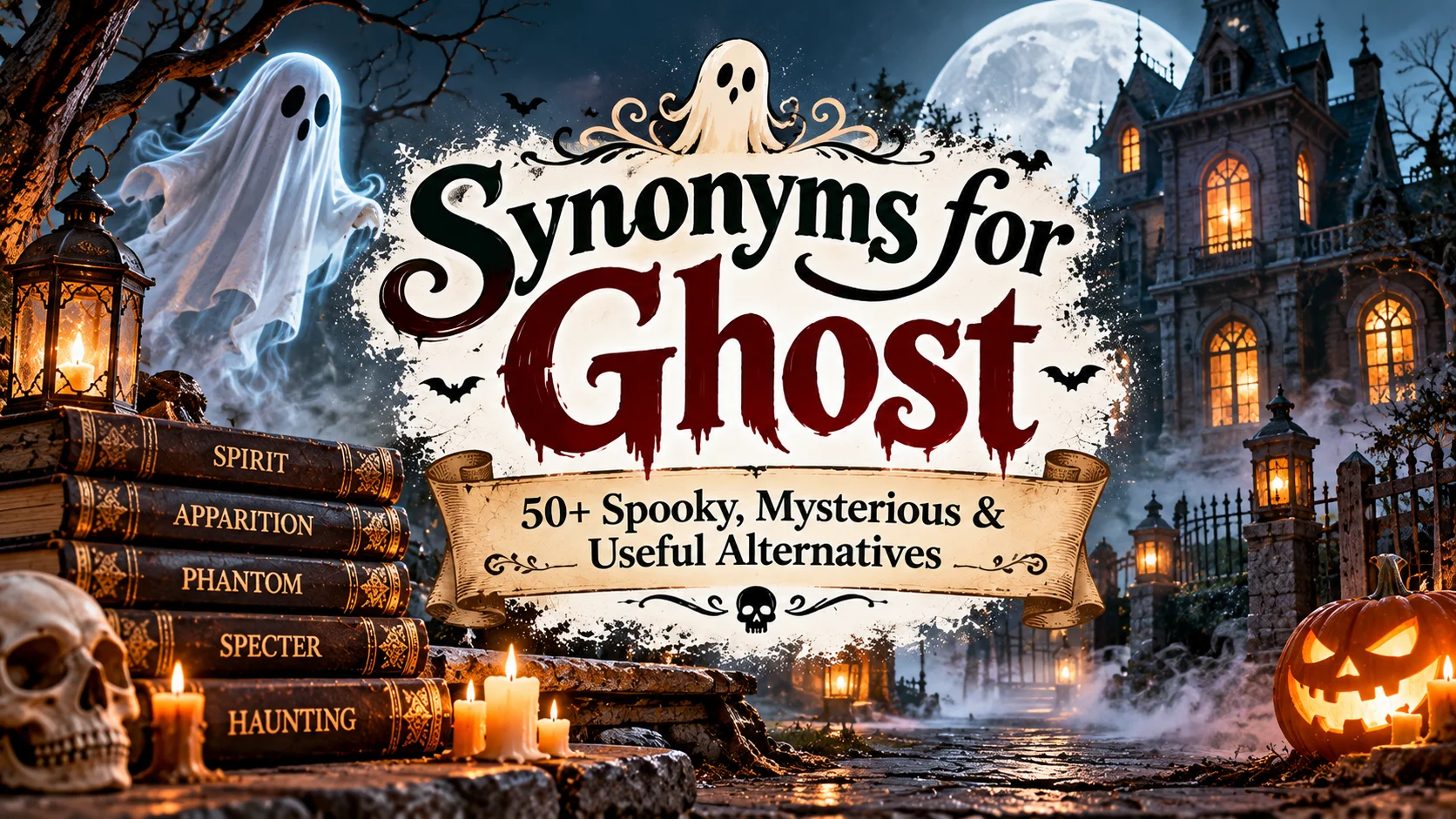
Finding the right synonyms for ghost depends on what kind of meaning the sentence needs. The word ghost can refer to a supernatural spirit, the soul or apparition of a dead person, a faint trace of something, or even a person who suddenly stops communicating.
Words such as spirit, apparition, specter, phantom, wraith, shade, and haunt can describe supernatural ideas, but they do not all create the same mood. Some sound frightening, some literary, and others are more neutral. In modern informal English, ghost can also mean suddenly cutting off communication with someone.
This guide explores the best synonyms for ghost, including spooky alternatives, literary words, supernatural terms, informal meanings, examples, context-based choices, and commonly confused expressions.
👻 What Does Ghost Mean?
A ghost is commonly described as the spirit or apparition of a dead person that is believed to appear to living people. The word is strongly associated with supernatural stories, haunted houses, folklore, horror movies, and paranormal beliefs.
However, ghost has several other meanings.
It can describe:
- A supernatural apparition
- The spirit of a dead person
- A faint image or trace
- Something that remains from the past
- A person who disappears without explanation
- Someone who suddenly stops communicating
- A writer who secretly writes material for another person
Because the word has multiple meanings, the best synonym depends on the context.
📚 Synonyms for Ghost at a Glance
Different alternatives emphasize different aspects of the word ghost. Some focus on supernatural appearance, while others suggest memory, disappearance, or haunting.
| Synonym | Meaning | Tone | Example |
|---|---|---|---|
| Spirit | Supernatural or nonphysical being | Neutral | They believed a spirit lived there. |
| Apparition | A ghostly appearance | Formal/Literary | A strange apparition appeared. |
| Specter | Frightening ghost or haunting presence | Literary | A specter haunted the castle. |
| Phantom | Ghostlike or mysterious figure | Literary | A phantom appeared in the fog. |
| Wraith | Ghostly figure, often frightening | Dark/Literary | A wraith moved through the shadows. |
| Shade | Spirit of a dead person | Literary | The shade wandered through the ruins. |
| Poltergeist | Supernatural entity associated with disturbances | Paranormal | They blamed the noise on a poltergeist. |
| Haunt | Ghost or place associated with a ghost | Supernatural | The house was said to be haunted. |
| Entity | Being or presence | Neutral | A strange entity appeared. |
| Revenant | Dead person believed to return | Literary | The story features a mysterious revenant. |
🔮 Synonyms for Ghost by Meaning
The word ghost changes meaning depending on how it is used. A supernatural ghost needs different alternatives from a person who suddenly stops replying to messages.
| Context | Useful Synonyms | Example |
|---|---|---|
| Supernatural being | Spirit, apparition, phantom | A spirit appeared in the room. |
| Frightening ghost | Specter, wraith, revenant | A specter was seen near the castle. |
| Dead person’s spirit | Shade, spirit | The shade appeared in the story. |
| Faint image | Trace, shadow, outline | A ghost of a smile remained. |
| Past memory | Echo, remnant, vestige | The building was a ghost of its former self. |
| Person who disappears | Vanish, disappear, fade away | He ghosted without explanation. |
| Dating/social media | Ignore, cut off, disappear | She ghosted him after two dates. |
| Secret writer | Ghostwriter | He worked as a ghostwriter. |
👻 Spirit
Spirit is one of the closest general synonyms for ghost. It can refer to a supernatural being, the soul of a deceased person, or a nonphysical presence.
Unlike ghost, spirit does not always sound frightening.
For example:
- A spirit appeared near the old house.
- They believed the spirit of their ancestor remained nearby.
- The story is about a restless spirit.
The word can therefore sound more neutral or respectful than ghost.
🌫️ Apparition
An apparition is a supernatural or ghostly appearance, especially something suddenly seen.
It is a more formal and literary word than ghost.
Example:
A mysterious apparition appeared at the end of the hallway.
The word works particularly well in horror writing, historical fiction, and descriptions of unexplained supernatural appearances.
🕯️ Specter
A specter or spectre is a ghostly figure or frightening apparition.
Both spellings exist:
- Specter — common in American English
- Spectre — common in British English
Example:
A dark specter appeared outside the abandoned mansion.
The word can also be used figuratively:
The specter of war haunted the community.
In that sentence, specter refers to a threatening possibility rather than an actual ghost.
🌑 Phantom
Phantom refers to a ghostly or seemingly supernatural figure. It can also describe something that appears real but is not actually present.
Examples:
- A phantom appeared in the doorway.
- The old legend tells of a phantom wandering through the forest.
- He was chasing a phantom of his former life.
Because of its mysterious sound, phantom is common in literature, fantasy, horror, and mythology.
🖤 Wraith
A wraith is a ghostly figure, traditionally associated with a dead person or ominous supernatural presence.
The word has a particularly dark and eerie tone.
Example:
A pale wraith appeared beneath the moonlight.
Wraith is especially suitable when describing a frightening, shadowy, or mysterious ghost.
🌘 Shade
In literary and historical usage, a shade can mean the spirit of a dead person.
Example:
The ancient poem describes the shades of the dead.
The word is less common in everyday conversation but appears frequently in mythology, poetry, fantasy, and classical literature.
🏚️ Haunt
Haunt has several meanings related to ghosts.
As a verb, it means to repeatedly visit or appear in a place or person’s thoughts.
The ghost was said to haunt the old house.
As a noun, a haunt can mean a place that someone frequently visits:
The café was one of her favorite haunts.
The related adjective haunted is especially common in supernatural contexts.
🌀 Poltergeist
A poltergeist is a type of supernatural entity traditionally associated with unexplained physical disturbances, such as noises, moving objects, or other disruptions.
Example:
The family believed a poltergeist was responsible for the strange noises.
A poltergeist is therefore more specific than the general word ghost.
Not every ghost is described as a poltergeist.
🧟 Revenant
A revenant is a person or being believed to return after death, particularly in folklore and literature.
The word comes from a term associated with someone who has returned.
Example:
The novel tells the story of a revenant who returns to his former home.
It is an excellent alternative when writing about dark folklore, gothic fiction, or supernatural stories.
🌫️ Ectoplasm
Ectoplasm is not a direct synonym for ghost. It refers to a supposed substance associated with spiritualistic or paranormal manifestations.
Because the word appears frequently in ghost stories and paranormal fiction, it is sometimes associated with ghosts.
Example:
The fictional ghost appeared surrounded by glowing ectoplasm.
It should not normally replace ghost in ordinary writing.
🕯️ Apparitional Being
An apparitional being is a descriptive phrase for a supernatural figure or apparition.
It can be useful in formal or creative writing when a writer wants to avoid repeating the word ghost.
Example:
The story centers on an apparitional being that appears after midnight.
This phrase sounds more descriptive than conversational.
🌙 Other Spooky Synonyms for Ghost
Writers have many options when they want a mysterious or frightening alternative to ghost.
- Spirit
- Apparition
- Specter
- Spectre
- Phantom
- Wraith
- Shade
- Revenant
- Haunt
- Poltergeist
- Entity
- Presence
- Manifestation
- Shadow
- Shadow figure
- Restless spirit
- Wandering spirit
- Disembodied spirit
- Supernatural being
- Ghostly figure
These terms are not perfectly interchangeable, so the intended mood should guide the choice.
📖 Literary Synonyms for Ghost
Literary writing often benefits from words that create atmosphere rather than simply repeating ghost.
Useful choices include:
- Specter
- Phantom
- Wraith
- Shade
- Apparition
- Revenant
- Spirit
- Presence
- Echo
- Shadow
- Remnant
- Vestige
For example:
A phantom drifted through the ruined corridor.
sounds different from:
A ghost walked through the hallway.
The first creates a more atmospheric and literary feeling.
😱 Scary Synonyms for Ghost
When the goal is to make a ghost sound frightening, words with darker associations can create a stronger effect.
- Wraith
- Specter
- Phantom
- Revenant
- Apparition
- Haunting presence
- Restless spirit
- Shadow figure
- Dark entity
- Malevolent spirit
- Undead spirit
- Supernatural entity
These alternatives are particularly useful for horror stories, Halloween content, scary character descriptions, and spooky captions.
🌸 Gentle Synonyms for Ghost
Not every ghost story needs to sound terrifying. In emotional or spiritual writing, softer words can work better.
- Spirit
- Soul
- Presence
- Memory
- Essence
- Shade
- Ancestor
- Departed spirit
- Guiding presence
- Loved one’s spirit
For example:
She felt the comforting presence of her grandmother.
This sounds much gentler than:
She saw a terrifying specter.
🧠 Ghost as a Faint Trace or Remnant
Ghost can also describe something faint that remains from the past.
For example:
A ghost of a smile crossed his face.
Here, ghost does not mean a supernatural being. It means a faint suggestion or trace.
Useful alternatives include:
- Trace
- Hint
- Echo
- Remnant
- Vestige
- Shadow
- Suggestion
- Fragment
- Faint impression
- Memory
Examples:
- A trace of sadness remained.
- An echo of the old tradition survived.
- A remnant of the original building still stands.
- A shadow of his former confidence remained.
👻 Ghost as a Verb
Ghost can also be used as a verb in informal modern English.
It can mean to suddenly stop communicating with someone without explanation.
Example:
He ghosted me after our second conversation.
In this sense, ghost is not about supernatural activity.
Possible alternatives include:
- Ignore
- Disappear
- Cut off communication
- Stop responding
- Stop replying
- Avoid
- Withdraw
- Vanish
- Go silent
- Fade away
The best alternative depends on the exact situation.
📱 Synonyms for Ghosting Someone
In dating, friendships, and online communication, ghosting means suddenly ending communication without explanation.
Related expressions include:
- Stop replying
- Go silent
- Disappear
- Ignore messages
- Cut off contact
- Avoid someone
- Withdraw from communication
- Vanish
- Drop out of contact
- Cease responding
Example:
She stopped replying without explanation.
This communicates the idea without using the informal word ghosted.
💬 Ghost vs. Ignore
Ghost and ignore overlap, but they are not identical.
Ignore means deliberately not paying attention or responding.
Ghost generally suggests abruptly ending communication or disappearing from contact.
Compare:
He ignored my message.
This could describe one unanswered message.
He ghosted me.
This usually suggests a broader pattern of suddenly disappearing or ending communication.
🖋️ Ghostwriter and Ghostwriting
Another important meaning appears in ghostwriter.
A ghostwriter is someone who writes material that is officially published under another person’s name or presented as another person’s work, usually by agreement.
Examples include:
- Books
- Speeches
- Articles
- Memoirs
- Songs
- Online content
Example:
The celebrity hired a ghostwriter to help write the memoir.
Here, ghost does not mean a supernatural spirit. It is part of the established term ghostwriter.
🌫️ Ghost as a Shadow or Outline
In some contexts, ghost can describe a faint or barely visible image.
Possible alternatives include:
- Shadow
- Outline
- Trace
- Faint image
- Afterimage
- Impression
- Echo
- Remnant
For example:
A ghost of the original image remained on the screen.
The word describes something faint or residual rather than supernatural.
🎬 Ghost Synonyms for Fiction and Fantasy
Fantasy and supernatural fiction often uses specialized vocabulary to distinguish different types of spirits.
Useful terms include:
- Spirit
- Specter
- Phantom
- Wraith
- Shade
- Revenant
- Apparition
- Entity
- Haunt
- Undead
- Restless spirit
- Shadow being
- Supernatural entity
Writers can choose among these based on whether the character is friendly, frightening, mysterious, ancient, or hostile.
📊 Ghost Synonyms by Tone
| Tone | Recommended Words |
|---|---|
| Neutral | Spirit, ghost, presence |
| Formal | Apparition, entity, manifestation |
| Literary | Specter, phantom, shade, wraith |
| Scary | Wraith, specter, revenant, dark entity |
| Gentle | Spirit, soul, presence |
| Mysterious | Phantom, apparition, shadow |
| Historical | Shade, spirit, revenant |
| Casual | Ghost, spooky figure |
| Modern/social | Ghost, disappear, stop replying |
| Figurative | Echo, trace, remnant, vestige |
🧩 Words Related to Ghost
Some words are not direct synonyms but are strongly associated with ghosts and supernatural stories.
- Haunted
- Haunting
- Paranormal
- Supernatural
- Spirit
- Soul
- Apparition
- Séance
- Medium
- Possession
- Afterlife
- Cemetery
- Graveyard
- Poltergeist
- Phantom
- Specter
- Wraith
- Shadow
- Eerie
- Unexplained
These terms can be useful when writing about ghosts without repeating the same word throughout an article.
✍️ Example Sentences Using Ghost Synonyms
Here are examples showing how different alternatives change the tone and meaning.
- A spirit appeared beside the old house.
- An apparition emerged from the fog.
- A dark specter stood at the end of the corridor.
- A pale phantom crossed the room.
- The story describes a wandering wraith.
- The ancient poem mentions the shades of the dead.
- The castle is said to be haunted.
- The family blamed the strange noises on a poltergeist.
- The legend tells of a revenant returning from the grave.
- A faint echo of the past remained.
- She felt the presence of someone who was no longer alive.
- He suddenly disappeared from the conversation.
🔄 Antonyms of Ghost
There is no single perfect antonym for ghost because the word has several meanings.
For a supernatural sense, possible contrasts include:
- Living person
- Human being
- Physical presence
- Reality
The verb ghost, possible opposites include:
- Respond
- Communicate
- Reply
- Stay in contact
- Engage
- Answer
For the figurative sense of a faint trace, possible contrasts include:
- Presence
- Reality
- Substance
- Full expression
- Clarity
The correct opposite depends on the meaning being used.
📝 How to Choose the Right Synonym for Ghost
The best synonym depends on four main factors: meaning, tone, context, and audience.
- If the subject is a supernatural spirit, spirit, apparition, or phantom may work.
- If the ghost is particularly frightening, wraith, specter, or revenant can create a darker tone.
- If the writing is literary, shade, phantom, and specter can add atmosphere.
- If ghost means suddenly ending communication, words such as disappear, ignore, or stop responding are more appropriate.
- If ghost means a faint trace, echo, remnant, trace, or vestige may be better.
❓ FAQs About Synonyms for Ghost
What is the best synonym for ghost?
Spirit is one of the closest general synonyms for ghost. Other options include apparition, specter, phantom, wraith, and shade, depending on the tone and context.
What is a scary synonym for ghost?
Wraith, specter, phantom, revenant, and dark entity can create a frightening or mysterious feeling. Wraith and specter are especially common in dark or literary descriptions.
What is a formal synonym for ghost?
Apparition and specter are useful formal or literary alternatives. Entity and manifestation can also work in certain paranormal contexts.
What is a literary word for ghost?
Words such as wraith, shade, specter, phantom, apparition, and revenant are commonly associated with literary or atmospheric descriptions of ghosts.
What is another word for a ghost spirit?
Spirit is the simplest alternative. Depending on the context, apparition, phantom, shade, wraith, or specter may also work.
What does ghost mean in texting?
In modern informal communication, ghost can mean suddenly stopping communication with someone without explanation. For example, “He ghosted me” means he suddenly stopped replying or disappeared from contact.
What is another word for ghosting?
Possible alternatives include disappearing, going silent, ignoring someone, cutting off contact, stopping communication, and stopping replies.
What is a synonym for ghost in literature?
Depending on the style, specter, phantom, wraith, shade, apparition, and revenant can replace ghost in literary writing.
What is the difference between a ghost and a phantom?
Both words can describe supernatural figures, but phantom often has a more mysterious or literary tone. Ghost is the more common everyday word.
What is the difference between a ghost and a spirit?
A spirit is a broader term and can sound neutral or spiritual, while ghost often specifically suggests the apparition or presence of a dead person.
What is the difference between a specter and a ghost?
A specter is a ghostly or frightening apparition and usually sounds more literary or dramatic than the everyday word ghost.
What is the difference between a wraith and a ghost?
A wraith traditionally refers to a ghostly figure and often carries a darker, more ominous tone than the general word ghost.
🎯 Conclusion: Finding the Right Synonym for Ghost
There are many useful synonyms for ghost, but the best choice depends on the meaning and tone of the sentence. Spirit is a broad and flexible alternative, while apparition, specter, phantom, wraith, shade, and revenant provide increasingly literary, mysterious, or dark descriptions of supernatural beings.
The word ghost can also have modern and figurative meanings. Someone who suddenly stops communicating may be described as ghosting, while a faint trace of something can be called an echo, remnant, trace, or vestige. In professional writing, ghostwriter introduces yet another meaning.
Choosing the right synonym is therefore less about finding one replacement word and more about identifying the exact sense of ghost. Once the context is clear, the right alternative becomes much easier to select.

Olivia Bennett is a writer and language enthusiast at Vocabsteria. She is passionate about exploring word meanings, name origins, and cultural expressions from around the world.