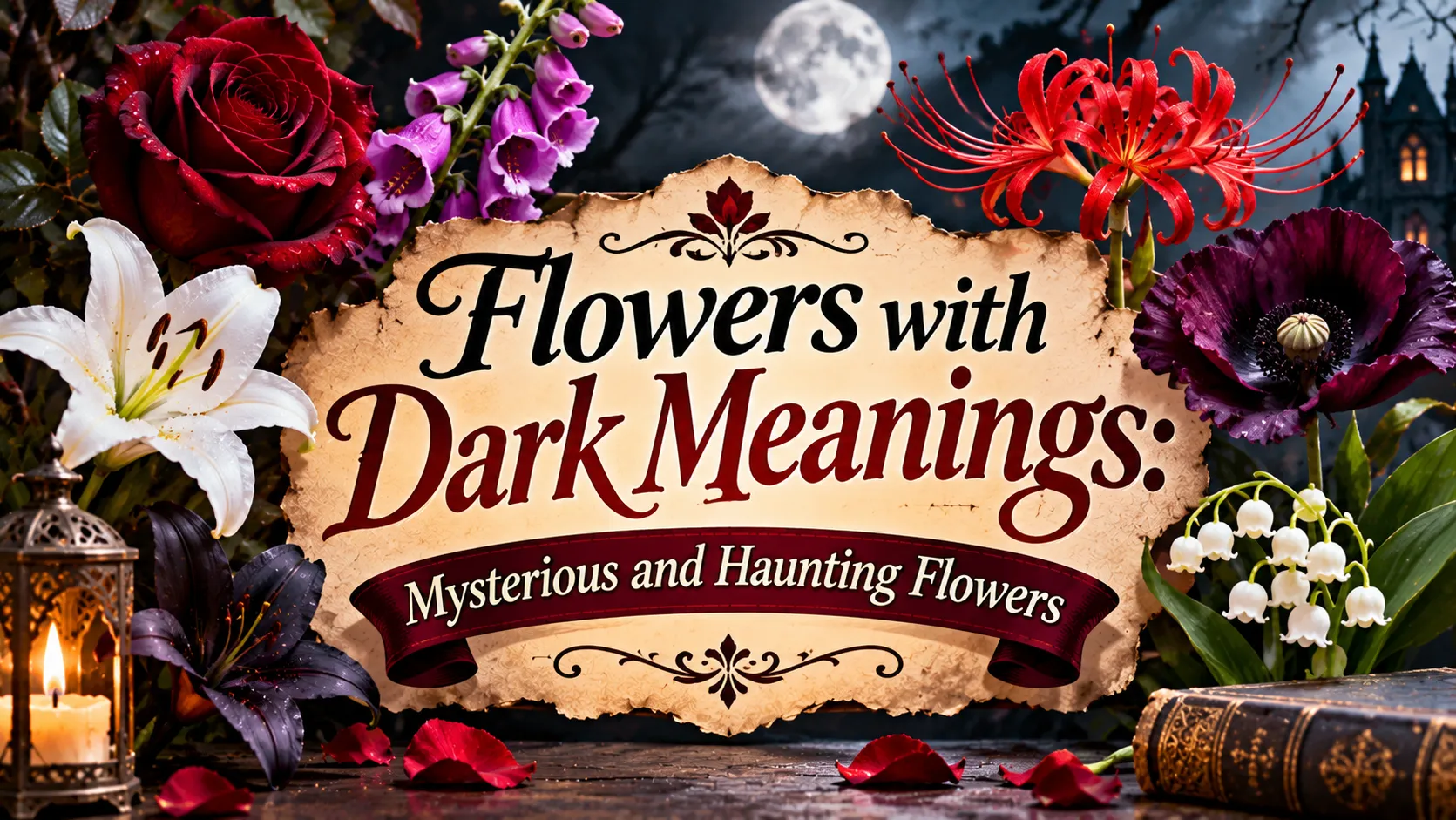
Flowers are often associated with love, beauty, happiness, and new beginnings, but not every bloom carries a cheerful message. Throughout history, different flowers have symbolized death, grief, betrayal, jealousy, heartbreak, mourning, and unrequited love. Some have become connected with ancient myths, tragic love stories, funerals, and supernatural beliefs. Their delicate petals may look beautiful, yet their symbolism can tell a much darker story.
Flowers with dark meanings are especially fascinating because their appearance and symbolism often contrast. A black rose, for example, can represent endings, mystery, or farewell, while a beautiful white lily may symbolize mourning and remembrance. Even familiar flowers such as poppies, chrysanthemums, and marigolds have associations with death or remembrance in particular cultures.
Whether you are interested in gothic flower symbolism, dark floral arrangements, mysterious garden plants, or flowers that represent sadness and loss, this guide explores their meanings and histories. You will discover flowers associated with death, betrayal, loneliness, revenge, and forbidden love, along with the stories that make each bloom meaningful.
🥀 What Do Flowers with Dark Meanings Symbolize?
Flowers with dark meanings are blooms associated with difficult emotions, mysterious ideas, or serious life experiences. Their symbolism may include death, grief, separation, jealousy, disappointment, danger, or the end of a relationship. These meanings often come from folklore, mythology, literature, religious traditions, and cultural customs rather than from the flowers themselves.
A flower’s symbolism can also change depending on its color, location, and cultural background. White chrysanthemums, for instance, are used in mourning traditions in several countries, while chrysanthemums in other settings can represent happiness and longevity. Similarly, a red rose traditionally symbolizes romantic love, but a dark or black rose can suggest farewell, loss, or transformation.
Understanding these meanings helps you appreciate flowers beyond their appearance. It also makes it easier to choose appropriate blooms for gothic decorations, memorial arrangements, symbolic artwork, and creative writing.
🖤 Flowers with Dark Meanings and Their Symbolism
Some flowers have developed powerful associations with death, sorrow, betrayal, and mystery. Their symbolism makes them popular in gothic literature, dark floral artwork, and stories about complicated emotions.
Here are some notable flowers and their darker associations.
| Flower | Dark meaning or symbolism |
|---|---|
| Black Rose | Death, endings, farewell, and transformation |
| Lily | Mourning, death, and remembrance in funeral settings |
| Poppy | Sleep, remembrance, death, and sacrifice |
| Chrysanthemum | Mourning and remembrance in certain cultures |
| Marigold | Death, remembrance, and the journey of departed souls |
| Foxglove | Danger, poison, and caution |
| Hemlock | Poison, death, and betrayal |
| Oleander | Danger and toxic beauty |
| Nightshade | Poison, mystery, and danger |
| Datura | Mystery, danger, and altered states |
| Hyacinth | Sorrow and grief in some mythological interpretations |
| Anemone | Abandonment, loss, and fading love |
| Yellow Carnation | Rejection and disappointment |
| Orange Lily | Hatred or disdain in some Victorian flower dictionaries |
| Rue | Regret, sorrow, and repentance |
| Cypress | Mourning, death, and remembrance |
| Aconite | Danger, poison, and caution |
| Belladonna | Deadly beauty, danger, and poison |
| Bleeding Heart | Heartbreak and unrequited love |
| Black Dahlia | Mystery, betrayal, and dramatic beauty in modern interpretations |
These meanings are not universal rules. Floral symbolism changes across cultures and historical periods, so the same flower may communicate different messages in different situations.
🌹 Black Roses: Death, Endings, and Transformation
<text>Black roses are among the most recognizable symbols in dark floral aesthetics. Although naturally occurring roses do not produce a true, naturally black flower, very dark varieties can appear almost black, and florists can also create black roses through dyeing or other treatments. Their dramatic appearance has made them popular symbols of mystery, endings, farewell, and transformation.</text>
In gothic art and literature, black roses often represent the end of a relationship, the loss of something precious, or a new beginning after a difficult experience. They can also communicate rebellion, independence, and an appreciation for unconventional beauty.
Common black rose meanings:
- The ending of a relationship or chapter.
- Farewell and separation.
- Mystery and the unknown.
- Transformation after hardship.
- Mourning and remembrance.
- Rebellion and individuality.
Black roses are particularly useful as fictional symbols because they can represent both destruction and renewal. Their meaning depends on the story or artistic context.
⚰️ Flowers That Symbolize Death and Mourning
Flowers have played an important role in funeral customs and remembrance traditions for centuries. Certain blooms are chosen because their cultural associations communicate sympathy, respect, and remembrance. Others have become symbols of mortality through mythology, religious practices, and traditional literature.
These flowers are commonly associated with death or mourning.
| Flower | Meaning |
|---|---|
| White Lily | Purity, sympathy, and remembrance |
| Chrysanthemum | Mourning and remembrance in several cultures |
| Poppy | Remembrance of fallen soldiers and sacrifice |
| Marigold | Honoring departed loved ones in Día de los Muertos traditions |
| White Rose | Reverence, remembrance, and innocence |
| Carnation | Love and remembrance, depending on color |
| Gladiolus | Strength, sincerity, and remembrance |
| Cypress | Mourning and eternal remembrance |
| Forget-Me-Not | Remembering someone who has passed away |
| Calla Lily | Sympathy, rebirth, and remembrance |
White Lilies
White lilies are frequently used in funeral arrangements because they symbolize purity, sympathy, and the restoration of innocence in some Christian traditions. Their elegant appearance can communicate respect and remembrance.
Chrysanthemums
Chrysanthemums are strongly associated with funerals and remembrance in countries such as Japan and parts of Europe. However, they can also represent happiness, longevity, and good fortune elsewhere.
Poppies
Red poppies are widely associated with remembrance of military personnel who died in war, particularly in Commonwealth countries. Their symbolism is connected to the battlefields of World War I and the poem In Flanders Fields.
Marigolds
Marigolds are important in Día de los Muertos traditions in Mexico. Their bright colors and fragrance are traditionally associated with welcoming and honoring the spirits of deceased loved ones.
🥀 Flowers That Represent Sadness, Grief, and Heartbreak
Some flowers symbolize emotional pain rather than physical death. They appear in romantic poetry, traditional flower dictionaries, and stories about separation or unfulfilled love. Their meanings can help communicate feelings that are difficult to express directly.
| Flower | Symbolic meaning |
|---|---|
| Bleeding Heart | Heartbreak and unrequited love |
| Anemone | Abandonment and fading hope |
| Hyacinth | Sorrow and grief in some traditions |
| Yellow Carnation | Rejection and disappointment |
| Purple Hyacinth | Sorrow or a request for forgiveness in some interpretations |
| Cyclamen | Separation or resignation in some flower-language traditions |
| Daffodil | Unreturned affection in some historical interpretations |
| Sweet Pea | Farewell and delicate pleasure |
| Rue | Regret and repentance |
| Bluebell | Sadness or humility in certain folklore traditions |
| Violet | Modesty, remembrance, and sometimes hidden feelings |
| Forget-Me-Not | Lasting memories and separation |
Bleeding Heart
The bleeding heart flower is named for its distinctive heart-shaped blooms with a small droplet-like feature beneath them. Its appearance has made it a natural symbol of heartbreak, compassion, and love that causes pain.
Anemone
Anemones have been associated with abandonment and fading love in parts of European flower symbolism. In Greek mythology, they are connected with the tragic story of Adonis and Aphrodite.
Hyacinth
The hyacinth has a connection to grief through Greek mythology. The flower is traditionally linked with Hyacinthus, a beautiful youth whose tragic death was mourned by Apollo.
🕷️ Poisonous Flowers with Beautiful but Dangerous Meanings
Some flowers look delicate and attractive but contain toxic compounds. Their danger has contributed to associations with temptation, betrayal, mystery, and deadly beauty. These plants are especially common in gothic gardens, historical stories, and fictional poison imagery.
The following flowers are known for their toxicity. Their inclusion is for botanical and symbolic interest, not for handling or consumption.
| Flower | Dark association |
|---|---|
| Belladonna | Deadly beauty and poison |
| Foxglove | Danger and caution |
| Oleander | Beautiful but toxic nature |
| Monkshood | Poison and danger |
| Datura | Mystery and toxicity |
| Lily of the Valley | Delicate beauty with poisonous parts |
| Hemlock | Historical association with poison and death |
| Autumn Crocus | Beauty and toxicity |
| Jimsonweed | Danger and poisonous properties |
| Angel’s Trumpet | Dramatic beauty and toxicity |
Important: Do not eat, brew, or experiment with any of these plants. Several can cause serious poisoning, and some are dangerous to handle. Keep them away from children and pets.
Belladonna
Belladonna, also known as deadly nightshade, has a long association with poison and dangerous beauty. Its name comes from Italian words meaning beautiful woman, reflecting its historical cosmetic use. The plant is highly toxic.
Foxglove
Foxglove produces tall stems covered in beautiful bell-shaped flowers. Despite its attractive appearance, it contains compounds that can seriously affect the heart. In folklore and literature, it often carries an association with danger and enchantment.
Oleander
Oleander is an ornamental shrub with attractive flowers in several colors. Every part of the plant is toxic if ingested, giving it a reputation for dangerous beauty.
🦇 Gothic Flowers for Dark Aesthetics
Gothic flowers combine dramatic shapes, rich colors, unusual textures, and associations with mystery or melancholy. They are often used in gothic photography, alternative wedding arrangements, dark romantic artwork, and dramatic garden designs.
Consider these flowers for a dark floral aesthetic.
| Flower | Why it fits a gothic aesthetic |
|---|---|
| Black Rose | Dramatic color and symbolism of endings |
| Black Dahlia | Rich appearance and mysterious associations |
| Dark Calla Lily | Elegant shape and dramatic color |
| Deep Purple Tulip | Rich color and romantic intensity |
| Black Hollyhock | Tall, dramatic flower spikes |
| Burgundy Peony | Full blooms and dark romantic color |
| Dark Red Carnation | Deep color and expressive appearance |
| Purple Iris | Mysterious color and elegant structure |
| Chocolate Cosmos | Deep brown-red petals and unusual appearance |
| Queen of the Night Tulip | Deep, almost black color |
| Dark Hellebore | Early blooms and moody garden appeal |
| Persian Buttercup | Layered petals and rich colors |
| Black Petunia | Dramatic, nearly black blooms |
| Burgundy Dahlia | Full petals and bold appearance |
| Deep Red Amaranthus | Hanging flower clusters and dramatic texture |
A gothic floral arrangement does not need to contain flowers with negative traditional meanings. Deep purple, burgundy, and nearly black blooms can create a dark atmosphere through color and texture alone.
🌑 Flowers That Symbolize Betrayal, Jealousy, and Revenge
Not all flowers with dark meanings are connected to death or sadness. Some represent jealousy, rejection, resentment, or a complicated relationship. These associations are particularly interesting in Victorian flower symbolism, where people used bouquets to communicate feelings without speaking openly.
| Flower | Traditional or modern association |
|---|---|
| Yellow Carnation | Rejection or disappointment |
| Orange Lily | Hatred or disdain in some Victorian dictionaries |
| Marigold | Jealousy or grief in some historical interpretations |
| Yellow Rose | Jealousy in some older flower-language traditions |
| Buttercup | Childishness or ingratitude in certain interpretations |
| Rue | Regret and repentance |
| Aconite | Danger and poisonous associations |
| Black Rose | Farewell, endings, or dramatic separation |
| Foxglove | Danger and caution |
| Wormwood | Bitterness and sorrow |
The meaning of a flower can depend on the color and the tradition being followed. A yellow rose, for example, is widely used today to communicate friendship and happiness, even though older flower dictionaries sometimes associated it with jealousy.
🌙 Flowers Associated with Mystery, Night, and the Supernatural
Certain flowers have nighttime blooming habits, unusual shapes, or strong connections to folklore. Their appearance and behavior have inspired stories about moonlight, dreams, spirits, and mysterious gardens.
Here are some flowers with especially atmospheric associations.
| Flower | Mysterious association |
|---|---|
| Moonflower | Nighttime beauty and mystery |
| Queen of the Night Cactus | Rare nighttime blooming |
| Night-Blooming Jasmine | Fragrance released after dark |
| Datura | Folklore, mystery, and toxicity |
| Evening Primrose | Evening blooms and nighttime imagery |
| Night Phlox | Sweet fragrance after sunset |
| Ghost Orchid | Unusual appearance and rarity |
| Black Bat Flower | Unusual dark, bat-like flower structure |
| Passionflower | Complex symbolism and religious associations |
| Blue Lotus | Ancient symbolism involving spirituality and mystery |
These flowers are not necessarily associated with evil or death. Their dark appeal often comes from their unusual appearance, nighttime behavior, or place in folklore.
🥀 Flowers with Dark Meanings in Different Cultures
Flower symbolism is not universal. The same flower may represent mourning in one country and celebration in another. Understanding cultural differences is essential when discussing flowers associated with death, grief, and remembrance.
| Flower | Cultural association |
|---|---|
| Chrysanthemum | Used for mourning and remembrance in Japan and parts of Europe; also symbolizes longevity elsewhere |
| Marigold | Used to honor deceased loved ones during Día de los Muertos in Mexico |
| Poppy | Associated with remembrance of fallen soldiers in Commonwealth traditions |
| White Lily | Associated with funerals and purity in some Christian traditions |
| Lotus | Represents spiritual purity and rebirth in several Asian religious traditions |
| Red Spider Lily | Associated with death, separation, and the afterlife in Japanese folklore |
| White Chrysanthemum | Commonly associated with mourning in some European traditions |
| Frangipani | Has varied associations with temples, life, death, and spirituality in different regions |
Red Spider Lily
The red spider lily, also called Lycoris radiata, is especially interesting in Japanese folklore. It is often associated with death, separation, and the afterlife. Its appearance near cemeteries and its autumn blooming season have contributed to its symbolic associations.
Marigold in Mexican Traditions
Marigolds are an important part of Día de los Muertos celebrations. Their bright orange and yellow blooms are used to decorate altars and graves and honor deceased family members. Their association with death is therefore connected with remembrance and celebration of life rather than simply sadness.
Chrysanthemums in Japan
Chrysanthemums have an important place in Japanese culture and can symbolize longevity, rejuvenation, and nobility. They are also used in funeral and memorial settings, showing how a single flower can carry several meanings.
🌹 Flowers That Represent Forbidden or Unrequited Love
Some flowers have become symbols of love that cannot be fulfilled, relationships that must end, or affection that remains unreturned. These meanings are common in romantic literature, historical flower dictionaries, and modern artistic interpretations.
| Flower | Meaning |
|---|---|
| Bleeding Heart | Unrequited love and heartbreak |
| Anemone | Abandonment and fading love |
| Yellow Carnation | Rejection |
| Hyacinth | Sorrow and regret |
| Sweet Pea | Farewell or delicate pleasure |
| Daffodil | Unreturned affection in some traditional interpretations |
| Violet | Hidden or modest affection |
| Red Spider Lily | Separation and loss |
| Black Rose | Love ending or transformation |
| Forget-Me-Not | A desire to be remembered |
A bouquet containing dark red roses and anemones can create a dramatic artistic representation of love and loss. However, modern flower symbolism is flexible, so these meanings are best treated as inspiration rather than fixed rules.
🪦 Flowers Commonly Used for Funerals and Memorials
Funeral flowers are chosen to communicate sympathy, respect, remembrance, and support for grieving families. Their symbolism may be connected with religious beliefs, cultural traditions, or personal memories of the deceased.
Common funeral flowers include:
- White lilies: Sympathy, purity, and remembrance.
- White roses: Reverence, respect, and innocence.
- Chrysanthemums: Mourning and remembrance in several countries.
- Carnations: Love, admiration, and remembrance.
- Gladiolus: Strength, sincerity, and moral integrity.
- Orchids: Eternal love and sympathy.
- Forget-Me-Nots: Lasting memories and remembrance.
- Calla Lilies: Sympathy and the cycle of life.
- Hydrangeas: Gratitude and heartfelt emotion.
- Poppies: Remembrance and sacrifice.
The best funeral flowers depend on the family’s preferences and cultural or religious customs. A flower with a dark historical meaning may not be appropriate for every memorial.
🌿 How to Create a Dark Floral Garden
A dark floral garden uses rich colors, dramatic foliage, unusual flower shapes, and contrasting textures to create a mysterious atmosphere. You can design one without relying exclusively on poisonous plants or flowers traditionally associated with death.
Consider these ideas:
- Choose dark colors: Look for burgundy, deep purple, wine red, and nearly black flower varieties.
- Combine contrasting textures: Pair delicate petals with dramatic leaves or ornamental grasses.
- Add nighttime fragrance: Consider night-blooming flowers suited to your climate.
- Use dramatic containers: Dark stone, aged metal, or simple black planters can support the gothic aesthetic.
- Include safe ornamental varieties: Choose plants appropriate for your household, especially if children or pets are present.
- Plan for flowering seasons: Combine plants that bloom at different times to maintain visual interest throughout the year.
- Use lighting carefully: Soft garden lighting can create shadows and highlight dramatic flower shapes.
Always research plant toxicity and local growing requirements before purchasing flowers. Some popular gothic-looking plants are poisonous, and not every variety grows well in every climate.
✨ How to Choose Flowers Based on Their Dark Meanings
The right flower depends on the emotion or message you want to communicate. A flower associated with mourning may be suitable for remembrance, while one associated with jealousy or rejection may be better suited to fictional symbolism or artwork.
Use this guide to narrow down your choices.
| Your intended message | Flowers to consider |
|---|---|
| Death and remembrance | White lilies, chrysanthemums, poppies |
| Heartbreak | Bleeding hearts, anemones |
| Mystery | Black roses, black bat flowers |
| Farewell | Sweet peas, black roses |
| Jealousy | Yellow roses in historical symbolism |
| Danger | Foxglove, belladonna, aconite |
| Loneliness | Anemones, violets |
| Gothic beauty | Dark dahlias, calla lilies, black petunias |
| Transformation | Black roses, poppies |
| Memorial tribute | White roses, forget-me-nots, orchids |
Remember that flowers communicate through more than symbolism. Their colors, fragrance, arrangement, and personal significance can all influence the message.
❓ Frequently Asked Questions About Flowers with Dark Meanings
What flower has the darkest meaning?
The black rose is one of the most recognizable flowers associated with dark symbolism. It can represent death, endings, farewell, mystery, and transformation. Its meaning is largely symbolic and varies across art and popular culture.
What flower symbolizes death?
Chrysanthemums, lilies, poppies, and marigolds are associated with death or remembrance in particular cultures and traditions. Their meanings differ depending on the country and context.
What flower represents sadness?
The anemone, hyacinth, bleeding heart, and yellow carnation are associated with sadness, grief, rejection, or heartbreak in certain flower-symbolism traditions.
What flower symbolizes betrayal?
There is no universally accepted flower for betrayal. In Victorian flower symbolism, yellow carnations were sometimes associated with rejection, while certain interpretations of yellow roses connected them with jealousy. Modern meanings vary.
What flower represents heartbreak?
The bleeding heart is one of the clearest symbolic choices for heartbreak and unrequited love. Its distinctive shape resembles a heart with a small droplet beneath it.
What flower represents loneliness?
Anemones, violets, and certain interpretations of forget-me-nots can represent separation, remembrance, or hidden emotions. However, there is no universally accepted flower symbolizing loneliness.
Are black roses real?
Roses do not naturally produce a truly black pigment. However, some varieties have very dark red or purple petals that appear almost black. Florists can also create black roses using dyes.
What flower symbolizes revenge?
No single flower has a universal meaning of revenge. Some historical flower dictionaries associate certain colors and blooms with resentment, rejection, or anger, but these meanings are not consistent across cultures.
What flowers are associated with the gothic aesthetic?
Black roses, dark dahlias, deep purple tulips, black petunias, dark calla lilies, and black hollyhocks are popular choices for gothic-inspired floral designs.
Are poisonous flowers always associated with evil?
No. A flower’s toxicity is a botanical characteristic, not proof of an evil meaning. Its association with danger or mystery often comes from folklore, historical uses, or its appearance.
What flower represents eternal remembrance?
Forget-me-nots are widely associated with remembrance and lasting memories. White roses and certain types of chrysanthemums can also be used to honor someone who has passed away.
🥀 Conclusion
Flowers with dark meanings show that beauty and sorrow can exist side by side. From black roses symbolizing endings and transformation to bleeding hearts representing heartbreak, each flower tells a different story. Chrysanthemums, marigolds, poppies, and lilies also demonstrate how flowers can become powerful symbols of mourning, remembrance, and the connection between life and death.
Whether you are interested in gothic flower symbolism, dark floral arrangements, mysterious plants, or flowers that represent grief and forbidden love, understanding their meanings adds another layer to their beauty. Remember that flower symbolism changes across cultures and traditions. The most meaningful flower is ultimately the one whose story matches the emotion, memory, or message you want to express.

Olivia Bennett is a writer and language enthusiast at Vocabsteria. She is passionate about exploring word meanings, name origins, and cultural expressions from around the world.