Flowers often represent love, happiness, friendship, and appreciation, but some blooms carry darker messages. Throughout history, different cultures have associated certain flowers with rejection, jealousy, grief, betrayal, regret, and unrequited love. These symbolic meanings can make an otherwise beautiful bouquet feel surprisingly emotional.
Flowers with negative meanings can help you understand the hidden language of flowers and the messages people once attached to particular colors and blooms. Victorian flower symbolism, traditional folklore, and modern interpretations all contribute to these meanings. However, flower symbolism is not universal, so the same flower may represent sadness in one tradition and happiness in another.
Whether you are researching flower symbolism, choosing a meaningful bouquet, or simply curious about the stories behind unusual blooms, this guide explores flowers associated with negative emotions and explains what each one traditionally represents.
🌼 Flowers With Negative Meanings and Their Symbolism
Some flowers have developed associations with difficult emotions through folklore, historical traditions, and the Victorian language of flowers. Their meanings can include rejection, sorrow, jealousy, disappointment, and emotional distance.
Here are some flowers that have traditionally carried negative or bittersweet symbolism.
Yellow Carnation – Rejection and Disappointment
Yellow carnations may look cheerful, but traditional flower symbolism sometimes connects them with rejection, disappointment, and disdain. Their bright color creates an interesting contrast with their less welcoming historical interpretation.
People may choose yellow carnations today simply because they enjoy their appearance. Still, their traditional symbolism makes them an interesting flower to explore when studying negative flower meanings.
Marigold – Grief and Jealousy
Marigolds have strong connections with remembrance, mourning, and grief in several cultural traditions. Their association with funerals and memorial celebrations gives them a deeper emotional meaning beyond their bright orange and yellow petals.
Some flower-symbolism traditions also connect marigolds with jealousy and emotional distress. Their meaning depends heavily on the culture and occasion in which people use them.
Anemone – Abandonment and Forsaken Love
Anemones often symbolize abandonment, forsaken love, and feelings of being left behind. Their delicate petals and short-lived blooms have helped create associations with loss and temporary happiness.
In some traditions, anemones also represent protection and anticipation. Their negative meaning makes them especially interesting in stories about heartbreak and separation.
Yellow Rose – Jealousy and Fading Affection
Yellow roses commonly represent friendship, joy, and warmth in modern flower-giving traditions. However, older flower dictionaries sometimes associated them with jealousy, infidelity, or fading affection.
This contrast makes yellow roses a good example of how flower meanings change over time. Their modern positive symbolism is far more familiar to many people today.
Striped Carnation – Refusal and Rejection
Striped carnations traditionally symbolize refusal or an inability to return someone’s feelings. Their unusual appearance makes them stand out in bouquets, but their historical message can be less romantic.
In the Victorian language of flowers, people sometimes used striped carnations to communicate rejection without speaking directly. This symbolism makes them one of the more recognizable examples of flowers associated with negative meanings.
Lavender – Distrust and Suspicion
Lavender is widely associated with relaxation, calmness, and peaceful surroundings today. However, some historical flower-symbolism references connect it with distrust or suspicion.
Its traditional meanings vary, and many modern interpretations focus on purity, serenity, and devotion instead. The negative association is less common than its positive symbolism.
Foxglove – Insincerity and Danger
Foxglove has a striking appearance, with tall stems and bell-shaped flowers. Some traditional interpretations associate it with insincerity, while its poisonous nature gives it an additional connection with danger and caution.
Foxglove is also linked to folklore and mystery. Its beautiful appearance and toxic properties create a contrast that makes it a memorable flower in symbolic discussions.
Hydrangea – Vanity and Heartlessness
Hydrangeas are popular ornamental flowers, but certain historical interpretations associate them with vanity, boastfulness, or heartlessness. These meanings may reflect older beliefs about emotional coldness and excessive pride.
Modern flower symbolism often gives hydrangeas more positive meanings, including gratitude, appreciation, and heartfelt emotion. Their interpretation depends on the color and cultural context.
Daffodil – Unrequited Love
Daffodils usually represent spring, renewal, and new beginnings. However, some flower dictionaries associate them with unrequited love, especially when their symbolism draws on the Greek myth of Narcissus.
This association reflects the story of someone who becomes absorbed in their own reflection rather than returning another person’s affection. As a result, daffodils can carry a bittersweet message in certain symbolic traditions.
Basil – Hatred and Resentment
Basil is better known as a culinary herb, but some historical flower traditions give it a darker symbolic meaning. Certain interpretations connect basil with hatred, resentment, and strong negative emotions.
Its symbolism varies significantly between cultures. In other traditions, basil represents protection, love, and good fortune.
Petunia – Anger and Resentment
Petunias are colorful garden flowers that can symbolize comfort and peacefulness in some modern interpretations. However, certain traditional meanings connect them with anger, resentment, and feelings of disappointment.
Their symbolic message can depend on the surrounding flowers and the intention behind a bouquet. This makes petunias an interesting choice when exploring contrasting flower meanings.
Cyclamen – Resignation and Farewell
Cyclamen flowers sometimes represent resignation, separation, and farewell. Their delicate appearance and downward-facing blooms contribute to their association with emotional endings.
In some traditions, cyclamen can also symbolize sincere affection and lasting feelings. Its meaning depends on the historical reference and cultural context.
Narcissus – Vanity and Self-Absorption
Narcissus flowers take their name from the figure in Greek mythology who became fascinated with his own reflection. This story gives the flower a traditional connection with vanity, excessive self-love, and self-absorption.
Although narcissus flowers can also symbolize renewal and new beginnings, their mythological background explains their darker associations.
Rhododendron – Warning and Danger
Rhododendrons are admired for their large, colorful flower clusters. However, some varieties contain toxic compounds, which have contributed to associations with warning, danger, and caution.
Their symbolism is not always negative, but their toxicity makes them a notable flower in discussions about dangerous plants and darker floral meanings.
Wisteria – Regret and Longing
Wisteria produces beautiful hanging flower clusters that create a romantic appearance. Some symbolic interpretations connect it with regret, longing, and emotional reflection.
Its cascading growth can also suggest devotion and enduring affection. The flower’s meaning changes across traditions, making it more bittersweet than universally negative.
Black Dahlia – Betrayal and Mystery
Black dahlias are often associated with mystery, dramatic change, and darker emotions in modern floral symbolism. Some contemporary interpretations connect them with betrayal, sadness, and endings.
The term usually refers to very dark burgundy or purple dahlias rather than naturally pure-black flowers. Their dramatic appearance makes them popular in gothic floral designs.
💔 Flowers That Symbolize Rejection and Unrequited Love
Not every flower communicates affection or romantic interest. Some traditional flower meanings express emotional distance, unanswered feelings, or the disappointment of love that is not returned.
These flowers can represent the difficult side of relationships and human emotions.
- Yellow carnation – Rejection and disappointment
- Striped carnation – Refusal or unreturned affection
- Anemone – Abandonment and forsaken love
- Daffodil – Unrequited love in some traditions
- Yellow rose – Jealousy or fading affection in older symbolism
- Petunia – Anger and resentment
- Cyclamen – Farewell or emotional separation
- Lavender – Distrust in certain historical interpretations
- Wisteria – Regret and longing
- Hydrangea – Emotional coldness in some traditional meanings
These meanings are not fixed rules for every culture. If you plan to give someone flowers, consider their personal preferences and the message you want to communicate rather than relying on historical symbolism alone.
😢 Flowers That Represent Sadness, Grief, and Loss
Flowers often appear at funerals, memorial services, and remembrance ceremonies because they provide a gentle way to express emotions that words cannot always describe. Certain blooms have developed associations with mourning, separation, and emotional loss.
Here are some flowers that can represent sadness or grief.
- Marigold – Mourning and remembrance in several traditions
- Anemone – Loss and abandonment
- Cyclamen – Farewell and resignation
- Daffodil – Unreturned love and emotional longing
- Wisteria – Regret and reflection
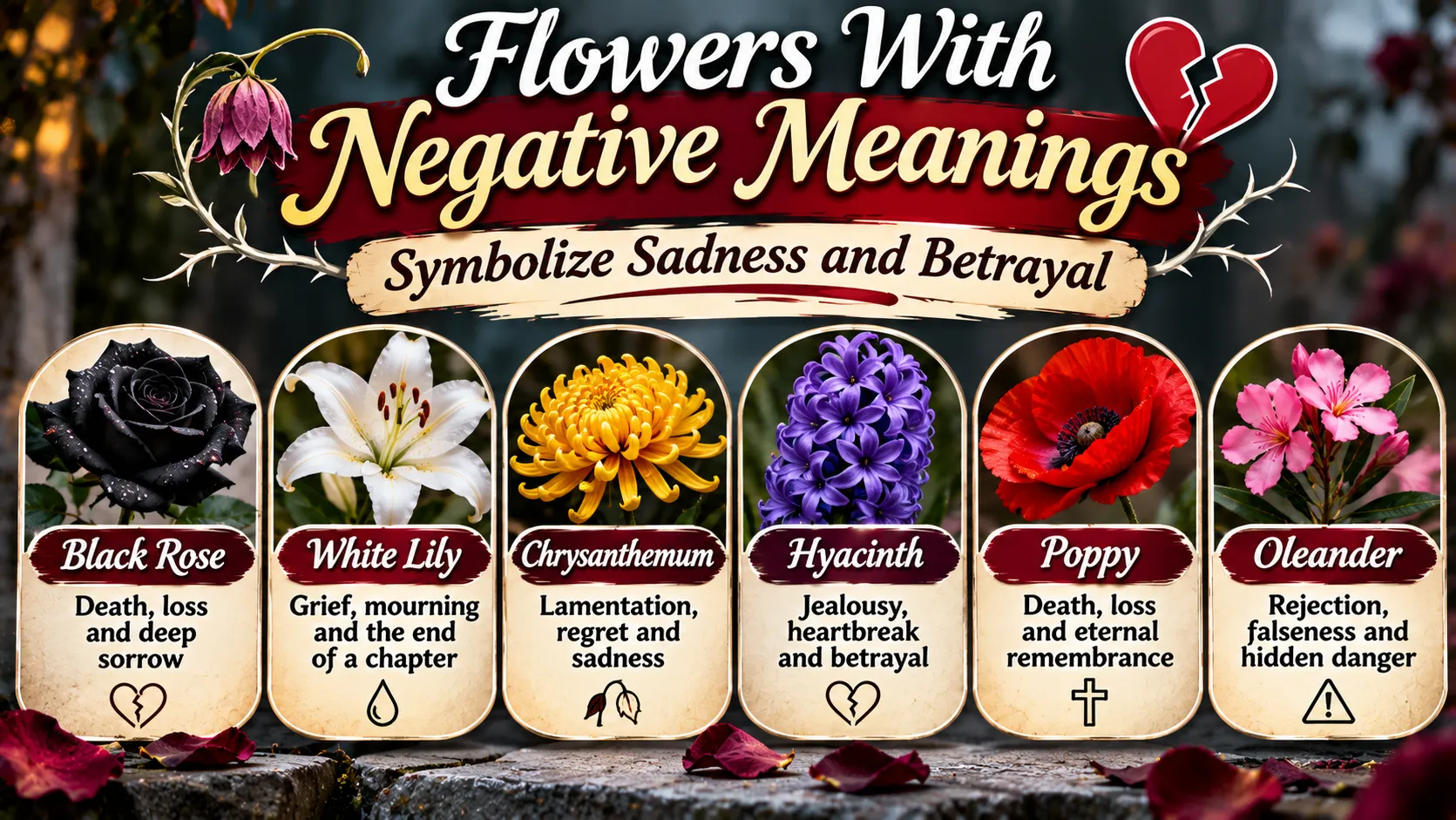
- White chrysanthemum – Mourning and remembrance in some cultures
- Poppy – Remembrance and sleep; sometimes associated with death
- Hyacinth – Sorrow and regret in certain historical interpretations
- Forget-me-not – Remembrance and lasting attachment
- Black dahlia – Mystery, endings, and grief in modern interpretations
A flower associated with sadness does not necessarily make an inappropriate gift. For example, marigolds and chrysanthemums can play meaningful roles in memorial traditions. Their symbolism depends on the occasion and cultural expectations.
🥀 Flowers That Symbolize Jealousy and Betrayal
Jealousy and betrayal are powerful emotions, and some flower traditions use blooms to represent these feelings. Their meanings often come from historical flower dictionaries, folklore, or modern symbolic interpretations.
- Yellow rose – Jealousy and fading affection in older symbolism
- Black dahlia – Betrayal and mystery in modern interpretations
- Yellow carnation – Disdain and rejection
- Petunia – Anger and resentment
- Foxglove – Insincerity and caution
- Basil – Hatred and resentment in certain traditions
- Hydrangea – Vanity and heartlessness in some historical references
- Lavender – Distrust in certain flower dictionaries
- Wisteria – Regret and emotional longing
These flowers can be useful symbols in literature, art, and storytelling. Writers may use them to suggest hidden emotions or complicated relationships without explaining everything directly.
⚠️ Poisonous Flowers With Dark Symbolism
Some flowers have a darker reputation because they contain toxic compounds. Their appearance may seem delicate or attractive, but touching or consuming certain parts can create health risks.
The following flowers deserve special attention because of their toxicity or dangerous properties.
- Foxglove – Contains cardiac glycosides that can affect heart function.
- Oleander – All parts of the plant are highly toxic if swallowed.
- Lily of the valley – Contains compounds that can affect heart rhythm.
- Daffodil – Bulbs and other parts can cause poisoning if eaten.
- Rhododendron – Some species contain grayanotoxins.
- Monkshood – Contains highly toxic alkaloids.
- Autumn crocus – Contains colchicine, which can cause serious poisoning.
- Angel’s trumpet – Contains dangerous tropane alkaloids.
- Hydrangea – Contains compounds that can release cyanide-related toxins when metabolized.
A flower’s poisonous nature does not automatically give it a negative symbolic meaning. Toxicity is a botanical fact, while flower symbolism comes from cultural traditions and interpretation.
Never eat an unidentified flower or use an ornamental plant as food or medicine without reliable expert guidance. Keep potentially toxic plants away from children and pets.
🌹 Why Do Some Flowers Have Negative Meanings?
Flower symbolism developed through centuries of folklore, literature, mythology, and cultural traditions. People used flowers to communicate feelings when direct conversation was difficult or socially discouraged.
Several factors helped create negative flower meanings.
Historical stories and mythology: Myths often connect flowers with heartbreak, vanity, death, or loss. The narcissus flower, for example, takes its name from a Greek myth associated with self-absorption.
Flower appearance: Some blooms have unusual shapes, dark colors, or short flowering periods. People sometimes interpreted these features as symbols of mystery, sadness, or temporary happiness.
Cultural traditions: Different societies attach different meanings to the same flower. A flower connected with mourning in one country may represent celebration in another.
Victorian flower language: During the Victorian era, people used flowers to send coded messages. Certain colors and varieties communicated rejection, jealousy, or emotional distance.
Plant characteristics: Some poisonous plants developed reputations for danger and caution. Foxglove and oleander are examples of flowers whose toxicity contributes to their darker reputation.
🎨 Do Flower Colors Change Their Meanings?
Yes. Flower colors can influence symbolism, especially in traditional flower-giving customs. A red flower may represent passion, while a yellow version of the same flower may have a completely different interpretation.
However, color symbolism also changes across cultures and historical periods.
| Flower color | Common symbolic meaning | Possible negative association |
|---|---|---|
| Red | Love and passion | Anger or intense emotions |
| Yellow | Friendship and happiness | Jealousy in certain traditions |
| White | Purity and innocence | Mourning in some cultures |
| Black or very dark | Mystery and transformation | Grief or endings |
| Purple | Admiration and dignity | Mystery or emotional distance |
| Orange | Energy and enthusiasm | Strong desire or intense feelings |
| Pink | Gratitude and affection | Emotional disappointment in some contexts |
The flower species matters just as much as its color. A yellow rose, for example, has a different history of symbolism from a yellow marigold.
💐 Should You Give Someone Flowers With Negative Meanings?
You can give these flowers if you understand their symbolism and choose them for the right reason. Their traditional meanings do not make them bad flowers, and many remain popular in gardens, celebrations, and floral arrangements.
Before selecting a bouquet, consider these points:
- Think about the occasion: A flower connected with grief may suit a memorial but feel confusing at a birthday celebration.
- Consider the recipient: Some people care deeply about flower symbolism, while others choose flowers based on color and appearance.
- Understand cultural differences: A flower may have a positive meaning in one culture and a negative meaning in another.
- Choose your message carefully: If you want to express love, friendship, or gratitude, select blooms with widely recognized positive meanings.
- Avoid unnecessary assumptions: Never assume someone intends to communicate rejection or betrayal simply because they give you a particular flower.
Ultimately, the thought behind a bouquet matters more than an old symbolic definition.
🌿 Positive Meanings Behind Flowers With Negative Symbolism
A flower with a negative historical meaning can still carry a positive message today. Symbolism changes over time, and many flowers have several interpretations.
For example, yellow roses traditionally carried associations with jealousy in some flower dictionaries, but modern flower-giving customs commonly connect them with friendship and happiness. Hydrangeas may symbolize vanity in certain historical interpretations, yet many modern arrangements use them to express gratitude and appreciation.
Here are a few examples of flowers with both positive and negative associations:
| Flower | Negative association | Positive association |
|---|---|---|
| Yellow rose | Jealousy | Friendship and happiness |
| Marigold | Grief | Celebration and remembrance |
| Anemone | Abandonment | Protection and anticipation |
| Daffodil | Unrequited love | Renewal and hope |
| Hydrangea | Vanity | Gratitude and appreciation |
| Lavender | Distrust in some traditions | Calmness and devotion |
| Wisteria | Regret | Devotion and affection |
| Cyclamen | Farewell | Sincere affection |
This contrast shows why you should consider the full context before assigning a flower a single meaning.
❓ Frequently Asked Questions About Flowers With Negative Meanings
What flower represents rejection?
Yellow carnations traditionally symbolize rejection, disdain, and disappointment. Striped carnations can also represent refusal or unreturned affection in Victorian flower symbolism.
What flower symbolizes betrayal?
Black dahlias sometimes symbolize betrayal and mystery in modern floral interpretations. However, this meaning is not universal, and dark dahlias can also represent transformation and elegance.
Which flower represents sadness?
Marigolds, anemones, and cyclamen can symbolize grief, loss, or emotional separation in certain traditions. Their meanings vary depending on the culture and occasion.
What flower symbolizes jealousy?
Yellow roses have historically been associated with jealousy and fading affection in some flower dictionaries. Today, many people view them as symbols of friendship, joy, and warmth.
What flower represents unrequited love?
Daffodils sometimes symbolize unrequited love because of their connection with the Greek myth of Narcissus. Their more common modern meanings include renewal, hope, and new beginnings.
Are black flowers associated with death?
Black or very dark flowers can represent mourning, grief, mystery, and endings. However, people also use them to symbolize elegance, strength, individuality, and transformation.
Do all cultures interpret flowers in the same way?
No. Flower meanings differ across countries, religions, historical periods, and personal traditions. A flower associated with mourning in one culture may represent celebration or good fortune elsewhere.
Which flower symbolizes hatred?
Basil has been associated with hatred and resentment in some historical flower-symbolism traditions. However, other cultures connect basil with protection, love, and good fortune.
Is a yellow rose a bad gift?
No. Yellow roses are widely recognized as symbols of friendship, happiness, and warmth today. Their historical association with jealousy is less common in modern flower-giving customs.
Are poisonous flowers always associated with negative meanings?
No. A poisonous flower may have positive, neutral, or negative symbolic meanings. Botanical toxicity and cultural symbolism are two different things.
🌸 Conclusion
Flowers with negative meanings reveal a fascinating side of floral symbolism. While many blooms represent love and happiness, others have traditional connections with rejection, jealousy, grief, betrayal, and unrequited love. Yellow carnations, anemones, marigolds, daffodils, and black dahlias are just a few examples of flowers with darker symbolic interpretations.
However, these meanings are not universal. Culture, history, flower color, and personal experiences can all change how people interpret a bloom. Some flowers that once represented negative emotions now carry positive meanings in modern floral traditions.
Understanding these symbolic differences can help you appreciate flowers beyond their appearance. Whether you are choosing a bouquet, exploring flower folklore, or researching the hidden language of blooms, remember that every flower can tell a different story.

Olivia Bennett is a writer and language enthusiast at Vocabsteria. She is passionate about exploring word meanings, name origins, and cultural expressions from around the world.