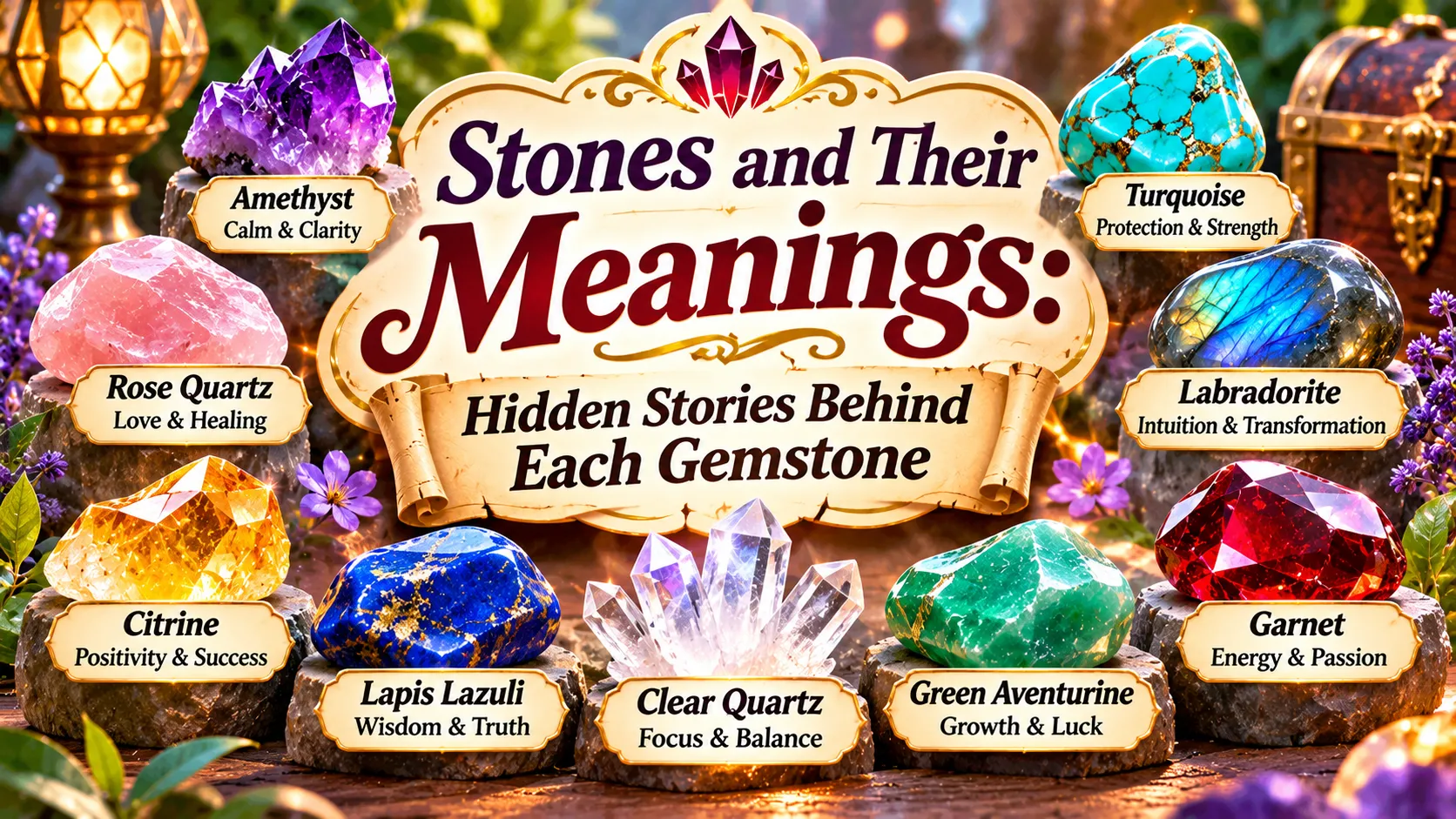
Every stone carries a unique appearance, color, texture, and story. Some gemstones symbolize love and emotional connection, while others represent courage, wisdom, peace, protection, and personal growth. From the calming beauty of amethyst to the warm glow of citrine, stones have fascinated people for centuries through their natural beauty and cultural symbolism.
People also explore stones and their meanings when choosing jewelry, collecting crystals, creating meaningful gifts, or learning about birthstones. Different cultures connect gemstones with different qualities, traditions, and beliefs. In this guide, you will discover more than 50 popular stones, their colors, symbolic meanings, and interesting characteristics. You will also learn how to identify gemstones and choose stones that match your personal style.
Popular Stones and Their Meanings 💎
Popular gemstones attract attention because of their beautiful colors, natural patterns, and traditional symbolism. Each stone has its own mineral characteristics, while its symbolic meaning often comes from history, folklore, and cultural beliefs.
Amethyst
Color: Purple, violet, and lavender
Meaning: Peace, wisdom, clarity, and spiritual growth
Amethyst stands out with its beautiful purple shades and transparent crystal appearance. This variety of quartz has attracted jewelry lovers and gemstone collectors for centuries. Many traditions connect amethyst with calmness, wisdom, and clear thinking.
Rose Quartz
Color: Soft pink to pale rose
Meaning: Love, kindness, compassion, and emotional connection
Rose quartz attracts attention with its gentle pink color. Many people associate this popular crystal with romantic love, friendship, self-love, and compassion. Its soft appearance also makes it a favorite choice for necklaces, bracelets, and decorative pieces.
Clear Quartz
Color: Transparent or cloudy white
Meaning: Clarity, balance, focus, and simplicity
Clear quartz looks almost like glass, although its natural crystal structure gives it a distinctive appearance. Collectors appreciate its clean color and versatile beauty. Modern crystal traditions often connect clear quartz with mental clarity, focus, and balance.
Citrine
Color: Yellow, golden, and orange
Meaning: Happiness, confidence, optimism, and abundance
Citrine brings a warm golden glow to gemstone collections. Its sunny appearance makes it a popular choice for people who enjoy bright and cheerful jewelry. Traditional crystal symbolism connects citrine with positivity, confidence, creativity, and prosperity.
Aquamarine
Color: Pale blue to blue-green
Meaning: Peace, courage, communication, and serenity
Aquamarine resembles clear ocean water and often displays delicate blue or blue-green shades. Its name comes from Latin words associated with seawater. Many people connect this gemstone with calm communication, courage, and emotional balance.
Garnet
Color: Deep red, burgundy, green, orange, and other shades
Meaning: Passion, strength, loyalty, and commitment
Garnet describes a group of minerals rather than one single gemstone. Red garnet remains especially popular, but this gemstone family also includes green, orange, and other varieties. Traditional symbolism connects garnet with passion, loyalty, courage, and lasting relationships.
Moonstone
Color: White, cream, peach, gray, and rainbow-like flashes
Meaning: Intuition, new beginnings, femininity, and emotional balance
Moonstone displays a beautiful glow that seems to move across its surface when light reaches it from different angles. Gemologists call this optical effect adularescence. Many traditions connect moonstone with intuition, fresh starts, and the changing cycles of life.
Opal
Color: White, black, pink, blue, and multicolored flashes
Meaning: Creativity, imagination, inspiration, and individuality
Opal fascinates gemstone lovers with its colorful flashes and changing patterns. Some varieties display vibrant colors that shift as the viewer moves the stone. Traditional symbolism connects opal with imagination, originality, hope, and creative expression.
Turquoise
Color: Sky blue, robin’s egg blue, and blue-green
Meaning: Protection, friendship, good fortune, and peace
Turquoise has a distinctive blue-green color that makes it easy to recognize. People across different cultures have valued this gemstone for jewelry, decorative objects, and traditional ornaments. Many traditions connect turquoise with protection, friendship, positive energy, and good fortune.
Peridot
Color: Olive green to bright yellow-green
Meaning: Renewal, happiness, growth, and prosperity
Peridot offers a fresh green appearance that works beautifully in rings, earrings, and necklaces. Unlike many gemstones, peridot forms in Earth’s mantle and can also appear in some meteorites. Its bright color inspires symbolic connections with renewal, happiness, and personal growth.
Blue Stones and Their Meanings 💙
Blue gemstones often remind people of the ocean, sky, peace, and open spaces. Their colors range from pale icy blue to deep navy, and different stones carry unique mineral properties and traditional associations.
Sapphire
Color: Blue, pink, yellow, green, and other colors
Meaning: Wisdom, loyalty, honesty, and nobility
Sapphire belongs to the corundum mineral family, and blue sapphire remains its most famous variety. Its durability makes it a popular choice for engagement rings and everyday jewelry. Traditional symbolism connects sapphire with wisdom, loyalty, sincerity, and royal elegance.
Blue Topaz
Color: Light blue, sky blue, and deep Swiss blue
Meaning: Communication, confidence, clarity, and calmness
Blue topaz attracts attention with its bright and refreshing color. Jewelers often use it in rings, pendants, and earrings. Many modern gemstone traditions connect blue topaz with honest communication, confidence, and peaceful thinking.
Lapis Lazuli
Color: Deep royal blue with possible golden pyrite flecks
Meaning: Truth, wisdom, knowledge, and self-expression
Lapis lazuli has a rich blue appearance that people have admired since ancient times. Its golden pyrite flecks often create a starry effect across the surface. Ancient civilizations used this stone for jewelry, ornaments, and decorative objects, while modern symbolism connects it with truth and wisdom.
Tanzanite
Color: Violet-blue to deep blue-purple
Meaning: Transformation, insight, and spiritual awareness
Tanzanite comes from a small mining region near Mount Kilimanjaro in Tanzania. Its striking blue-purple color makes it a distinctive addition to gemstone collections. Many modern crystal enthusiasts associate it with transformation, insight, and personal development.
Iolite
Color: Violet-blue, blue, and grayish blue
Meaning: Direction, independence, clarity, and self-discovery
Iolite can show different colors when viewers examine it from different angles. This optical quality gives the gemstone an interesting appearance. Modern symbolic interpretations connect iolite with direction, independence, and the confidence to make personal decisions.
Larimar
Color: Pale blue, turquoise, and white
Meaning: Serenity, relaxation, and emotional peace
Larimar features soft blue patterns that often resemble ocean waves or cloudy skies. This rare gemstone comes from the Dominican Republic. Its sea-inspired appearance makes it popular among collectors who appreciate peaceful colors and tropical designs.
Kyanite
Color: Blue, teal, green, gray, and black
Meaning: Balance, communication, and self-expression
Kyanite often forms long, blade-like crystals with a distinctive blue color. Its appearance varies depending on its mineral composition and natural formation. Modern crystal traditions connect kyanite with balance, communication, and clear self-expression.
Sodalite
Color: Royal blue with white veins
Meaning: Logic, truth, confidence, and clear thinking
Sodalite combines deep blue colors with white patterns that create a marble-like appearance. Jewelry makers and collectors often appreciate its natural contrast. Symbolically, people connect sodalite with logic, honesty, confidence, and thoughtful communication.
Purple Stones and Their Meanings 💜
Purple gemstones often symbolize imagination, elegance, wisdom, and individuality. Their colors range from delicate lavender to rich violet, making them attractive choices for jewelry and gemstone collections.
Charoite
Color: Violet, purple, and lavender with swirling patterns
Meaning: Transformation, courage, and personal growth
Charoite features dramatic purple patterns that create a flowing appearance. Its distinctive look makes it especially interesting to mineral collectors. Modern crystal symbolism connects this stone with courage, transformation, and the ability to embrace change.
Sugilite
Color: Deep purple, violet, and magenta
Meaning: Compassion, individuality, and emotional strength
Sugilite stands out with its rich purple shades and sometimes displays dark or pinkish patterns. Its unusual appearance makes it a desirable collector’s stone. Some modern crystal traditions associate sugilite with compassion, individuality, and emotional strength.
Lepidolite
Color: Lavender, lilac, pink-purple, and gray
Meaning: Calmness, transition, and emotional balance
Lepidolite belongs to the mica mineral group and often displays a soft, shimmering surface. Its lavender shades create a gentle and elegant appearance. Modern symbolic traditions connect it with calmness, balance, and the process of moving through life’s changes.
Purple Fluorite
Color: Light purple, violet, and deep purple
Meaning: Focus, learning, creativity, and clarity
Purple fluorite often forms attractive translucent crystals with beautiful color zoning. Collectors appreciate its geometric crystal shapes and delicate shades. Modern crystal symbolism connects purple fluorite with concentration, learning, and creative thinking.
Green Stones and Their Meanings 💚
Green gemstones remind people of forests, leaves, springtime, and natural growth. Many traditions connect green stones with prosperity, renewal, harmony, and fresh opportunities.
Emerald
Color: Light green to deep rich green
Meaning: Love, wisdom, renewal, and prosperity
Emerald belongs to the beryl mineral family and gets its green color mainly from chromium or vanadium. Its luxurious appearance has made it a favorite among royalty, collectors, and jewelry designers. Traditional symbolism connects emerald with love, wisdom, fertility, and prosperity.
Jade
Color: Green, white, lavender, yellow, and other shades
Meaning: Harmony, good fortune, wisdom, and protection
Jade includes two different minerals: jadeite and nephrite. Many cultures, especially in East Asia, have valued jade for centuries because of its beauty and cultural significance. Traditional symbolism connects jade with harmony, good fortune, wisdom, and protection.
Malachite
Color: Light green to dark green with banded patterns
Meaning: Transformation, confidence, and personal growth
Malachite displays beautiful green bands that create natural circular and flowing patterns. Its distinctive appearance makes it popular in jewelry and decorative carvings. Modern crystal symbolism often connects malachite with transformation, confidence, and positive change.
Green Aventurine
Color: Light green to dark green
Meaning: Opportunity, optimism, luck, and growth
Green aventurine has a gentle green color and may display a subtle sparkling effect. Collectors appreciate its smooth texture and attractive appearance. Modern traditions often associate it with new opportunities, optimism, and good fortune.
Amazonite
Color: Blue-green, turquoise, and pale green
Meaning: Communication, courage, harmony, and confidence
Amazonite features beautiful blue-green shades that resemble tropical water. Its smooth surface makes it a popular choice for beads, bracelets, and polished stones. Symbolic interpretations connect amazonite with confidence, harmony, and honest communication.
Bloodstone
Color: Dark green with red spots
Meaning: Courage, strength, vitality, and determination
Bloodstone usually features a dark green background with small red spots that resemble drops of blood. Ancient traditions connected this stone with courage and physical strength. Today, collectors often appreciate its distinctive appearance and historical associations.
Black Stones and Their Meanings 🖤
Black gemstones offer a bold and elegant appearance. People often connect their dark colors with strength, mystery, grounding, and protection, although each stone has its own mineral identity and cultural history.
Black Obsidian
Color: Deep black, sometimes with a glossy surface
Meaning: Strength, reflection, protection, and self-awareness
Black obsidian forms when lava cools quickly and creates natural volcanic glass. Its shiny surface gives it a dramatic appearance. Many modern crystal traditions associate obsidian with self-reflection, protection, and personal strength.
Black Tourmaline
Color: Black
Meaning: Protection, grounding, stability, and confidence
Black tourmaline, also known as schorl, often forms long crystals with ridged surfaces. Collectors value its natural structure and dark appearance. Modern crystal traditions commonly connect it with grounding, stability, and protection.
Onyx
Color: Black, white, and layered color patterns
Meaning: Strength, discipline, confidence, and determination
Onyx is a variety of chalcedony that can display parallel bands of different colors. Black onyx remains especially popular in men’s jewelry, rings, and polished decorative pieces. Traditional symbolism connects it with discipline, confidence, and inner strength.
Hematite
Color: Metallic gray, silver-gray, and reddish brown
Meaning: Grounding, focus, strength, and stability
Hematite is an iron oxide mineral with a distinctive metallic shine in its polished form. Its heavy feel and reflective surface make it easy to recognize. Modern gemstone symbolism connects hematite with focus, stability, and grounding.
Smoky Quartz
Color: Light smoky brown to dark brown
Meaning: Grounding, patience, strength, and stability
Smoky quartz belongs to the quartz family and gets its brown color through natural irradiation and other geological factors. Its transparent smoky appearance makes it an attractive jewelry stone. Modern traditions associate it with patience, stability, and grounding.
Red and Orange Stones and Their Meanings ❤️
Red and orange gemstones create warm, energetic color combinations. Their bold appearance often inspires associations with passion, courage, creativity, confidence, and determination.
Ruby
Color: Red, pinkish red, and deep crimson
Meaning: Passion, courage, love, and confidence
Ruby belongs to the corundum family and gets its red color from chromium. Its strong color and durability make it one of the most famous precious gemstones. Traditional symbolism connects ruby with passion, courage, love, and royal power.
Carnelian
Color: Orange, reddish orange, and brownish red
Meaning: Creativity, motivation, courage, and confidence
Carnelian is a variety of chalcedony with warm orange and red shades. Ancient people used it for beads, seals, and decorative objects. Modern symbolic traditions connect it with motivation, creativity, courage, and self-confidence.
Sunstone
Color: Orange, peach, golden, and reddish brown
Meaning: Joy, optimism, confidence, and personal power
Sunstone often displays a sparkling effect that gives its surface a warm glow. Its golden and orange shades create a bright, cheerful appearance. Many modern traditions connect sunstone with optimism, confidence, and positive energy.
Fire Agate
Color: Brown, orange, red, and iridescent flashes
Meaning: Passion, courage, creativity, and determination
Fire agate displays colorful flashes that seem to glow beneath its surface. Its unusual patterns make it an interesting gemstone for collectors and jewelry designers. Symbolically, people often connect it with passion, courage, and creative energy.
Red Jasper
Color: Brick red, reddish brown, and deep red
Meaning: Stability, endurance, courage, and determination
Red jasper belongs to the quartz family and often contains earthy patterns or natural inclusions. Its warm color gives it a strong and grounded appearance. Traditional and modern interpretations connect it with endurance, courage, and stability.
White and Clear Stones and Their Meanings 🤍
White and transparent gemstones create a clean, timeless appearance. People often connect these stones with purity, clarity, simplicity, peace, and fresh beginnings.
White Howlite
Color: White with gray or black veins
Meaning: Patience, calmness, and awareness
Howlite often displays a white surface with gray veins that resemble natural marble. Jewelers sometimes use it in beads and polished jewelry. Modern crystal symbolism connects howlite with patience, calmness, and thoughtful decision-making.
Selenite
Color: White, transparent, and pale cream
Meaning: Clarity, peace, and spiritual reflection
Selenite is a transparent or translucent variety of gypsum. Its silky appearance and soft glow make it popular in decorative pieces and mineral collections. Handle selenite carefully because its soft structure can scratch easily, and water can damage it.
White Agate
Color: White, cream, and pale gray
Meaning: Balance, simplicity, calmness, and harmony
White agate often features soft bands or cloudy patterns that create a gentle appearance. Its neutral color works well in minimalist jewelry and decorative designs. Symbolic interpretations connect white agate with balance, harmony, and peaceful living.
Howlite
Color: White with gray or dark veins
Meaning: Patience, mindfulness, and relaxation
Howlite has a distinctive veined appearance and often resembles marble. Stone collectors appreciate its natural patterns and smooth polished finish. Modern crystal traditions connect it with mindfulness, patience, and relaxation.
White Moonstone
Color: Milky white with a soft blue sheen
Meaning: Intuition, fresh beginnings, and emotional harmony
White moonstone displays a delicate glow that changes as light moves across its surface. Its elegant appearance makes it a popular choice for rings and pendants. Traditional symbolism connects it with intuition, new beginnings, and emotional harmony.
Rare and Unique Stones and Their Meanings ✨
Some gemstones attract collectors because of their unusual colors, limited sources, or distinctive optical effects. These rare and unique stones offer more than beautiful appearances; their geological features also make them fascinating.
Alexandrite
Color: Green in daylight and reddish purple under warm light
Meaning: Transformation, adaptability, and balance
Alexandrite is famous for its dramatic color-changing effect. The stone can appear green or bluish green in daylight and red or purplish red under incandescent light. Modern symbolism connects it with adaptability, transformation, and balance.
Labradorite
Color: Gray, green, blue, gold, and rainbow flashes
Meaning: Creativity, transformation, and imagination
Labradorite displays colorful flashes that seem to appear beneath its surface. Gemologists call this optical effect labradorescence. Its unusual appearance makes it popular among collectors, while modern crystal traditions connect it with creativity and transformation.
Tanzanite
Color: Blue, violet, and purple
Meaning: Insight, change, and individuality
Tanzanite comes from northern Tanzania and belongs to the mineral zoisite family. Its blue-violet color makes it stand out in fine jewelry. Many modern symbolic interpretations connect it with personal change, insight, and individuality.
Rhodochrosite
Color: Pink, rose, and reddish pink with white bands
Meaning: Compassion, love, and emotional connection
Rhodochrosite often features beautiful pink and white bands. Its soft colors make it an attractive choice for collectors and jewelry lovers. Modern traditions associate it with compassion, emotional connection, and self-love.
Fluorite
Color: Purple, green, blue, yellow, and multicolored
Meaning: Focus, learning, clarity, and creativity
Fluorite comes in a wide range of colors and often forms attractive cubic crystals. Collectors appreciate its color variety and geometric shapes. Modern crystal symbolism connects fluorite with concentration, learning, and clear thinking.
Pyrite
Color: Metallic gold or brass-yellow
Meaning: Confidence, ambition, prosperity, and determination
Pyrite has a shiny metallic appearance that often resembles gold. People commonly call it fool’s gold because of its color and luster. Modern symbolic traditions connect pyrite with ambition, confidence, and prosperity.
Stones That Symbolize Love and Relationships 💗
Many people choose gemstones as gifts because their colors and traditional meanings express affection, loyalty, and emotional connection. These stones can add a thoughtful message to jewelry, anniversary presents, and personal keepsakes.
- Rose Quartz: Romantic love, compassion, and self-love.
- Garnet: Passion, commitment, and loyalty.
- Emerald: Lasting love, harmony, and devotion.
- Rhodochrosite: Compassion and emotional connection.
- Ruby: Romance, courage, and deep affection.
- Moonstone: Emotional harmony and new beginnings.
- Rhodonite: Forgiveness, kindness, and compassion.
Stones That Symbolize Protection and Strength 🛡️
People often choose dark or bold gemstones because their traditional symbolism reflects courage, security, and resilience. These stones also create striking jewelry designs.
- Black Obsidian: Protection and self-reflection.
- Black Tourmaline: Grounding and stability.
- Tiger’s Eye: Courage, confidence, and determination.
- Hematite: Strength, focus, and balance.
- Bloodstone: Courage and endurance.
- Onyx: Discipline and inner strength.
- Red Jasper: Stability and resilience.
Stones That Symbolize Luck, Wealth, and Prosperity 🍀
Several gemstones carry traditional associations with good fortune, abundance, and success. People often choose them for meaningful gifts, decorative collections, and jewelry with positive symbolism.
- Citrine: Prosperity, optimism, and abundance.
- Green Aventurine: Opportunity, luck, and growth.
- Jade: Good fortune, harmony, and wisdom.
- Pyrite: Ambition and prosperity.
- Peridot: Growth, renewal, and positive change.
- Sunstone: Confidence and optimism.
- Tiger’s Eye: Focus, courage, and determination.
Precious vs. Semiprecious Stones: What’s the Difference? 💍
Gemstones often fall into two traditional categories: precious and semiprecious. This classification helps people understand common jewelry terminology, although modern gemology focuses more on a stone’s quality, rarity, durability, and market value.
Precious stones traditionally include four gemstones:
- Diamond
- Ruby
- Sapphire
- Emerald
Semiprecious stones include many other gemstones, such as amethyst, garnet, aquamarine, turquoise, peridot, moonstone, and opal.
The word “semiprecious” does not mean a gemstone lacks value or beauty. Some semiprecious stones can command high prices because of their rarity, exceptional quality, or demand.
How to Identify Different Stones and Gemstones 🔍
Gemstone identification requires more than looking at color. Many different minerals share similar shades, and treatments or imitations can make identification even more difficult.
Consider these features when examining a stone:
Color: Observe the stone under natural light and check for uneven color, zoning, or unusual patterns.
Transparency: Notice whether the gemstone looks transparent, translucent, or opaque.
Luster: Examine how the surface reflects light. Some stones show a glassy shine, while others have a silky, metallic, or waxy appearance.
Hardness: Gemologists use the Mohs hardness scale to compare how easily one mineral scratches another. Avoid scratching valuable jewelry because this test can damage the stone.
Natural patterns: Look for bands, inclusions, crystal structures, and other features that may help distinguish one mineral from another.
Professional testing: Ask a qualified gemologist or trusted laboratory to identify an expensive or unfamiliar gemstone. Professional testing offers more reliable results than appearance alone.
How to Choose the Right Stone for You 💎
The right gemstone depends on your personal taste, budget, jewelry style, and reason for choosing it. Some people prefer a stone’s color, while others appreciate its geological history or traditional meaning.
Start by choosing a color that matches your style. Purple amethyst, green emerald, blue sapphire, and pink rose quartz each create a different look. Next, consider how you plan to use the stone. Rings and everyday bracelets need durable materials, while decorative specimens may suit softer minerals.
You can also explore traditional symbolism if you want a gemstone with a meaningful message. For example, rose quartz often represents love, citrine symbolizes optimism, and tiger’s eye connects with courage. Treat these associations as cultural or spiritual traditions rather than scientifically proven effects.
Finally, check the gemstone’s authenticity, treatment history, quality, and price before purchasing it. A reputable seller should provide clear information about the stone.
Frequently Asked Questions About Stones and Their Meanings ❓
What stone represents love?
Rose quartz is one of the most popular stones associated with love, compassion, and emotional connection. Ruby and garnet also carry traditional associations with passion, romance, and commitment.
Which stone represents strength and courage?
Tiger’s eye, bloodstone, ruby, and red jasper often symbolize strength and courage. Their traditional meanings connect with confidence, determination, and resilience.
What stone represents peace and calmness?
Amethyst, aquamarine, and moonstone commonly symbolize peace and emotional balance. Their soft or soothing colors also make them popular choices for jewelry and decorative collections.
Which gemstone represents wealth and good luck?
Citrine, jade, green aventurine, and pyrite often carry symbolic associations with prosperity and good fortune. These meanings come from cultural traditions and modern crystal beliefs.
What is the most popular healing stone?
Amethyst, rose quartz, clear quartz, and black tourmaline rank among the most recognizable stones in modern crystal traditions. People associate them with calmness, love, clarity, and protection. However, scientific research does not establish that gemstones can heal medical conditions.
Which stones represent new beginnings?
Moonstone, peridot, clear quartz, and labradorite often symbolize fresh starts, renewal, and personal transformation. Their meanings make them popular choices for gifts that celebrate life changes.
What is the rarest gemstone?
Rarity depends on the gemstone’s availability, quality, size, and market demand. Some exceptionally rare gemstones include painite, red beryl, and certain varieties of garnet. Not every rare stone has the same commercial value.
Are gemstone meanings scientifically proven?
No. Gemstone meanings usually come from cultural traditions, historical beliefs, folklore, and modern crystal practices. A stone’s color, mineral composition, hardness, and geological properties have scientific explanations, but symbolic meanings do not establish medical or supernatural effects.
What is the difference between a crystal and a gemstone?
A crystal describes a solid material with an organized atomic structure. A gemstone is a mineral, rock, or organic material that people cut, polish, or use for decoration and jewelry. Many gemstones form crystals, but not every crystal qualifies as a gemstone.
Conclusion 💎
Stones and their meanings offer a fascinating way to explore gemstones, natural beauty, and cultural traditions. Amethyst represents wisdom and calmness, rose quartz symbolizes love, citrine connects with optimism, and turquoise carries traditional associations with protection. Meanwhile, sapphire, emerald, ruby, jade, and many other stones attract attention through their distinctive colors and mineral properties.
Whether you collect crystals, choose meaningful jewelry, or simply enjoy learning about gemstones, each stone offers something interesting to discover. Explore their colors, compare their natural features, and choose the stones that reflect your personal taste. Remember that symbolic meanings enrich the experience, while scientific gemology explains each stone’s actual properties.

Olivia Bennett is a writer and language enthusiast at Vocabsteria. She is passionate about exploring word meanings, name origins, and cultural expressions from around the world.