Have you ever stared at a gardening label or agricultural document and wondered whether to write “fertiliser” or “fertilizer”? You are not alone. This common spelling dilemma confuses students, gardeners, farmers, and professionals worldwide. We encounter this question regularly, and the answer is simpler than you might think.
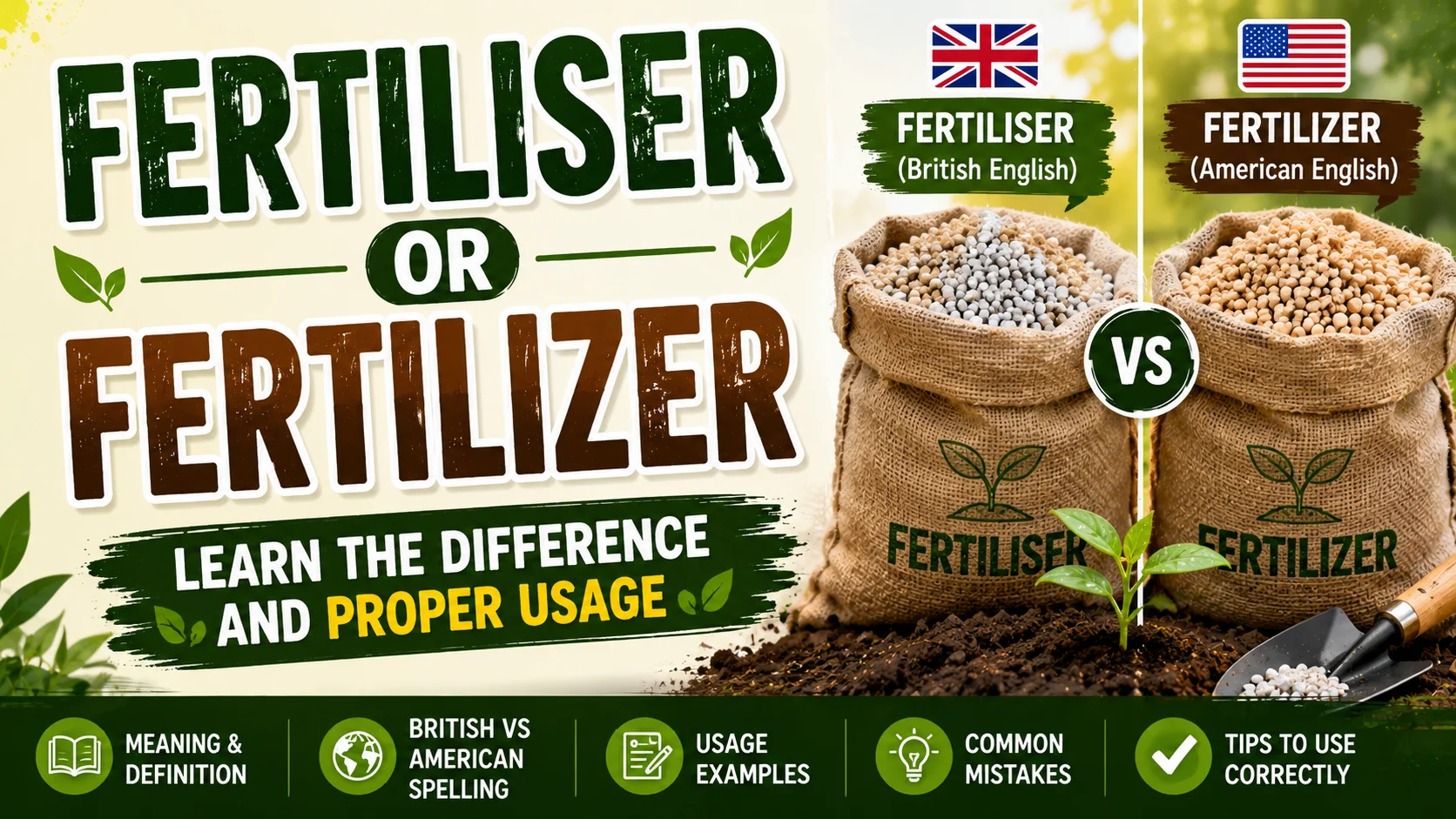
Both spellings are correct—they refer to exactly the same substance that you add to soil to improve plant growth and crop yields . The choice between “fertiliser” and “fertilizer” depends entirely on which version of English you use. If you write in British English, you use “fertiliser” with an ‘s’. If you write in American English, you use “fertilizer” with a ‘z’ .
In this comprehensive guide, we will explain everything you need to know about these spellings, their origins, proper usage, and common mistakes to avoid. You will learn when to use each spelling, why the difference exists, and how to choose correctly for your audience.
What is Fertiliser or Fertilizer? (Quick Answer)
“Fertiliser” and “fertilizer” mean exactly the same thing: a substance you add to soil to help plants grow by providing essential nutrients like nitrogen, phosphorus, and potassium . The only difference lies in spelling—”fertiliser” is British English, while “fertilizer” is American English . Both spellings are correct depending on your location.
Key points:
- Both spellings refer to the same agricultural and gardening substance
- Use “fertiliser” in British, Australian, and New Zealand English
- Use “fertilizer” in American English
- The word comes from the Latin fertilis, meaning “bearing in abundance”
Quick Comparison Table
Main Meaning Section
Definition
Fertiliser/Fertilizer (noun): any substance of natural or synthetic origin that you add to soil or water to supply essential nutrients to plants and increase their productivity . These nutrients typically include nitrogen (N), phosphorus (P), and potassium (K)—the primary elements plants need to grow strong and healthy .
Pronunciation
British English (Fertiliser): /ˈfɜːtɪˌlaɪzə/
American English (Fertilizer): /ˈfɜrtlˌaɪzər/
You pronounce the ‘s’ in “fertiliser” as a ‘z’ sound in British English, which is why the American spelling uses a ‘z’—it reflects the actual pronunciation more directly .
Part of Speech
- Noun: The substance itself—”We bought fertiliser for the garden”
- Countable/Uncountable: You can use it as both—”a bag of fertilizer” (uncountable) and “many fertilizers” (countable, referring to different types)
Origin/Etymology
The word “fertiliser” and “fertilizer” both trace back to the Latin word fertilis, meaning “bearing in abundance, fruitful, or productive” . The verb “fertilize” entered English in the 17th century, and the noun form “fertilizer” first appeared in the 1650s .
The spelling difference emerged when American English standardized many words with ‘ize’ endings (like realize, organize, civilize), while British English often retained ‘ise’ endings . This reflects the broader spelling reforms championed by American lexicographer Noah Webster in the early 19th century.
Contextual Meaning
In modern usage, “fertiliser/fertilizer” appears in several specific contexts:
- Agriculture: Farmers use fertilisers to boost crop yields and maintain soil fertility
- Gardening: Home gardeners add fertiliser to flower beds, vegetable patches, and lawns
- Scientific: Researchers study fertiliser types, nutrient content, and environmental impacts
- Commercial: Companies manufacture and sell fertiliser products in granular, powder, or liquid forms
Detailed Explanation
Literal Meaning
Literally, “fertiliser” means any material—natural or synthetic—that you add to soil to make it more fertile and productive. The term encompasses everything from animal manure and compost to complex chemical compounds containing precise nutrient ratios .
Common Meaning
In everyday usage, people use “fertiliser” to refer to any plant food or soil additive that helps plants grow better. Most people understand fertilisers as products you buy at garden centers, agricultural supply stores, or online—whether organic (like compost or manure) or chemical (like synthetic nitrogen compounds) .
Internet Meaning
Online, “fertiliser” and “fertilizer” appear frequently in gardening blogs, agricultural forums, and e-commerce websites. The spelling choice often indicates the website’s regional origin. For example, UK-based gardening sites use “fertiliser,” while US-based sites use “fertilizer” .
Slang Meaning
In slang usage, people sometimes use “fertilizer” metaphorically to refer to anything that makes something grow or develop. For instance, you might hear “money is the fertilizer of business” meaning financial resources help businesses expand.
Texting Meaning
In texting and casual digital communication, people often abbreviate to “fert” or simply use the spelling common to their region. You might see “need fert for garden” in a quick text message.
Social Media Meaning
On platforms like Instagram, Pinterest, and TikTok, “fertiliser” frequently appears in gardening hashtags like #organicfertiliser, #liquidfertilizer, or #compost. The spelling used often reflects the influencer’s location or target audience.
Usage Examples
Synonyms Table
Antonyms Table
Related Terms Table
Real-Life Usage
Daily Conversation
You will hear “fertiliser” in everyday conversations about gardening, lawn care, and home improvement. People ask “What fertiliser should I use for tomatoes?” or say “The lawn needs fertiliser this spring.” Gardeners often discuss organic versus chemical options with neighbors and friends.
Social Media
On social media platforms, you will see “fertiliser” in gardening communities, hashtags like #fertilizertips, and product reviews. Influencers share fertiliser recommendations, application techniques, and before-and-after photos showing results.
Business Communication
In agricultural business, professionals discuss fertiliser prices, supply chains, and application schedules. Farm managers order fertiliser in bulk, negotiate contracts, and track nutrient management plans. Companies market fertiliser products through technical brochures and sales presentations.
Academic Writing
Agricultural scientists and researchers publish studies on fertiliser types, environmental impacts, and application methods . Academic papers discuss optimal nutrient ratios, soil health, and sustainable farming practices. Students write research papers on fertiliser history, chemistry, and future developments.
Online Messaging
In digital communication, people use “fertiliser” in short messages about gardening plans, purchase reminders, and quick questions. You might text “Pick up fertiliser at the store” or message “When should I apply fertiliser?”
Common Mistakes
Semantic Keyword Section
Throughout this article, we have integrated semantic keywords that help you find exactly what you need. These include “fertiliser vs fertilizer,” “difference between fertiliser and fertilizer,” “British vs American spelling,” “fertilizer definition,” “fertilizer meaning,” “types of fertiliser,” “organic fertiliser,” “synthetic fertilizer,” “NPK fertiliser,” “fertilizer application,” “fertilizer examples,” “fertilizer synonyms,” and “fertilizer usage guide.”
We carefully selected these terms based on what people actually search for when they have questions about this topic.
Related Questions Section
Q: What is the difference between fertiliser and fertilizer?
A: Both words mean exactly the same thing—a substance you add to soil to help plants grow. The only difference is spelling: “fertiliser” is British English, and “fertilizer” is American English .
Q: Which spelling should I use: fertiliser or fertilizer?
A: Use “fertiliser” if you write for a British, Australian, or New Zealand audience. Use “fertilizer” if you write for an American audience .
Q: Is fertiliser a word?
A: Yes, “fertiliser” is a correct word in British English. It means the same as “fertilizer” in American English .
Q: What are the three main nutrients in fertiliser?
A: The three primary nutrients are nitrogen (N) for leaf growth, phosphorus (P) for roots and flowers, and potassium (K) for overall plant health. People often refer to this as NPK .
Q: What is organic fertiliser?
A: Organic fertiliser comes from natural sources like animal manure, compost, or plant material. It improves soil health gradually and is often preferred for environmental sustainability .
Q: What is the origin of the word fertiliser?
A: “Fertiliser” comes from the Latin word fertilis, meaning “bearing in abundance, fruitful, or productive” .
Q: What are examples of fertilisers?
A: Common examples include compost, manure, urea, ammonium nitrate, superphosphate, and potassium chloride .
FAQ Section
1. Is “fertiliser” or “fertilizer” correct?
Both spellings are correct. “Fertiliser” is the British English spelling, while “fertilizer” is the American English spelling. Choose based on your target audience .
2. Do fertiliser and fertilizer mean the same thing?
Yes, they mean exactly the same substance. The spelling variation reflects regional differences in English, not any actual difference in meaning or usage .
3. Why do Americans spell it “fertilizer”?
American spelling uses ‘ize’ endings for many words (like realize, organize, and fertilizer) due to Noah Webster’s spelling reforms in the early 19th century, which aimed to simplify English spelling .
4. What does NPK mean on a fertiliser label?
NPK stands for Nitrogen (N), Phosphorus (P), and Potassium (K)—the three primary plant nutrients. The numbers on the label show the percentage of each nutrient in the product. For example, 10-10-10 contains 10% of each .
5. What is the difference between organic and synthetic fertiliser?
Organic fertiliser comes from natural sources like compost and manure, releasing nutrients slowly and improving soil structure. Synthetic fertiliser is manufactured chemically, providing nutrients quickly but with higher environmental costs .
6. Can I use “fertilizer” in British English?
Yes, people will understand you, but “fertiliser” is the preferred British spelling. Using “fertilizer” in the UK marks your writing as American-influenced .
7. What are the types of fertiliser?
Fertilisers come in several forms: straight (single nutrient), complex (chemically combined nutrients), mixed (physical blends), solid (granules, powder, prills), and liquid. They also include organic, inorganic, slow-release, and compound types .
8. Is fertiliser always good for plants?
Fertiliser nourishes plants, but you must apply the correct type and amount. Too much fertiliser can damage roots, burn plants, and pollute waterways. Always follow application guidelines .
Conclusion
We have explored the key differences between “fertiliser” and “fertilizer” and learned that both spellings are correct—they simply reflect different regional preferences in English. “Fertiliser” serves as the standard British, Australian, and New Zealand spelling, while “fertilizer” is the preferred American spelling.
When you write, choose the spelling that matches your audience. Your writing will appear more professional and credible when you use the appropriate regional spelling. Both spellings refer to the same vital agricultural and gardening substances that help plants grow, improve crop yields, and feed the world.
We encourage you to apply this knowledge in your writing, whether you are preparing a scientific paper, writing a gardening blog, or simply labeling your garden products. Remember: “fertiliser” for the UK and Commonwealth, “fertilizer” for the United States and Canada.

Olivia Bennett is a writer and language enthusiast at Vocabsteria. She is passionate about exploring word meanings, name origins, and cultural expressions from around the world.